
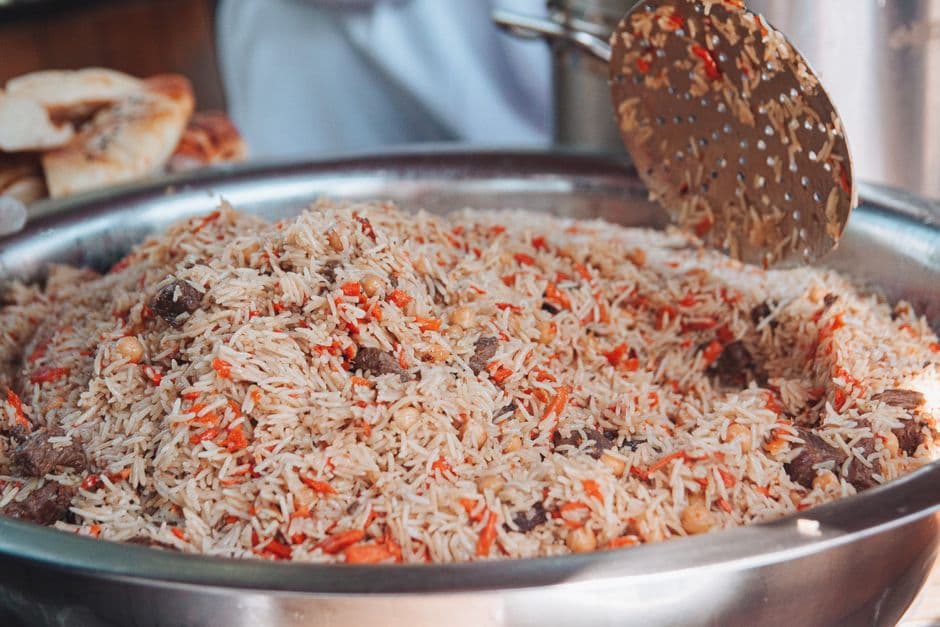
Plov
Uzbekistan's legendary rice pilaf — lamb, carrots, onions and spiced broth cooked together in a kazan to create Central Asia's most beloved dish.
About This Recipe
Plov (also spelled 'palov') is the national dish of Uzbekistan and the cornerstone of Central Asian celebration cooking. It is cooked in a kazan — a large, round-bottomed cast iron cauldron over an open fire — though a heavy Dutch oven works perfectly at home. The technique is precise: onions and lamb are browned in rendered fat, yellow and orange carrots are added in matchsticks, followed by spiced broth. Rice is layered on top and steamed in the broth without stirring. The result is a pilaf in which every grain of rice is separate, golden and deeply flavoured. A whole head of garlic and quince or chickpeas are often tucked into the rice for festive occasions.
Ingredients
Serves 6
- 800 glamb shoulder(cut into 4cm chunks)
- 500 glong-grain rice(devzira or basmati, soaked in cold water for 1 hour)
- 600 gcarrots(half yellow, half orange if possible, cut into long matchsticks)
- 3large onions(thinly sliced)
- 1 whole headgarlic(top trimmed to expose cloves, kept whole)
- 150 mlvegetable oil or rendered lamb fat
- 1 teaspooncumin seeds
- 1 teaspoonground coriander
- 0.5 teaspoonground turmeric
- 1 teaspoonblack pepper
- 1 teaspoonsalt(plus more to taste)
- 800 mlhot water or lamb stock
- 150 gcooked chickpeas(optional)
Instructions
- 1
Heat the fat
Heat the oil in a large, heavy Dutch oven or kazan over the highest heat until shimmering and just beginning to smoke. This is essential for the correct flavour and colour.
- 2
Brown the onions
Add the sliced onions and fry, stirring frequently, for 12–15 minutes until deeply caramelised and dark brown — almost burnt looking. This depth of colour is what gives Uzbek plov its characteristic richness.
- 3
Brown the lamb
Add the lamb pieces and fry over high heat, without stirring for the first 2 minutes, until deeply browned all over. Season with salt and pepper.
- 4
Add carrots and spices
Add the carrot matchsticks and stir-fry for 5 minutes until slightly softened. Add the cumin seeds, coriander and turmeric. Stir for 1 minute until fragrant.
- 5
Add liquid and garlic
Pour in the hot stock. Nestle the whole head of garlic and the chickpeas (if using) into the centre. Bring to a boil and taste the broth — it should be well-seasoned. Simmer uncovered for 20 minutes.
The broth should taste slightly saltier than you'd normally like — the rice will absorb the salt.
- 6
Add the rice
Drain the soaked rice and layer it evenly over the meat and carrots using a slotted spoon. Do not stir. The liquid should just reach the level of the rice. Use a skewer to poke 5–6 holes through the rice layer to allow steam to escape.
- 7
Steam the rice
Cover with a tight-fitting lid, reduce heat to the lowest setting and cook for 25–30 minutes until the rice is completely tender and all liquid is absorbed. Do not lift the lid during this time.
- 8
Rest and serve
Remove from heat and let rest, covered, for 10 minutes. Gently fold the rice, meat and carrots together from the bottom up. Mound onto a large communal platter. Place the whole garlic head in the centre as a garnish.
Did you make this?
Rate it and help other cooks find the recipes that actually work.
One tap to sign in, and we'll save the rating you just picked.
Everything you need to plan your week — free
- Meal calendar
- Grocery list
- AI recipe ideas
Track what you eat
Snap your meal to log calories and macros, run fasting timers and track water in the free SnapCal app.
Pro Tips
- →
Browning the onions until very dark is the single most important step for authentic flavour.
- →
Devzira rice, grown in the Fergana Valley, is the traditional choice and absorbs stock beautifully. Basmati is an excellent substitute.
- →
Never stir the rice once added. The separate layers of rice, vegetable and meat are what make plov unique.
- →
Taste and adjust salt at the very end — flavors concentrate as liquids reduce, and a final pinch of flaky salt sharpens the whole dish.
Variations
- •
Bukhara-style plov includes raisins, dried barberries and quince, which add sweetness and tartness.
- •
Use beef chuck in place of lamb for a milder plov.
- •
Vegetarian: swap the protein for roasted king oyster mushrooms, smoked tofu or cooked chickpeas — adjust seasoning slightly upward to compensate.
- •
Spicier: add a finely chopped fresh chile or a teaspoon of crushed Aleppo/Urfa pepper to the aromatics for warm, layered heat instead of a single sharp hit.
Storage
Refrigerate in an airtight container for up to 3 days. Reheat in a covered pan with a splash of water over low heat.
History & Origin
Plov has been central to Uzbek culture for over a thousand years, mentioned in the writings of the philosopher and physician Avicenna (Ibn Sina). Today, Uzbek plov is inscribed on UNESCO's Intangible Cultural Heritage list. Master plov cooks — called 'oshpaz' — are highly respected and cook enormous quantities for weddings and celebrations.
Frequently Asked Questions
Do I need a special pan?
A heavy Dutch oven or cast iron casserole pot works well. The key is a tight-fitting lid and even heat distribution. A thin saucepan will not give good results.
Why is my rice mushy?
Mushy rice usually means too much liquid. The broth level should just reach the surface of the rice, not cover it.
Can I make this ahead of time?
Yes — most of the components can be prepared up to a day in advance and refrigerated separately. Reheat gently and assemble just before serving so textures stay distinct.
What can I substitute if I don't have all the ingredients?
Stay close to the role each ingredient plays: swap aromatics for similar ones (shallot for onion, lime for lemon), and keep the fat-acid-salt balance intact. Spice blends can usually be approximated with what's in the cupboard.
Nutrition Facts
Per serving (500g / 17.6 oz) · 6 servings total
Time Summary
Have Questions?
Ask our AI cooking assistant anything about this recipe — substitutions, techniques, scaling.
Chat with AI Chef →Featured in Guides
This recipe is featured in the following curated guides:
More Uzbek Recipes
You Might Also Like
Similar dishes from other cuisines around the world.
Browse by Ingredient
More recipes built around the same core ingredients.
Free Kitchen Tools
Calculators and converters that pair with this page — no signup needed.
Put This Into a Plan
Schedule it, shop for it, and track what you already have.
Read Next
Longer reads that go deeper on the ideas behind this dish.
Community
Join the conversation
Sign in to leave a comment and save your favourite recipes