
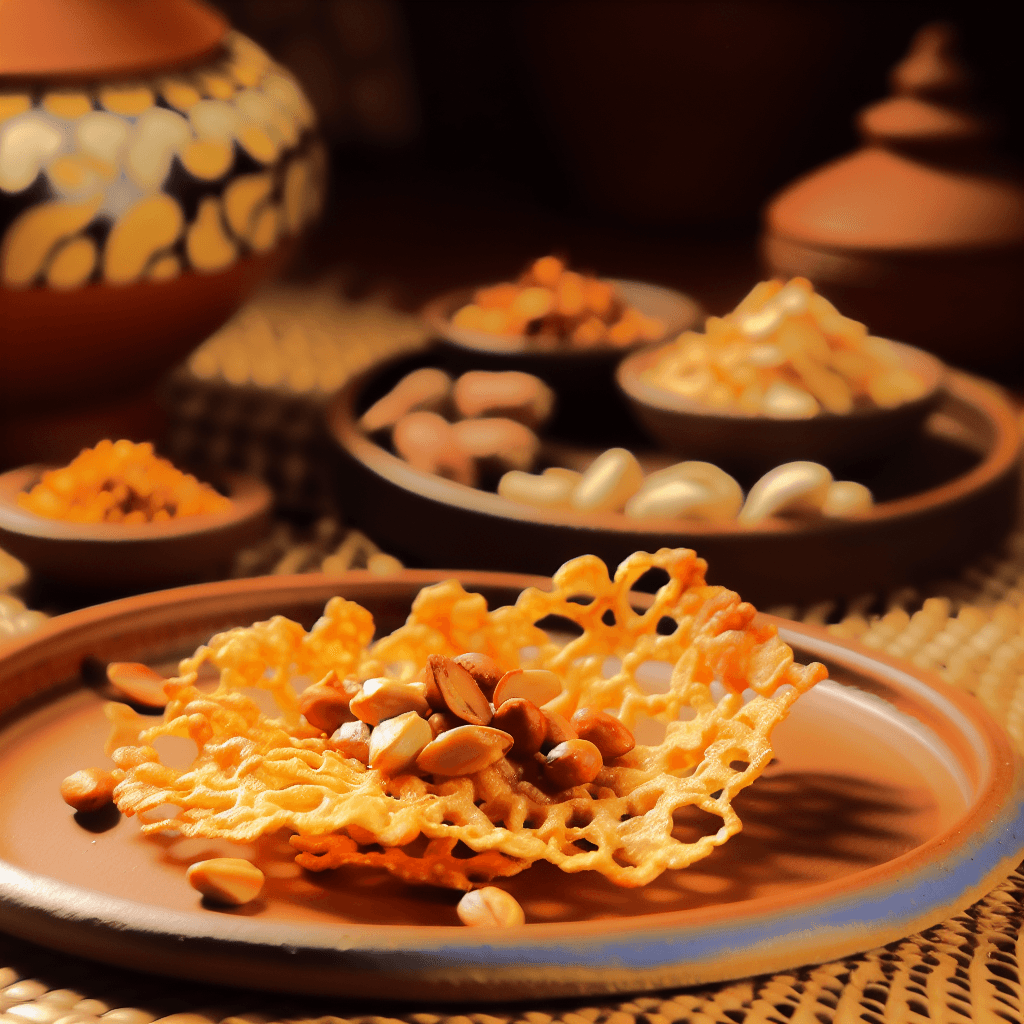
Rempeyek
Indonesian peanut brittle wafers — thin, crispy, addictive.
About This Recipe
Rempeyek (also spelled peyek) are Indonesia's lacy, shattering-crisp peanut wafers — a thin batter of rice flour, coconut milk, garlic, and turmeric is ladled down the side of a hot wok, studded with roasted peanuts, and fried until golden and brittle. The genius is in the technique: pouring the batter against the sloped wall of the wok lets it spread paper-thin before sliding into the oil, creating the signature delicate, web-like texture. Eaten as a cracker alongside gado-gado, pecel, or plain rice, or simply snacked on by the handful, rempeyek delivers savory garlic, earthy turmeric, and toasty peanut crunch in every bite. They keep for days, which is why they're a favorite gift and Lebaran pantry staple.
Ingredients
Serves 12
- 1 cupall-purpose flour
- 1/2 cupcoconut milk
- 1/2 cupwater
- 2 clovesgarlic, minced
- 1/2 tspturmeric
- 1/4 tspchili flakes
- 1 tspsalt
- 1 tspsugar
- 1 cuproasted peanuts
- oil for frying
Instructions
- 1
Make batter
Whisk the flour, coconut milk, water, garlic, turmeric, chili flakes, salt, and sugar until completely smooth and lump-free. The batter should be noticeably thin — closer to heavy cream than pancake batter — so it spreads into a delicate, lacy disc when it hits the oil.
Let the batter rest 10 minutes, then check the consistency again; flour absorbs liquid as it sits, so you may need an extra splash of water.
- 2
Fry
Heat 4–5cm of oil in a wok to about 170°C. Ladle a small amount of batter and pour it slowly down the sloped side of the wok just above the oil line — it will spread thin against the hot metal, then release and slide into the oil as it sets.
This wall-pouring technique is what creates rempeyek's signature lacy thinness; pouring batter directly into the oil makes thick, doughy fritters instead.
- 3
Add peanuts
While the surface is still wet and bubbling, scatter a spoonful of roasted peanuts over the wafer so they embed in the batter. Once the edges turn golden and release from the wok, flip gently with a spatula and fry another 1–2 minutes until evenly golden and rigid.
- 4
Drain
Lift each rempeyek out with a spider strainer, holding it briefly over the wok to shed excess oil, then drain flat on paper towels. Don't stack them while hot. They will continue to crisp and harden as they cool to room temperature.
Did you make this?
Rate it and help other cooks find the recipes that actually work.
One tap to sign in, and we'll save the rating you just picked.
Everything you need to plan your week — free
- Meal calendar
- Grocery list
- AI recipe ideas
Track what you eat
Snap your meal to log calories and macros, run fasting timers and track water in the free SnapCal app.
Pro Tips
- →
Keep the batter thin and the oil steady at 170°C — these two factors determine whether rempeyek shatters or chews.
- →
Stir the batter before every ladleful; the flour and spices settle quickly and uneven batter fries unevenly.
- →
Substituting half the flour with rice flour produces an even lighter, glassier crunch, as many Javanese cooks do.
- →
Fry in small batches so the oil temperature doesn't drop — crowded oil makes greasy, limp wafers.
- →
Cool completely before storing; trapped steam in a warm container will soften every wafer in the batch.
Variations
- •
Rempeyek teri: swap the peanuts for tiny dried anchovies, a hugely popular savory version across Java.
- •
Use raw green soybeans (peyek kedelai) or sliced almonds for a different nutty profile.
- •
Stir thinly sliced kaffir lime leaves into the batter for a fragrant, citrusy lift that's classic in Yogyakarta.
- •
Add a teaspoon of ground coriander and candlenut to the batter for a deeper, more traditional spice base.
Storage
Store fully cooled rempeyek in an airtight container at room temperature for up to 1 week. If they soften from humidity, re-crisp them in a 150°C oven for 5 minutes and cool before serving.
History & Origin
Rempeyek originates from Javanese cuisine, where records and oral tradition place it as a staple accompaniment for centuries, particularly around Yogyakarta and Central Java. Traditionally it served as a protein-rich cracker eaten alongside vegetable dishes like pecel, and it remains a standard gift item and festive snack during Lebaran. Today countless regional versions exist, topped with anchovies, shrimp, or soybeans instead of peanuts.
Frequently Asked Questions
Why aren't my rempeyek crispy?
Two usual culprits: batter that's too thick, or oil that's too cool. The batter must be thin enough to spread into a lacy sheet, and the oil needs to hold around 170°C so the wafer dehydrates quickly rather than absorbing grease. Thin the batter with water a tablespoon at a time, and wait for the oil to recover heat between batches.
Do I have to pour the batter down the side of the wok?
It's the traditional technique and genuinely the best one — the hot sloped metal stretches the batter paper-thin before it slides into the oil. If you only have a flat pan, pour the batter from high up in a thin stream into the oil and tilt the pan to spread it, but expect slightly thicker, less lacy results.
Can I use raw peanuts instead of roasted?
Yes, and many Indonesian cooks do — raw skin-on peanuts, halved or roughly chopped, will roast right in the frying oil and turn deeply nutty. Just slice them thin or halve them so they cook through in the short frying time; whole raw peanuts can stay slightly raw-tasting inside while the wafer is already golden.
What do you eat rempeyek with?
Rempeyek works as both a snack and a utensil of sorts. It's classically served alongside pecel or gado-gado (vegetable salads with peanut sauce), nasi tumpeng celebration rice, or simple rice-and-sambal meals, where its crunch contrasts soft, saucy dishes. On its own with tea or coffee, it's an everyday Indonesian afternoon snack.
Nutrition Facts
Per serving (60g / 2.1 oz) · 12 servings total
Time Summary
Have Questions?
Ask our AI cooking assistant anything about this recipe — substitutions, techniques, scaling.
Chat with AI Chef →Featured in Guides
This recipe is featured in the following curated guides:
More Indonesian Recipes
You Might Also Like
Similar dishes from other cuisines around the world.
Browse by Ingredient
More recipes built around the same core ingredients.
Free Kitchen Tools
Calculators and converters that pair with this page — no signup needed.
Put This Into a Plan
Schedule it, shop for it, and track what you already have.
Read Next
Longer reads that go deeper on the ideas behind this dish.
Community
Join the conversation
Sign in to leave a comment and save your favourite recipes