
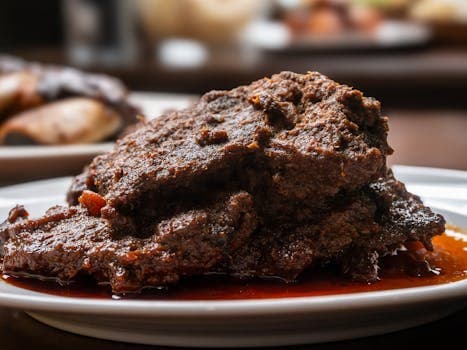
Rendang
Indonesian spiced meat cooked in coconut milk — rich, deeply spiced, legendary.
About This Recipe
Rendang is the crowning dish of the Minangkabau people of West Sumatra — beef simmered for hours in coconut milk and a pounded paste of shallots, garlic, ginger, galangal, chilies, and turmeric, until the liquid evaporates, the coconut oil splits out, and the meat fries gently in its own sauce. That final stage is what separates true rendang from an ordinary curry: the sauce darkens from golden to deep mahogany and clings to every fiber of fork-tender beef. Born of necessity — the slow cooking and low moisture preserved meat for days in the tropical heat — rendang became ceremonial food, served at Minang weddings, Eid celebrations, and adat rituals. Patience is the only difficult ingredient.
Ingredients
Serves 6
- 1 kgbeef chuck, cubed
- 2 canscoconut milk (400ml each)
- 6shallots
- 6 clovesgarlic
- 3 tbspfresh ginger
- 2 tbspgalangal
- 3red chilies
- 1 tbspturmeric
- 2 stalkslemongrass, bruised
- 3 leavesbay leaves
- 2 tspsalt
- 1 tbspbrown sugar
Instructions
- 1
Make spice paste
Blend or pound the shallots, garlic, ginger, galangal, chilies, and turmeric into a completely smooth paste, adding a tablespoon of water or oil if needed. A fine paste is critical — coarse bits will scorch during the long reduction instead of melting into the sauce.
- 2
Cook beef
Heat oil in a wide, heavy pot and fry the spice paste over medium heat for 3–5 minutes, stirring constantly, until it darkens slightly and smells cooked rather than raw. Add the beef cubes and turn them through the paste until coated and lightly seared on all sides.
Use the widest pot you own — more surface area means faster, more even evaporation later.
- 3
Add coconut milk
Pour in both cans of coconut milk, tuck in the bruised lemongrass and bay leaves, and bring everything just to a boil. The liquid should comfortably cover the meat; if not, top up with a little water.
- 4
Simmer long
Drop the heat to the lowest setting and simmer uncovered for 90 minutes or more, stirring every 10–15 minutes and scraping the bottom as the sauce thickens. Watch the transformation: the liquid reduces, the oil separates, and the sauce begins to fry the meat rather than boil it.
The end stage needs near-constant stirring — once the oil splits out, the sauce can scorch in a minute of inattention.
- 5
Finish
Season with salt and sugar and continue cooking until the sauce is thick, dark brown, and clinging to the meat with pools of red-tinged oil at the edges. The beef should yield to a fork but still hold its cube shape. Rest 15 minutes before serving — rendang improves as it sits.
Did you make this?
Rate it and help other cooks find the recipes that actually work.
One tap to sign in, and we'll save the rating you just picked.
Everything you need to plan your week — free
- Meal calendar
- Grocery list
- AI recipe ideas
Track what you eat
Snap your meal to log calories and macros, run fasting timers and track water in the free SnapCal app.
Pro Tips
- →
Use chuck, shin, or another well-marbled braising cut — lean meat turns dry and stringy over the long cook.
- →
Never cover the pot; evaporation is the whole technique.
- →
Stir more frequently as the sauce thickens — the last 20 minutes is when rendang scorches.
- →
Made a day ahead, rendang tastes noticeably better; the spices keep penetrating the meat overnight.
- →
Toasted grated coconut (kerisik) stirred in near the end adds the traditional nutty depth and helps thicken the sauce.
Variations
- •
Rendang ayam: use bone-in chicken pieces and cut the simmer to about 50 minutes.
- •
Kalio: stop cooking at the golden, still-saucy stage — this 'wet rendang' is a legitimate dish in its own right.
- •
Rendang jengkol or mushroom: vegetarian versions using jengkol beans or king oyster mushrooms are common in Sumatra.
- •
Add whole boiled eggs or chunks of potato in the last 30 minutes to stretch the dish.
Storage
Rendang keeps 5 days refrigerated and up to 3 months frozen, and many argue it peaks on day two or three. Traditionally, fully dried rendang kept for weeks at room temperature — but refrigerate yours.
History & Origin
Rendang originates with the Minangkabau people of West Sumatra, where it is ceremonial food tied to weddings and adat (customary) rites; written references go back to the early 16th century. The slow water-evaporation technique developed as preservation, letting Minang traders carry meat on long journeys across the highlands. In 2011 and again in 2017, CNN readers voted rendang the world's most delicious food, cementing its global reputation.
Frequently Asked Questions
Why is my rendang soupy?
It simply isn't finished. Real rendang requires the coconut milk to reduce until the oil separates and the sauce fries the meat — often 2.5 to 4 hours total. Keep simmering uncovered on low heat, stirring more often as it thickens. If it's golden and saucy, you've made kalio — delicious, but keep going for true rendang.
Can I make rendang in a slow cooker or pressure cooker?
Partially. A pressure cooker tenderizes the beef in 35–40 minutes, but you must still finish uncovered on the stove to reduce the sauce — the dry-frying stage is what makes rendang. A slow cooker never gets hot enough to evaporate properly, so plan on a stovetop finish either way.
What is kerisik and do I need it?
Kerisik is grated coconut toasted slowly until deep brown, then pounded to an oily paste. Stirred in near the end, it thickens the sauce and adds a roasted nuttiness central to Sumatran and Malaysian rendang. It's optional in a home version, but worth making: toast 1 cup of desiccated coconut in a dry pan and grind it.
How spicy should rendang be?
Authentic Minang rendang uses far more chili than this recipe — often 20-plus dried red chilies — but the long cooking mellows the heat into warmth rather than sharpness. Adjust to taste: deseed the chilies for mild, or add 1–2 tablespoons of ground dried chili for something closer to Padang restaurant intensity.
Nutrition Facts
Per serving (400g / 14.1 oz) · 6 servings total
Time Summary
Have Questions?
Ask our AI cooking assistant anything about this recipe — substitutions, techniques, scaling.
Chat with AI Chef →Featured in Guides
This recipe is featured in the following curated guides:
More Indonesian Recipes
You Might Also Like
Similar dishes from other cuisines around the world.
Browse by Ingredient
More recipes built around the same core ingredients.
Free Kitchen Tools
Calculators and converters that pair with this page — no signup needed.
Put This Into a Plan
Schedule it, shop for it, and track what you already have.
Read Next
Longer reads that go deeper on the ideas behind this dish.
Community
Join the conversation
Sign in to leave a comment and save your favourite recipes