
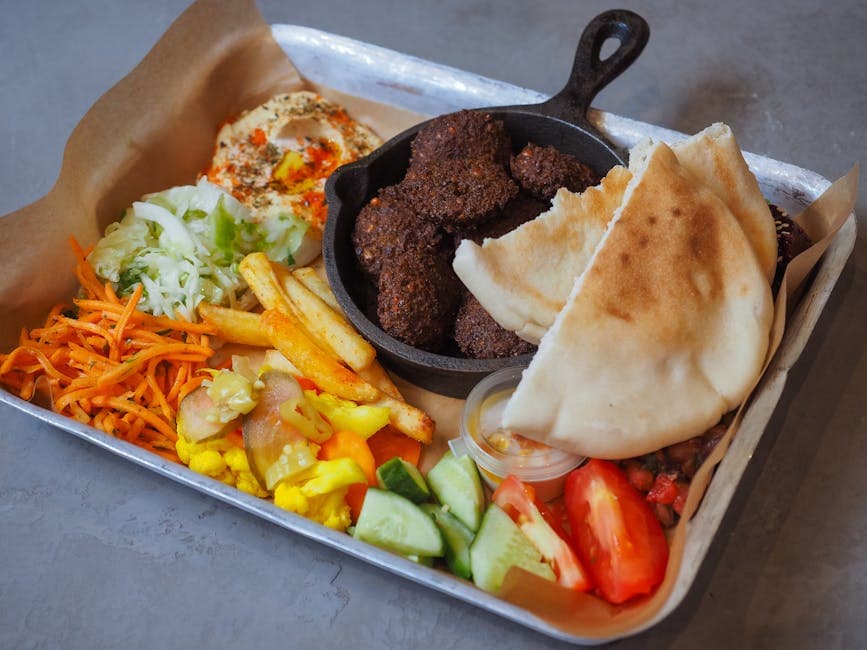
Sabich (Israeli Fried Aubergine Pita)
Tel Aviv's greatest street food — warm pita stuffed with fried aubergine slices, hard-boiled egg, Israeli salad, tahini, amba mango sauce and zhug. An Iraqi-Jewish breakfast eaten all day.
About This Recipe
Sabich is one of the great street foods of Israel and a deep window into Iraqi-Jewish cuisine. It was created by Iraqi Jewish immigrants who settled around Givataim and Ramat Gan in the 1940s and 50s, and was originally eaten on Shabbat morning (when cooking was forbidden) using pre-cooked aubergine and hard-boiled eggs. The combination of fried aubergine, egg, amba (a pungent Iraqi-Jewish pickled mango sauce) and tahini is uniquely Israeli — no other cuisine in the world has this particular combination. The amba sauce is the defining element: a fermented, intensely flavoured condiment that smells almost alarming but transforms everything it touches.
Ingredients
Serves 4
- 2large aubergines(sliced into 1cm rounds)
- 4pita breads(warm)
- 4eggs(hard-boiled, sliced)
- 150 mltahini(thinned with water and lemon to pouring consistency)
- 4 tbspamba (mango pickle sauce)(from Middle Eastern grocery stores)
- vegetable oilfor frying
- 2tomatoes(diced small (Israeli salad))
- 1cucumber(diced small (Israeli salad))
- 0.5onion(diced small (Israeli salad))
- 2 tbspfresh parsley(chopped (Israeli salad))
- 1 tbsplemon juice
- 1 tspsalt
- 2 tbspzhug (green chilli sauce)(to serve — optional)
Instructions
- 1
Salt and fry aubergine
Salt aubergine slices on both sides, rest 15 min, pat dry. Heat 1cm vegetable oil in a frying pan over medium-high heat. Fry slices in batches 3 min per side until deep golden-brown. Drain on paper towels.
- 2
Make Israeli salad
Combine diced tomato, cucumber, onion and parsley. Dress with lemon juice, salt and a drizzle of olive oil.
- 3
Make tahini sauce
Whisk tahini with water (3–4 tbsp), lemon juice and a pinch of salt until smooth and pourable — like double cream consistency.
- 4
Assemble
Open each warm pita into a pocket. Layer in: 2–3 slices fried aubergine, sliced hard-boiled egg, Israeli salad, a generous spoonful of tahini, and a spoonful of amba sauce.
Amba sauce is non-negotiable — it is the defining flavour of sabich. If unavailable, use a mixture of mango chutney and a little white wine vinegar as an imperfect substitute.
- 5
Finish
Add zhug (green chilli sauce) if desired. Eat immediately while the aubergine is warm.
Did you make this?
Rate it and help other cooks find the recipes that actually work.
One tap to sign in, and we'll save the rating you just picked.
Everything you need to plan your week — free
- Meal calendar
- Grocery list
- AI recipe ideas
Track what you eat
Snap your meal to log calories and macros, run fasting timers and track water in the free SnapCal app.
Pro Tips
- →
Salting the aubergine draws out bitterness and excess moisture — this step significantly improves the frying result.
- →
The aubergine must be properly fried (dark golden, soft all the way through) — undercooked aubergine is spongy and bitter.
- →
Taste and adjust salt at the very end — flavors concentrate as liquids reduce, and a final pinch of flaky salt sharpens the whole dish.
- →
Mise en place pays for itself: chop, measure and pre-mix everything before the heat goes on, especially for any step that moves fast.
Variations
- •
Vegan: omit the egg — the aubergine, tahini and amba are complete without it
- •
Add pickled cabbage or turnip (the Israeli street food standard)
- •
Potato version: add fried potato slices alongside the aubergine
- •
Vegetarian: swap the protein for roasted king oyster mushrooms, smoked tofu or cooked chickpeas — adjust seasoning slightly upward to compensate.
Storage
Fried aubergine keeps 2 days refrigerated — reheat in a pan. Assemble pitas fresh.
History & Origin
Sabich was created by Iraqi Jewish immigrants in Israel in the 1950s. The name derives from Sabich Halabi, an Iraqi-Jewish man who ran an early aubergine pita stall near Givataim market in the 1960s. The combination reflects Iraqi-Jewish Shabbat morning food: fried aubergine and hard-boiled eggs were prepared on Friday and eaten cold on Saturday. In Israel the dish became hot, stuffed in pita, and enriched with tahini and amba — a transformation into one of the country's great street foods.
Frequently Asked Questions
What is amba sauce and where can I buy it?
Amba is a fermented, pickled mango sauce brought to Israel by Iraqi and Yemeni Jewish immigrants. It is intensely sour, slightly funky, and deeply flavoured with fenugreek and turmeric. It is sold in bottles at Middle Eastern grocery stores, Israeli food shops and online. There is no perfect substitute — the combination of fermented mango, fenugreek and turmeric is unique — but a mixture of mango chutney, a little apple cider vinegar and a pinch of fenugreek approximates it.
Can I make this ahead of time?
Yes — most of the components can be prepared up to a day in advance and refrigerated separately. Reheat gently and assemble just before serving so textures stay distinct.
What can I substitute if I don't have all the ingredients?
Stay close to the role each ingredient plays: swap aromatics for similar ones (shallot for onion, lime for lemon), and keep the fat-acid-salt balance intact. Spice blends can usually be approximated with what's in the cupboard.
How do I know it's authentic?
Authenticity sits on a spectrum — what matters more is honoring the technique and balance of flavors. If the dish tastes harmonious and respects how cooks in its home region would build it, you're on solid ground.
Nutrition Facts
Per serving · 4 servings total
Time Summary
Have Questions?
Ask our AI cooking assistant anything about this recipe — substitutions, techniques, scaling.
Chat with AI Chef →More Israeli Recipes
You Might Also Like
Similar dishes from other cuisines around the world.
Browse by Ingredient
More recipes built around the same core ingredients.
Free Kitchen Tools
Calculators and converters that pair with this page — no signup needed.
Put This Into a Plan
Schedule it, shop for it, and track what you already have.
Read Next
Longer reads that go deeper on the ideas behind this dish.
Community
Join the conversation
Sign in to leave a comment and save your favourite recipes