
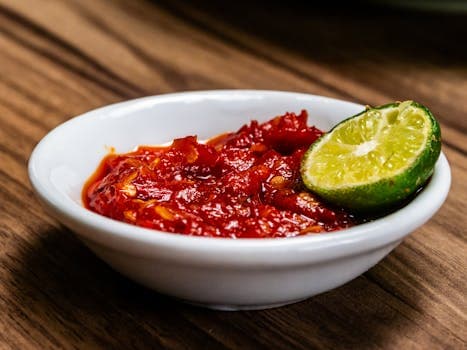
Sambal Oelek
Indonesian red chili paste — heat in its purest, simplest form.
About This Recipe
Sambal Oelek is the foundational chili paste of Indonesian cooking — fresh red chilies ground with salt and a little garlic into a coarse, fiery, vividly fresh condiment. The name comes from the ulekan, the flat stone mortar and wooden-handled pestle found in every Indonesian kitchen; 'oelek' is simply the old Dutch spelling of ulek, to grind. Where Indonesia's hundreds of other sambals layer in shrimp paste, tomatoes, lime leaves, or palm sugar, sambal oelek strips the idea to its essence: pure chili heat and brightness. It works both as a table condiment and as the raw chili base for stir-fries, marinades, and other sambals. Five minutes of grinding, weeks of better food.
Ingredients
Serves 8
- 200 gred chilies, roughly chopped
- 2 clovesgarlic
- 1 tspsalt
Instructions
- 1
Grind
Stem the chilies (deseed some if you want a gentler paste) and grind them with the garlic and salt in a mortar and pestle, working in a circular crushing motion until you have a coarse, juicy paste with visible flecks of skin and seed. In a food processor, pulse in short bursts — a purée is wrong; texture is the point.
Wear gloves and avoid touching your face; capsaicin lingers on skin for hours even after washing.
- 2
Store
Spoon the sambal into a clean, dry glass jar, press the surface flat, and top with a thin film of oil or a squeeze of lime to slow oxidation. Seal and refrigerate; the flavor settles and rounds out after a few hours.
Always use a clean, dry spoon when serving — introduced moisture and crumbs are what spoil fresh sambal early.
Did you make this?
Rate it and help other cooks find the recipes that actually work.
One tap to sign in, and we'll save the rating you just picked.
Everything you need to plan your week — free
- Meal calendar
- Grocery list
- AI recipe ideas
Track what you eat
Snap your meal to log calories and macros, run fasting timers and track water in the free SnapCal app.
Pro Tips
- →
Wear gloves when stemming and grinding chilies — capsaicin clings to skin for hours.
- →
Mix chili types for balance: red bird's eye (cabe rawit) for heat, larger red Holland or Fresno chilies for body and color.
- →
Keep the texture coarse; a smooth purée loses the rustic character that defines sambal oelek.
- →
A teaspoon of vinegar or lime juice extends shelf life and brightens the flavor.
- →
Salt is your preservative as well as seasoning — don't reduce it below the recipe amount if you plan to keep the jar a week.
Variations
- •
Add a splash of white vinegar for the tangier, jarred-style sambal familiar from supermarket shelves.
- •
Sambal bawang: fry the finished paste in hot oil with extra garlic and shallots for a mellow, cooked sambal.
- •
Add a teaspoon of toasted shrimp paste (terasi) to move it toward sambal terasi territory.
- •
Stir in palm sugar and lime for a sweet-hot dipping sambal for fried snacks.
Storage
Refrigerate in a sealed glass jar with a film of oil on top for up to 1 week, using only clean, dry spoons. For longer keeping, freeze in ice-cube trays — the cubes drop straight into stir-fries for months.
History & Origin
Sambal predates European contact in spirit — Indonesians ground pungent pastes long before chilies existed locally — but the chili itself arrived with Portuguese and Spanish traders from the Americas in the 16th century and conquered the archipelago's palate. The 'oelek' spelling is a relic of Dutch colonial orthography for ulek, the grinding motion of the stone mortar. Indonesia today counts well over 200 documented regional sambal varieties.
Frequently Asked Questions
How long does homemade sambal oelek keep?
Raw sambal keeps 5–7 days refrigerated in a clean sealed jar — the salt and capsaicin both inhibit spoilage, and adding vinegar or a film of oil on top stretches it further. For long-term storage, freeze it in ice-cube portions; the flavor survives freezing almost perfectly for 3 months.
Is this the same as the Huy Fong sambal oelek in stores?
Close but not identical. The jarred American version is chilies, vinegar, and salt — shelf-stable and noticeably tangy. The fresh Indonesian original is brighter, hotter, and less acidic. Use them interchangeably in cooking, but the homemade version is clearly superior as a table condiment.
Which chilies should I use?
Traditional sambal oelek uses red cabe rawit (bird's eye chilies), sometimes blended with larger, milder red chilies for volume. Outside Indonesia, a mix of red Fresno or Holland chilies with a handful of bird's eye gives the right balance of color, body, and serious heat. Avoid green chilies — the color and flavor profile change entirely.
Nutrition Facts
Per serving (20g / 0.7 oz) · 8 servings total
Time Summary
Have Questions?
Ask our AI cooking assistant anything about this recipe — substitutions, techniques, scaling.
Chat with AI Chef →More Indonesian Recipes
You Might Also Like
Similar dishes from other cuisines around the world.
Browse by Ingredient
More recipes built around the same core ingredients.
Free Kitchen Tools
Calculators and converters that pair with this page — no signup needed.
Put This Into a Plan
Schedule it, shop for it, and track what you already have.
Read Next
Longer reads that go deeper on the ideas behind this dish.
Community
Join the conversation
Sign in to leave a comment and save your favourite recipes