
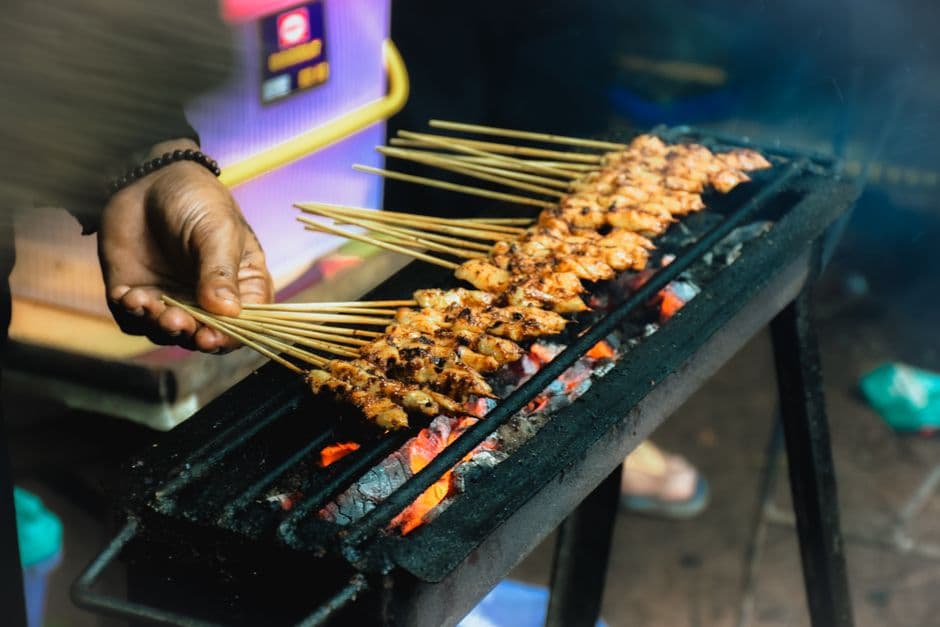
Sate Ayam Madura (Indonesian Madurese Chicken Satay)
Bite-sized chicken skewers grilled over coconut charcoal and bathed in a sweet kecap-peanut sauce — Indonesia's most famous street food, Madura style.
About This Recipe
Sate ayam Madura is the most beloved variant of Indonesia's national street food, named after the small island of Madura off East Java where the dish was perfected by Madurese hawkers who later spread it across the archipelago. What distinguishes Madurese satay from other regional styles (Padang, Bali, Solo) is the sauce — a thick, sweet, peanut-and-kecap-manis (sweet soy) dressing thinned with hot water, scented with kaffir lime leaf, palm sugar and a kiss of chile. The chicken itself is cut into tiny dice, threaded onto thin bamboo skewers, marinated only briefly in kecap and shallot, then grilled over coconut-husk charcoal which gives a distinctive smoky-sweet aroma you can smell from blocks away. The skewers are basted as they cook and served piled on a plate with extra peanut sauce, a wedge of lontong (compressed rice cake), slivered shallot, fried shallots, kerupuk crackers and a pinch of fresh chile. Eaten with the hands or a fork-and-spoon, Madurese satay is the smell of an Indonesian evening — vendors fan their grills with rattan fans at dusk, the smoke and the sweet aroma drift down the alleyways, and the whole country queues at the cart.
Ingredients
Serves 4
- 600 gboneless chicken thigh, cut into 1.5 cm cubes
- 4 tbspkecap manis (Indonesian sweet soy sauce), divided
- 3shallots, finely minced
- 3garlic cloves, minced
- 1 tbsptamarind paste mixed with 2 tbsp warm water
- 20 shortbamboo skewers, soaked 30 minutes
- 200 graw peanuts (skin on)
- 3red chiles (cabai merah), 2 deseeded plus 1 whole bird chile for heat
- 5shallots and 3 garlic cloves (for sauce)
- 2 tbsppalm sugar (gula jawa), shaved
- 3kaffir lime leaves, torn
- salt and tamarind water to taste
- to serve: lontong or steamed rice, fried shallots, kerupuk, sliced shallot
Instructions
- 1
Marinate the chicken
Combine the chicken with 2 tbsp kecap manis, the minced shallots, garlic, tamarind water and a pinch of salt. Massage well and rest 30 minutes (or up to 4 hours refrigerated). The marinade is light — kecap is the flavor, not a heavy spice rub.
- 2
Toast the peanuts for the sauce
Dry-roast peanuts in a heavy skillet over medium heat 8–10 minutes, tossing constantly, until the skins darken and the nuts smell intensely roasted. Cool 5 minutes, then rub between palms or in a kitchen towel to remove the loose skins (some skin left is fine and traditional).
- 3
Make the peanut sauce
In a mortar or blender, pound the chiles, shallots and garlic to a coarse paste. Heat 2 tbsp oil in a small pan and fry the paste 4 minutes over medium until fragrant. Add the peanuts (ground to a coarse meal in a food processor), palm sugar, kaffir lime leaves and 300 ml hot water. Simmer 6–8 minutes until thick and glossy. Adjust with kecap, tamarind water and salt — the sauce should be sweet, nutty, slightly sour and faintly hot.
For ultra-authentic texture, use a granite mortar (cobek) and pound the peanuts by hand — the rough texture clings better to the satay.
- 4
Skewer the chicken
Thread 4–5 chicken cubes tightly together on the top half of each soaked skewer. The cubes should touch each other (not spaced) — this protects the interior from overcooking and gives the dish its dense, juicy bite.
- 5
Light the grill
Light coconut-husk charcoal if you can find it (Asian groceries sell it as 'arang batok kelapa') — it burns hotter and sweeter than regular charcoal. Otherwise use lump hardwood. Let it ash over completely before grilling. Have a small bowl of kecap manis thinned with a splash of water and a basting brush ready.
- 6
Grill and baste
Place skewers over direct hot charcoal. Grill 2 minutes per side, then brush with the thinned kecap mixture and grill another minute per side. Repeat the baste and turn once more — total grilling time about 6–7 minutes for properly caramelized exteriors and juicy interiors (internal 72°C / 162°F).
- 7
Plate and serve
Arrange 5 skewers per serving on a plate, ladle peanut sauce generously over the top, and finish with fried shallots, sliced raw shallot, a wedge of lime and a pinch of fresh sliced chile. Serve with lontong or steamed rice and a small mound of kerupuk crackers.
Did you make this?
Rate it and help other cooks find the recipes that actually work.
One tap to sign in, and we'll save the rating you just picked.
Everything you need to plan your week — free
- Meal calendar
- Grocery list
- AI recipe ideas
Track what you eat
Snap your meal to log calories and macros, run fasting timers and track water in the free SnapCal app.
Pro Tips
- →
Kecap manis is non-negotiable — Indonesian sweet soy sauce (ABC or Bango brands) has a thick syrupy quality that ordinary soy cannot replicate. No substitute makes proper satay.
- →
Cut the chicken small — 1.5 cm cubes are the Madurese standard. Larger cubes won't get the surface-area-to-meat ratio that defines the dish.
- →
Coconut-husk charcoal really does taste different — sweeter and more aromatic. Worth ordering online from Indonesian or Thai grocers.
- →
Don't drown the satay in sauce at the table — the chicken should shine through. Ladle just enough to coat, with extra in a small bowl for dipping.
Variations
- •
Sate kambing (lamb satay) — replace chicken with leg of lamb cubes, marinate slightly longer.
- •
Sate Padang — skip the peanut sauce entirely and serve with a yellow turmeric-rice flour gravy.
- •
Vegetarian — substitute firm tofu and tempeh cubes, marinated 1 hour for flavor penetration.
- •
Sate lilit Bali — minced chicken seasoned with Balinese base genep and wrapped around lemongrass stalks instead of bamboo.
Storage
Refrigerate cooked satay up to 2 days; reheat over a grill or under a broiler 90 seconds, never microwave (rubberizes the meat). Peanut sauce keeps refrigerated 5 days; thin with hot water when reheating as it thickens dramatically when cold. Both freeze 1 month but texture suffers.
History & Origin
Satay traces to Arab traders who introduced kebab techniques to the Indonesian archipelago in the 18th and 19th centuries, where local cooks adapted it with native peanuts, kecap manis and tropical aromatics. Madurese hawkers from East Java perfected the chicken version in the early 20th century, and as they migrated across Indonesia they spread the dish to every major city, making sate ayam Madura the most widespread style of the national dish.
Frequently Asked Questions
Can I make peanut sauce in a blender?
Yes — pulse roasted peanuts to a coarse meal, then proceed as written. Don't blend to smooth peanut butter; the sauce should have texture.
What if I can't find kecap manis?
Mix 3 parts dark soy sauce with 1 part molasses or palm sugar — heat gently to dissolve. It's not the same but acceptable. ABC and Bango brands are sold online worldwide.
Why are my skewers burning?
Either your charcoal is too hot, you forgot to soak the skewers, or you're grilling too close to the flame. Position the grate 10 cm above ashed-over charcoal, and pre-soak skewers 30 minutes.
Can I use chicken breast?
Thigh has more fat and stays juicy on a hot grill; breast turns dry in 90 seconds at this heat. If you must use breast, cut larger cubes and reduce grilling time.
Nutrition Facts
Per serving (380g / 13.4 oz) · 4 servings total
Time Summary
Have Questions?
Ask our AI cooking assistant anything about this recipe — substitutions, techniques, scaling.
Chat with AI Chef →Featured in Guides
This recipe is featured in the following curated guides:
More Indonesian Recipes
You Might Also Like
Similar dishes from other cuisines around the world.
Browse by Ingredient
More recipes built around the same core ingredients.
Free Kitchen Tools
Calculators and converters that pair with this page — no signup needed.
Put This Into a Plan
Schedule it, shop for it, and track what you already have.
Read Next
Longer reads that go deeper on the ideas behind this dish.
Community
Join the conversation
Sign in to leave a comment and save your favourite recipes