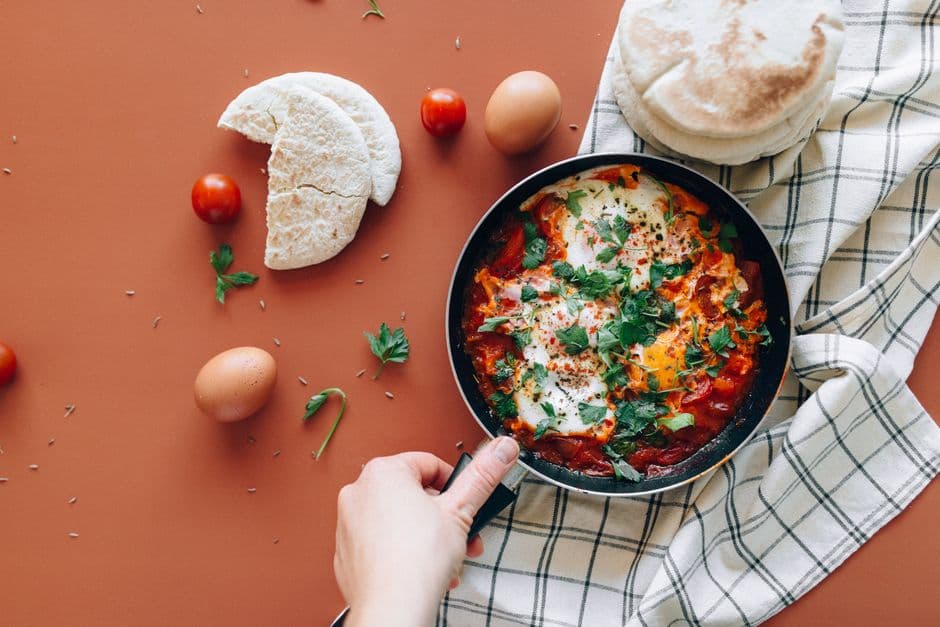
Israel's adopted morning classic — eggs poached in a spiced tomato and pepper sauce, finished with feta and herbs, served bubbling in the pan with challah or pita.
Shakshuka as prepared in Israel reflects the country's rich mosaic of culinary influences — brought by Mizrahi Jewish immigrants from North Africa and Yemen and now deeply embedded in Israeli food culture. The Israeli version tends to be milder and sweeter than its Tunisian parent, using sweet paprika and less harissa, often topped with feta cheese. It has spread from Israel to become one of the most fashionable brunch dishes globally.
Serves 2
Heat olive oil in a skillet. Cook onion and pepper over medium heat 6–8 minutes until soft.
Add garlic, paprika, cumin, and chili flakes. Cook 1 minute until fragrant.
Add crushed tomatoes and salt. Simmer 10 minutes until sauce thickens slightly.
Make 4 wells in the sauce. Crack an egg into each well. Cover and cook 5–6 minutes until whites are just set.
Crumble feta over the top. Scatter herbs. Serve directly from the pan with bread.
Don't overcook the eggs — the residual heat will continue cooking after you remove from the heat
Taste and adjust salt at the very end — flavors concentrate as liquids reduce, and a final pinch of flaky salt sharpens the whole dish.
Mise en place pays for itself: chop, measure and pre-mix everything before the heat goes on, especially for any step that moves fast.
Read the recipe through once before starting — knowing what's coming prevents the small timing mistakes that compound into bigger ones.
Add lamb or merguez sausage
Stir in tahini before serving
Use green tomatoes for a tangy version
Vegetarian: swap the protein for roasted king oyster mushrooms, smoked tofu or cooked chickpeas — adjust seasoning slightly upward to compensate.
Sauce (without eggs) keeps 3 days. Best to cook fresh eggs each time. Reheat sauce, add eggs, cook fresh.
Shakshuka originated in North Africa and was brought to Israel by Mizrahi Jewish immigrants from Tunisia, Libya, and Yemen in the 1950s. It gradually became a staple of Israeli home cooking and café culture.
It originated in North Africa (likely Tunisia) and was popularized in Israel by Mizrahi Jewish immigrants.
Yes — most of the components can be prepared up to a day in advance and refrigerated separately. Reheat gently and assemble just before serving so textures stay distinct.
Stay close to the role each ingredient plays: swap aromatics for similar ones (shallot for onion, lime for lemon), and keep the fat-acid-salt balance intact. Spice blends can usually be approximated with what's in the cupboard.
Authenticity sits on a spectrum — what matters more is honoring the technique and balance of flavors. If the dish tastes harmonious and respects how cooks in its home region would build it, you're on solid ground.
Per serving · 2 servings total
Ask our AI cooking assistant anything about this recipe — substitutions, techniques, scaling.
Chat with AI Chef →Join the conversation
Sign in to leave a comment and save your favourite recipes