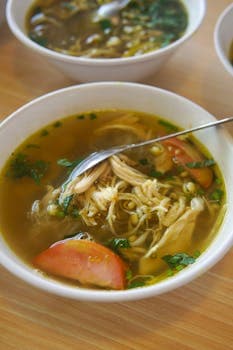
Soto Ayam is Indonesia's most iconic soup — a golden, turmeric-stained chicken broth perfumed with lemongrass, galangal, and ginger, ladled over noodles, shredded chicken, and hard-boiled egg. Nearly every region claims its own version: Soto Ayam Lamongan from East Java comes with koya (a savory powder of crushed prawn crackers and fried garlic), Soto Madura runs darker and richer, and Jakarta's Soto Betawi swaps in coconut milk. What unites them is the bumbu — a pounded paste of shallots, garlic, candlenuts, and fresh rhizomes that gets bloomed in oil before meeting the broth. The result is a soup that tastes simultaneously restorative and celebratory, brightened at the table with lime, sambal, and a shower of crispy fried shallots.
Serves 6
Pound or blend the turmeric, garlic, ginger, galangal, shallots, and candlenuts into a fine, uniform paste. Add a splash of water if your blender struggles — the paste should be smooth enough to dissolve into the broth without grit.
Toasting the candlenuts in a dry pan for 2 minutes first deepens their nutty flavor and removes their slight rawness.
Bring the water to a rolling boil in a large pot, lower in the chicken pieces, and return to a boil. Skim the gray foam diligently for the first 5 minutes — this is what keeps the finished broth clear and golden rather than cloudy.
Fry the spice paste in 2 tablespoons of oil over medium heat until fragrant and the raw shallot smell disappears, about 4 minutes, then stir it into the pot with the bruised lemongrass. Simmer gently for 30 minutes until the chicken is tender, then season with salt.
Frying the paste before adding it — rather than dumping it in raw — is the single biggest upgrade to the broth's depth.
Lift out the chicken, shred the meat off the bone, and strain the broth if you want it pristine. Divide noodles among bowls, top with shredded chicken and egg halves, ladle over the hot golden broth, and finish with fried shallots and lime wedges.
Everything you need to plan your week — free
Cook this hands-free
Get AI meal plans, step-by-step cooking mode, and your saved recipes in the free Bento app.
Fry the spice paste in oil until fragrant before adding it to the broth — raw paste tastes harsh and never fully integrates.
Use bone-in chicken pieces; the bones are what give the broth body and a silky mouthfeel.
Skim foam aggressively in the first few minutes of boiling for a clear, golden soup.
Bruise the lemongrass stalks with the back of a knife to release their oils before adding.
Serve the lime, sambal, and fried shallots at the table so each eater can adjust brightness and heat.
Soto Ayam Lamongan: top with koya, a powder of crushed prawn crackers and fried garlic.
Add boiled potato wedges and glass noodles (sohun) instead of egg noodles, Madura-style.
Soto Betawi-style: stir in 200ml coconut milk for a richer, creamier broth.
Swap chicken for beef shank and simmer longer for soto daging.
Store broth and garnishes separately in the refrigerator for up to 4 days; the broth gels when cold and re-liquefies on reheating. Cook noodles fresh per serving so they don't bloat.
Soto's roots are debated — many food historians trace it to caudo, a Chinese-influenced soup that arrived in coastal Java in the 19th century and was indigenized with local spices. Today there are dozens of regional sotos, from Lamongan to Banjar, and soto ayam is widely treated as Indonesia's unofficial national soup. Street vendors (pedagang soto) sell it from carts at all hours, often as breakfast.
Galangal is a rhizome related to ginger but with a sharper, piney, almost citrusy flavor — it's a signature note in soto. If you can't find fresh galangal, dried slices or paste from an Asian grocer work; in a pinch use extra ginger, though the soup will taste noticeably softer and less aromatic.
Macadamia nuts are the standard substitute — they share the same waxy richness that thickens and rounds out the spice paste. Raw cashews also work well. Use the same quantity, and avoid roasted salted nuts, which would throw off the seasoning. Never eat candlenuts raw in quantity; they must be cooked.
Cloudiness usually comes from boiling too hard or not skimming the foam early. Keep the pot at a gentle simmer after the initial boil, skim during the first five minutes, and strain the finished broth through a fine sieve before serving for a restaurant-clear result.
Koya is a savory topping powder from Lamongan, East Java, made by grinding fried prawn crackers (krupuk udang) with crispy fried garlic. Sprinkled over the soup, it dissolves slightly and adds umami body. It's optional but transforms the bowl — well worth the two minutes it takes.
Per serving (450g / 15.9 oz) · 6 servings total
Ask our AI cooking assistant anything about this recipe — substitutions, techniques, scaling.
Chat with AI Chef →This recipe is featured in the following curated guides:
Join the conversation
Sign in to leave a comment and save your favourite recipes
Everything you need to plan your week — free
Have feedback or need help?
We read every email and reply within 1–2 business days.
© 2026 MyCookingCalendar. All rights reserved.