
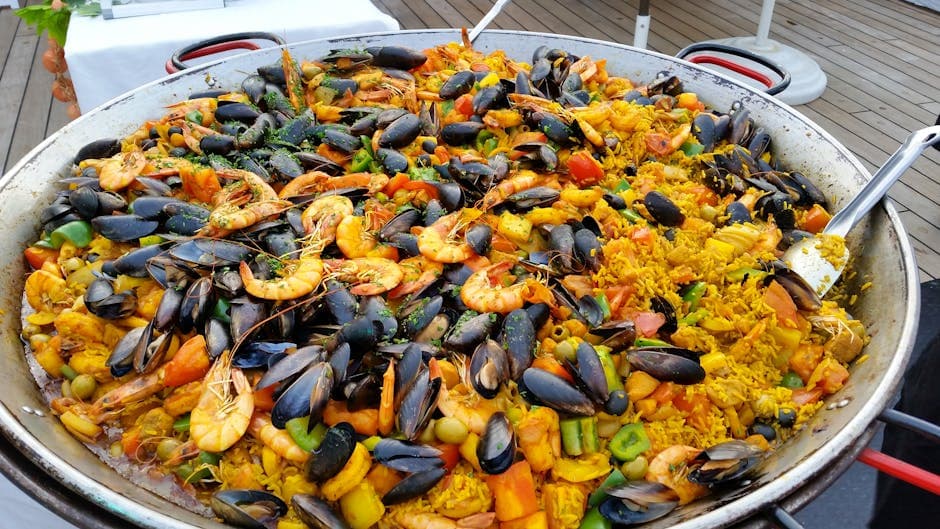
Fideuà (Catalan Seafood Noodle Paella)
Valencia and Catalonia's seafood paella made with toasted short noodles instead of rice — a smoky, briny coastal classic.
About This Recipe
Fideuà is the noodle cousin of paella — born on a Gandía fishing boat in the early 20th century when a cook named Gabriel Rodríguez Pastor ran out of rice and substituted short pasta nubs called fideos. The dish was so good it spread quickly along the Valencian and Catalan coasts, where today it competes with paella for festival pride. Short, hollow noodles (fideos #2 or fideuà-cut) are toasted in olive oil with garlic and tomato to a deep brown, then drowned in seafood broth, packed with monkfish, prawns, mussels, and squid, and cooked until the noodles stand straight on end with their tips slightly singed — a phenomenon called 'puntas tiesas' that signals the dish is done. It is served with a side of garlicky allioli that diners spoon over their portion, the cool mayonnaise melting into the hot noodles. A Mediterranean masterpiece in a paella pan.
Ingredients
Serves 4
- 400 gfideuà noodles (fideos #2) or short broken angel-hair
- 60 mlextra-virgin olive oil, divided
- 8 largeshell-on prawns or langoustines
- 300 gmonkfish or hake, cut into 3 cm chunks
- 200 gcleaned squid, sliced into rings
- 12mussels, scrubbed and debearded
- 1 mediumyellow onion, finely chopped
- 6 clovesgarlic, finely minced (4 for fideuà, 2 for allioli)
- 2 largeripe tomatoes, grated (skins discarded)
- 1 tbspsweet smoked paprika (pimentón dulce)
- 1 pinchsaffron threads, bloomed in 2 tbsp warm water
- 1.2 Lhot fish or seafood stock (shrimp shells boiled make excellent stock)
- 1.5 tspfine salt, plus more to taste
- 1 largeegg yolk (for allioli)
- 150 mlolive oil (for allioli)
- 1 tbspfresh lemon juice (for allioli)
- 1lemon, cut into wedges (for serving)
- 2 tbspfresh parsley, chopped
Instructions
- 1
Make the allioli first
Pound 2 garlic cloves with a pinch of salt in a mortar to a smooth paste. Whisk in the egg yolk, then drizzle in 150 ml olive oil drop by drop, beating constantly, until you have a thick mayonnaise. Whisk in lemon juice. Refrigerate.
- 2
Toast the noodles
Heat 2 tbsp olive oil in a wide paella pan over medium. Add the dry fideuà noodles and toast, stirring constantly, for 5–7 minutes until deeply golden-brown — the color of café con leche. Tip onto a plate.
This toasting is essential — it gives fideuà its signature nutty depth. Under-toasted noodles taste flat.
- 3
Sear the seafood
Add 2 more tbsp oil to the pan. Sear the prawns 30 seconds per side, remove. Sear the monkfish 60 seconds, remove. Sear the squid 30 seconds, remove. All seafood should be just barely cooked — they finish in the broth.
- 4
Build the sofrito
Add the remaining olive oil and the chopped onion to the pan. Sweat 6 minutes. Add the 4 minced garlic cloves, cook 60 seconds. Stir in the grated tomato and cook 8 minutes until darkened and jammy.
- 5
Bloom spices
Stir in smoked paprika and bloomed saffron with its water. Cook 30 seconds — don't let the paprika scorch or it goes bitter.
- 6
Add noodles and broth
Return the toasted noodles to the pan in an even layer. Pour the hot stock over the top until the noodles are just submerged. Add the monkfish and squid back in, distributed evenly. Bring to a hard boil.
- 7
Cook undisturbed
Lower heat to medium and let it bubble vigorously for 8 minutes WITHOUT STIRRING. Tuck the mussels (hinge down) and prawns into the noodles in the last 5 minutes.
- 8
Crisp the bottom and serve
When the broth is mostly absorbed and noodle tips begin standing up (puntas tiesas), increase heat to high for 60 seconds to crisp the bottom layer — a light socarrat. Remove from heat, scatter parsley, rest 3 minutes covered loosely with a towel. Serve in the pan with allioli and lemon wedges on the side.
Did you make this?
Rate it and help other cooks find the recipes that actually work.
One tap to sign in, and we'll save the rating you just picked.
Everything you need to plan your week — free
- Meal calendar
- Grocery list
- AI recipe ideas
Track what you eat
Snap your meal to log calories and macros, run fasting timers and track water in the free SnapCal app.
Pro Tips
- →
Fideuà-cut pasta (short, hollow nubs about 1.5 cm long) is essential — they toast properly and stand up at the end. Regular spaghetti broken short does not work the same.
- →
Toast the noodles to a real café-con-leche brown, not just golden — this is the dish's flavor backbone. Stop just before they smoke.
- →
Do NOT stir once the broth is in. Fideuà needs to develop a slight crisp bottom (socarrat), same as paella — stirring prevents this entirely.
Variations
- •
Fideuà negra: add 1 tablespoon of squid ink to the broth for a dramatic black dish.
- •
Vegetable fideuà: replace seafood with artichoke hearts, green beans, and chickpeas; use vegetable stock with a pinch of seaweed.
- •
Fideuà a banda: prepared dry-style and served separately from the seafood broth, which is sipped as the first course — old Gandía tradition.
Storage
Best eaten immediately while the noodle tips are still standing crisp. Refrigerate leftovers up to 2 days; reheat in a covered skillet with a splash of broth — never microwave, the seafood toughens.
History & Origin
Fideuà was invented around the 1910s on a fishing boat sailing out of Gandía, Valencia, when ship's cook Gabriel Rodríguez Pastor ran out of rice for the crew's paella and substituted fideos pasta. The dish was so well-received it spread along the Valencian and Catalan coasts, with the town of Gandía today hosting an annual fideuà competition. It is now considered a national dish alongside paella.
Frequently Asked Questions
What's the difference between fideuà and paella?
Fideuà uses short toasted noodles instead of rice and is from the Valencian-Catalan coast specifically. The cooking technique (paella pan, sofrito, hot broth, no stirring, socarrat at the bottom) is otherwise nearly identical.
Can I use spaghetti broken into pieces?
It works in a pinch but won't give the same texture — proper fideuà noodles are short and hollow, which lets them toast and stand up. Italian groceries sometimes sell them as 'fidelini cortos' or 'capellini'.
What is allioli and why is it served with fideuà?
Allioli is Catalan garlic mayonnaise — a smooth emulsion of garlic, egg yolk, and olive oil. It's traditionally spooned over each portion of fideuà to add a cool, garlicky richness that cuts through the seafood broth.
Nutrition Facts
Per serving (480g / 16.9 oz) · 4 servings total
Time Summary
Have Questions?
Ask our AI cooking assistant anything about this recipe — substitutions, techniques, scaling.
Chat with AI Chef →More Spanish Recipes
You Might Also Like
Similar dishes from other cuisines around the world.
Browse by Ingredient
More recipes built around the same core ingredients.
Free Kitchen Tools
Calculators and converters that pair with this page — no signup needed.
Put This Into a Plan
Schedule it, shop for it, and track what you already have.
Read Next
Longer reads that go deeper on the ideas behind this dish.
Community
Join the conversation
Sign in to leave a comment and save your favourite recipes