
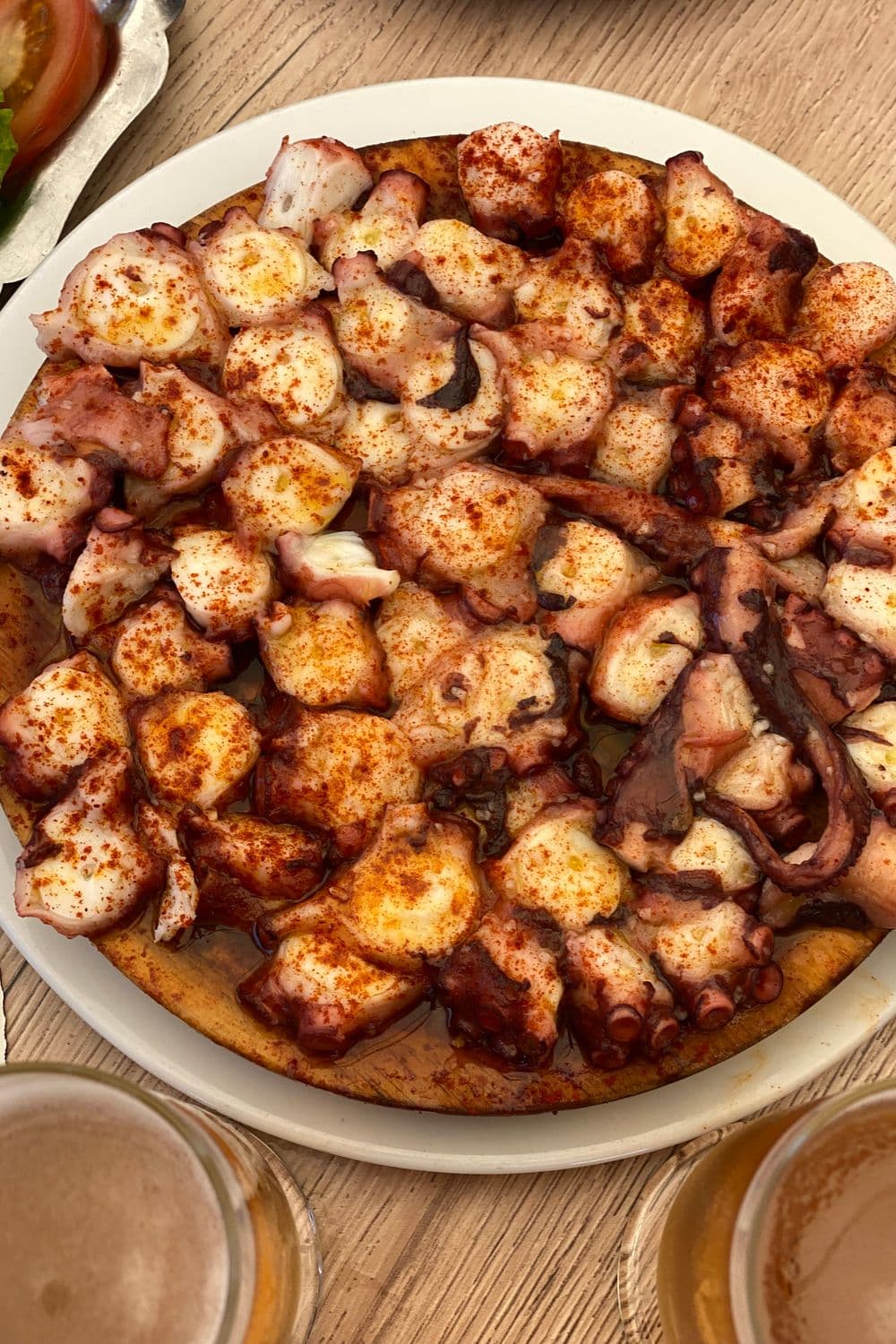
Spanish Octopus with Smoked Paprika — Andrés-Inspired
Slow-poached octopus with crushed potatoes, sweet smoked paprika and the best olive oil you can afford.
⭐Inspired by José Andrés · 🇪🇸 SpainAbout This Recipe
This dish is inspired by Chef José Andrés's lifelong championship of Spanish small-plate culture in America and his iconic Jaleo restaurants. Pulpo a la gallega — Galician-style octopus — is one of Spain's defining tapas: simple, dependent on excellent ingredients, and devastating when done well. The trick is patience: octopus must be cooked low and slow, then finished with crushed potatoes, abundant smoked paprika (pimentón) and a generous lashing of fruity Spanish olive oil. This is our take on the Galician tradition Andrés has brought to American audiences for 30+ years.
Ingredients
Serves 4
- 1.5 kgoctopus(fresh or thawed from frozen, cleaned)
- 1large onion(halved)
- 2bay leaves
- 1 tbspblack peppercorns
- 2garlic cloves(smashed)
- 600 gsmall waxy potatoes(such as Charlotte)
- 2 tspSpanish sweet smoked paprika (pimentón dulce)
- 0.5 tspSpanish hot smoked paprika (pimentón picante)(optional)
- 60 mlextra-virgin olive oil(the best you can afford)
- Maldon sea salt(to taste)
- 1lemon(wedges, to serve)
Instructions
- 1
Tenderise the octopus
If using fresh octopus, freeze it overnight first — the freeze-thaw cycle breaks down the muscle fibres and ensures tenderness. Bring a large pot of water to a rolling boil with the onion, bay leaves, peppercorns and garlic.
Galician tradition is to dip the octopus into the boiling water 3 times before fully submerging — it 'curls' the tentacles dramatically.
- 2
Poach gently
Lower the octopus into the boiling water. Reduce heat to a bare simmer (NOT a boil) and cook for 60–90 minutes depending on size — until a knife slides easily into the thickest part of a tentacle. Turn off heat and let rest in the water for 15 minutes.
- 3
Cook the potatoes
While the octopus rests, boil the potatoes whole in well-salted water for 18–20 minutes until tender. Drain and let steam dry.
- 4
Slice the octopus
Lift the octopus from the cooking water. Cut the tentacles into 1.5cm-thick slices on a slight bias, and chop the head into bite-sized pieces. Discard the beak (small hard piece in the centre).
- 5
Plate Galician-style
Slice or roughly crush the warm potatoes onto a wooden board or warm plate. Arrange the octopus slices on top. Sprinkle generously with both paprikas and Maldon salt. Drizzle abundantly with olive oil — don't be shy. Serve immediately with lemon wedges.
Did you make this?
Rate it and help other cooks find the recipes that actually work.
One tap to sign in, and we'll save the rating you just picked.
Everything you need to plan your week — free
- Meal calendar
- Grocery list
- AI recipe ideas
Cook this hands-free
Get AI meal plans, step-by-step cooking mode, and your saved recipes in the free Bento app.
Pro Tips
- →
Frozen octopus is actually preferred over fresh — the freeze-thaw cycle pre-tenderises the meat.
- →
Spanish pimentón (smoked paprika) is essential — Hungarian paprika won't give the same flavour.
- →
Use the best olive oil you have — this dish is essentially showcasing it.
Variations
- •
Pulpo a Feira: serve on a wooden board exactly as it's done in Galicia's village fairs.
- •
Grilled Variation: after poaching, brush the octopus with olive oil and char briefly on a hot grill for a smoky finish.
Storage
Best eaten immediately. Cooked octopus keeps in the cooking liquid for 2 days refrigerated and can be reheated gently.
History & Origin
Pulpo a la gallega (or pulpo a feira — 'fair-style octopus') is one of the defining dishes of Galicia in northwest Spain, traditionally cooked at village fairs in massive copper pots and served on wooden plates with rough wine. José Andrés has championed this and other regional Spanish dishes through his Jaleo restaurants since the 1990s.
Frequently Asked Questions
Why freeze fresh octopus?
The freeze-thaw cycle breaks down the muscle fibres in the octopus, tenderising the meat without long cooking. It's the secret behind tender Galician octopus and is universally used in Spanish home kitchens.
What is pimentón?
Pimentón is Spanish smoked paprika, made from peppers slowly smoked over oak wood. Its three varieties — dulce (sweet), agridulce (bittersweet) and picante (hot) — are essential to Spanish cuisine and cannot be substituted with regular paprika.
Why does Andrés insist on frozen octopus?
Octopus muscle is naturally tough; the freeze-thaw cycle ruptures cell walls and tenderises the meat without long cooking. Spanish home cooks have used this technique for decades — it's why Galician octopus is reliably tender.
What kind of wine pairs with pulpo?
Albariño from Rías Baixas (Galicia) is the textbook pairing — bright, citrus-driven, mineral. Verdejo or Godello also work. Avoid heavy reds; the smoked paprika and olive oil need a lifting acidity.
Can I cook this on the stove without a grill?
Yes — the dish is traditionally boiled, not grilled. The grill finish is optional and adds a smoky note. Boiled-only is fully authentic to the Galician tradition.
Nutrition Facts
Per serving (320g / 11.3 oz) · 4 servings total
Time Summary
Have Questions?
Ask our AI cooking assistant anything about this recipe — substitutions, techniques, scaling.
Chat with AI Chef →More Spanish Recipes
You Might Also Like
Similar dishes from other cuisines around the world.
Browse by Ingredient
More recipes built around the same core ingredients.
Free Kitchen Tools
Calculators and converters that pair with this page — no signup needed.
Put This Into a Plan
Schedule it, shop for it, and track what you already have.
Read Next
Longer reads that go deeper on the ideas behind this dish.
Community
Join the conversation
Sign in to leave a comment and save your favourite recipes