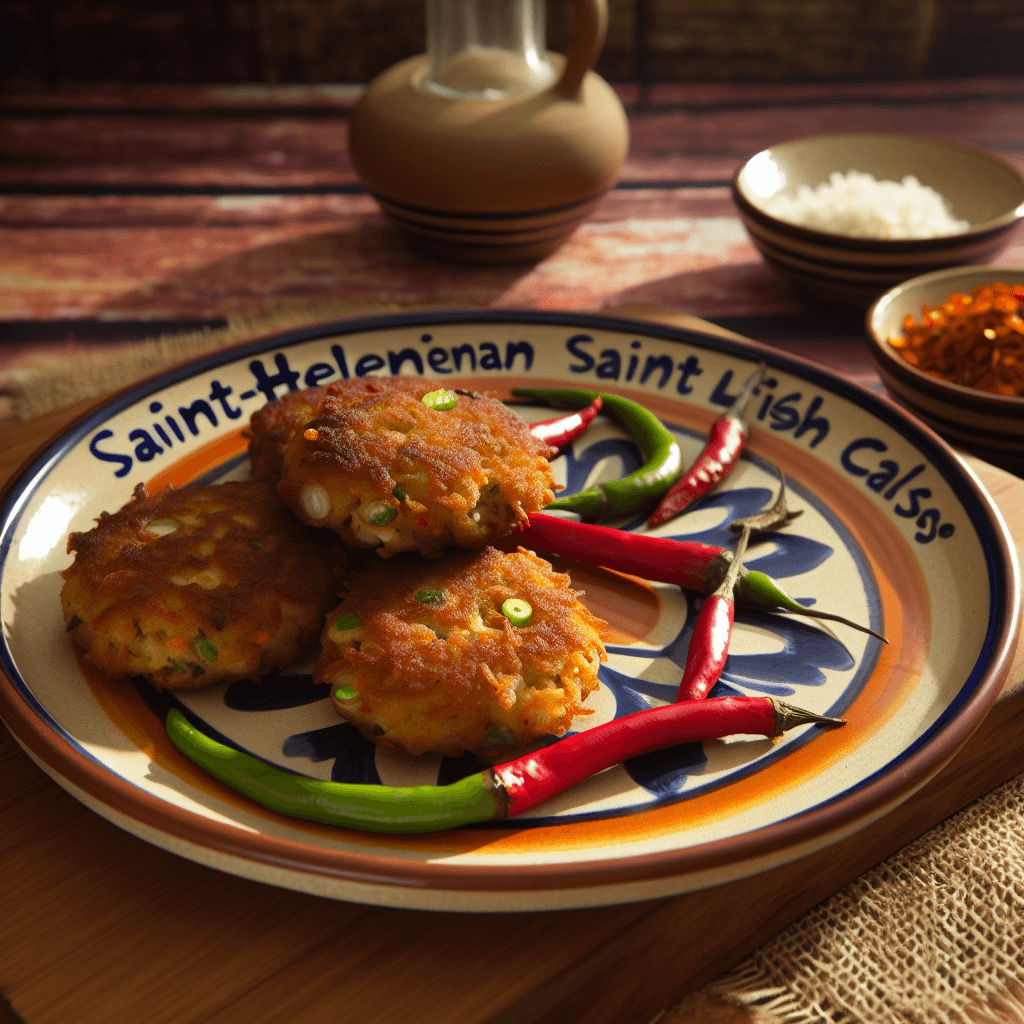
Saint Helena fish cakes are one of the most iconic dishes to come from this remote British Overseas Territory in the South Atlantic Ocean, and they tell the story of the island's history in every bite. For centuries, Saint Helena sat at the crossroads of the major sailing routes between Europe, India and the Far East — every ship of the British East India Company stopped there for water and provisions. Salt fish, the great preserved protein of seafaring civilisations, became a permanent part of the island's larder: cheap, shelf-stable and versatile. Local cooks transformed it into fish cakes spiced with chilli (from the island's Indian Ocean connections), brightened with spring onion, and fried in oil into crispy, golden patties that have been served at Saint Helena tables for generations. The technique has two non-negotiable steps. First, the salt fish must be properly desalted — soaked overnight in cold water, with at least one water change, then simmered for 10 minutes before flaking. Rushing this process leaves the cakes unpleasantly salty, masking the clean fish flavour beneath. Second, the mixture should be handled lightly when mixing and shaping: overworked fish cake mixture becomes dense and tough rather than tender and flaky. The cakes are pan-fried over medium heat — not deep-fried — in enough oil to reach halfway up the sides, producing a crust that is golden and crispy outside while staying moist within. On the island they are served as a snack or starter with the local chilli sauce, alongside boiled sweet potatoes, or at breakfast with fried egg — a combination that reflects Saint Helena's unpretentious, hearty cooking culture.
Serves 4
Drain the overnight-soaked salt fish and place in a small saucepan. Cover with fresh cold water and bring to a boil. Simmer for 10 minutes, then drain and allow to cool to room temperature. This double-desalting step ensures the cakes will not be overwhelmingly salty.
Taste a flake of fish at this point — it should be pleasantly seasoned but not sharp. If still very salty, simmer for 5 more minutes in fresh water.
Using your fingers, remove any remaining bones or skin from the cooled fish, then flake into small pieces — aim for flakes of about 1–2 cm rather than a fine mince. The texture of the flakes is what gives the finished fish cakes their characteristic bite.
In a bowl, combine the flaked fish, spring onion, chilli, garlic, flour, egg and black pepper. Using a fork or your hand, mix gently until just combined — do not overwork. The mixture should be moist enough to hold together when pressed but not wet or loose.
If the mixture seems too wet to shape, add a tablespoon more flour; if too dry, add a splash of water.
Divide mixture into 8–10 equal portions (about 50 g each). Shape each portion into a patty approximately 6 cm in diameter and 1.5 cm thick, pressing firmly so the edges are smooth and the cake is compact enough to hold together during frying.
Heat oil in a frying pan over medium heat until shimmering. Add fish cakes in a single layer — work in two batches to avoid crowding. Fry undisturbed for 3–4 minutes until the underside is deep golden and releases easily from the pan. Flip carefully and fry the second side for 3 minutes until equally golden.
Resist the urge to move the cakes during the first 3 minutes — letting the crust set is what prevents them from falling apart.
Transfer cooked fish cakes to a plate lined with paper towels and blot briefly. Serve hot, with chilli sauce or tomato chutney alongside and boiled sweet potatoes or crusty bread for a complete Saint Helena meal.
Soak salt fish overnight in the refrigerator, changing the water once — this is the minimum for proper desalting; a 24-hour soak gives the best result.
Flake rather than mince the fish — chunky flakes give the cakes a rustic, satisfying texture; a paste-like mince makes them dense and homogeneous.
Don't overwork the mixture when combining — a light hand keeps the fish flakes intact and the cakes tender.
Use a wide, heavy frying pan (cast iron is ideal) and resist moving the cakes until the crust has fully set — usually 3 minutes. They will release naturally when ready.
Tinned tuna or sardines can substitute in a pinch: drain thoroughly, omit the soaking step, and reduce added salt to zero as tinned fish is already seasoned.
Fresh fish version: use 300 g of firm white fish fillet (cod, hake or pollock), poached for 5 minutes then flaked — the result is milder and lighter than the salt fish original.
Potato fish cakes: add 150 g of mashed potato to the mixture for a more substantial, starchy cake in the British pub tradition that also arrived on the island through colonial links.
Curried fish cakes: add 1 tsp of mild curry powder to the mixture — this reflects Saint Helena's East India Company heritage and pairs perfectly with mango chutney.
Baked version: brush shaped cakes with oil and bake at 200°C for 20–22 minutes, flipping once at 12 minutes, for a lighter result without the fried crust.
Cooked fish cakes keep in the refrigerator for up to 2 days. Reheat in an oven at 180°C for 8–10 minutes rather than microwaving, which makes them soggy. Uncooked shaped patties can be refrigerated on a parchment-lined tray for up to 24 hours before frying.
Salt fish became central to Saint Helena's diet during the island's centuries as an East India Company victualling station, from 1659 onwards. Ships stopping for provisions brought preserved fish from the North Atlantic and later from South African waters, and island cooks developed their own repertoire of preparations. Fish cakes were a practical solution for using salt fish that had been soaked and needed to be consumed quickly, and the addition of chilli reflects the island's constant exposure to spice trade goods passing through its harbour.
Yes — tinned tuna in spring water, well-drained, or tinned sardines (bones removed) work as convenient substitutes. Omit any added salt from the recipe as tinned fish is already seasoned, and skip the soaking and simmering steps. The result is lighter and less savoury than the salt fish version but still delicious.
Taste a small flake after simmering — it should taste pleasantly seasoned, like a well-salted piece of fresh fish, not aggressively salty. If it is still very sharp, simmer for another 5 minutes in fresh water. Different brands and thicknesses of salt fish vary considerably in their salt content, so always taste before mixing.
The most common causes are a mixture that is too wet, too little flour as a binder, or cakes that were moved before the crust set. Ensure the fish was drained thoroughly after simmering, use the full 3 tablespoons of flour, and leave the cakes undisturbed for at least 3 minutes before attempting to flip. They will release from the pan naturally when the crust is properly set.
Yes — shape the cakes and refrigerate on a lined tray for up to 24 hours before frying. Alternatively, fry them fully, cool, and refrigerate for up to 2 days; reheat in a 180°C oven for 8–10 minutes to restore crispness.
The traditional accompaniment is a homemade chilli sauce and boiled sweet potatoes — the sweetness of the potato offsets the savoury, spicy cake perfectly. They also appear at breakfast alongside fried eggs. In Saint Helena's pubs and social clubs, fish cakes are served simply with chilli sauce as a bar snack.
Per serving · 4 servings total
Ask our AI cooking assistant anything about this recipe — substitutions, techniques, scaling.
Chat with AI Chef →Join the conversation
Sign in to leave a comment and save your favourite recipes
Have feedback or need help?
We read every email and reply within 1–2 business days.
© 2026 MyCookingCalendar. All rights reserved.