
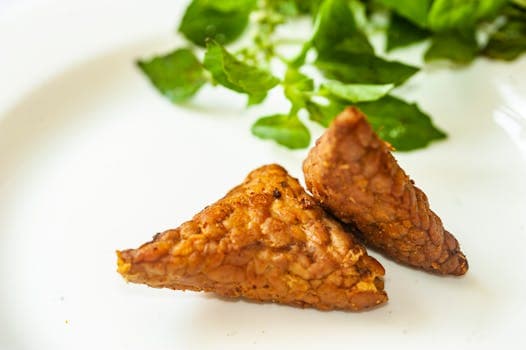
Tempeh Goreng
Indonesian fried tempeh — nutty, firm, protein-rich alternative to tofu.
About This Recipe
Tempeh Goreng is Indonesia frying its own greatest invention: tempeh, the fermented soybean cake born in Java, where Rhizopus mold knits whole soybeans into a firm, sliceable block with a nutty, mushroomy depth no other soy product matches. For this everyday preparation, slices are steeped in a turmeric-garlic-coriander brine — the classic bumbu kuning treatment — then fried until the edges crisp and brown while the center stays dense and meaty. It's eaten constantly across Java: beside rice and sambal at warungs, tucked into nasi campur, or straight from the wok as a snack. Cheap, high in protein, and deeply savory, it's arguably the most democratic food in Indonesia.
Ingredients
Serves 4
- 300 gtempeh, sliced lengthwise
- 2 tbspsoy sauce
- 1 tbspturmeric
- 2 clovesgarlic, minced
- 1 tspsalt
- oil for frying
Instructions
- 1
Marinate
Whisk the soy sauce, turmeric, garlic, and salt with 3–4 tablespoons of warm water to make a loose brine, and steep the tempeh slices in it for 15–30 minutes, turning once. Tempeh is porous and drinks up the seasoning — the warm liquid carries flavor right into the center.
Pat the slices reasonably dry before frying; clinging marinade is fine, but pooled liquid makes the oil spit violently.
- 2
Fry
Heat the oil to 170°C and fry the slices in a single layer, turning once, until both sides are deep golden brown with crisped, lacy edges — about 5 minutes total. The turmeric will tint the crust a beautiful amber. Drain on paper towels or a rack.
Thinner slices (5–7mm) give crunchier results; thick slabs stay softer and chewier in the middle — both are authentic, so cut to your preference.
- 3
Serve
Serve hot or at room temperature with sambal, kecap manis, or peanut sauce, or alongside rice and vegetables as the protein of a simple Javanese meal. A raw bird's-eye chili on the side is the traditional bite between mouthfuls.
Did you make this?
Rate it and help other cooks find the recipes that actually work.
One tap to sign in, and we'll save the rating you just picked.
Everything you need to plan your week — free
- Meal calendar
- Grocery list
- AI recipe ideas
Track what you eat
Snap your meal to log calories and macros, run fasting timers and track water in the free SnapCal app.
Pro Tips
- →
Use a wet brine-style marinade rather than a dry rub — tempeh's porous structure soaks liquid seasoning deep into the slice.
- →
Fresh tempeh from an Asian grocer tastes markedly nuttier than long-refrigerated supermarket blocks.
- →
Don't fry past deep golden; overcooked tempeh turns hard and bitter at the edges.
- →
If your tempeh tastes bitter, steam it 5 minutes before marinating to mellow it.
- →
Ground coriander in the marinade is the classic Javanese addition — half a teaspoon transforms the flavor.
Variations
- •
Tempeh mendoan (Banyumas): dip in a scallion-flecked flour batter and fry briefly so it stays soft and floppy.
- •
Kering tempe: fry thin matchsticks until hard-crisp, then toss in a sticky palm sugar, chili, and galangal glaze.
- •
Tempe penyet: lightly smash the fried slices into raw sambal with a pestle.
- •
Air-fryer version: brush marinated slices with oil and cook at 190°C for 10–12 minutes, flipping once.
Storage
Fried tempeh keeps 3 days refrigerated and re-crisps in a dry skillet or air fryer in a few minutes. Raw tempeh keeps about a week in the fridge and freezes for 3 months with no real quality loss.
History & Origin
Tempeh is one of the few major soy foods invented outside the Chinese culinary sphere — it originated in Java, with written references appearing in the Serat Centhini, a Javanese manuscript from the early 19th century, and the practice is likely centuries older. For generations it fed Java affordably enough to be dismissed as poor man's protein; today it's celebrated globally as one of the world's great fermented foods, and Indonesia has campaigned for its UNESCO heritage recognition.
Frequently Asked Questions
What's the difference between tempeh and tofu?
Tempeh is whole soybeans bound into a dense cake by fermentation with Rhizopus mold — firm, nutty, visibly beany, with more protein and fiber. Tofu is curds pressed from soy milk: smooth, mild, and softer. They fry differently too — tempeh crisps at the edges while keeping a meaty chew, whereas tofu goes shatter-crisp outside and custardy inside.
My tempeh tastes bitter — is it bad?
Mild bitterness is normal, especially in older or pasteurized tempeh. Steaming or simmering the slices for 5 minutes before marinating mellows it noticeably and helps the marinade absorb. Genuinely spoiled tempeh is different: sliminess, ammonia smell, or colorful (not gray-black) mold patches mean discard it. Gray or black spore patches alone are harmless.
Is fried tempeh still healthy?
Reasonably — tempeh brings around 16g of protein per serving plus fiber and minerals that survive frying, and it absorbs less oil than tofu thanks to its dense structure. Shallow-fry in fresh oil, drain well, or use an air fryer to cut the fat further. The fermentation also makes its nutrients more bioavailable than unfermented soy.
Nutrition Facts
Per serving (150g / 5.3 oz) · 4 servings total
Time Summary
Have Questions?
Ask our AI cooking assistant anything about this recipe — substitutions, techniques, scaling.
Chat with AI Chef →More Indonesian Recipes
You Might Also Like
Similar dishes from other cuisines around the world.
Browse by Ingredient
More recipes built around the same core ingredients.
Free Kitchen Tools
Calculators and converters that pair with this page — no signup needed.
Put This Into a Plan
Schedule it, shop for it, and track what you already have.
Read Next
Longer reads that go deeper on the ideas behind this dish.
Community
Join the conversation
Sign in to leave a comment and save your favourite recipes