
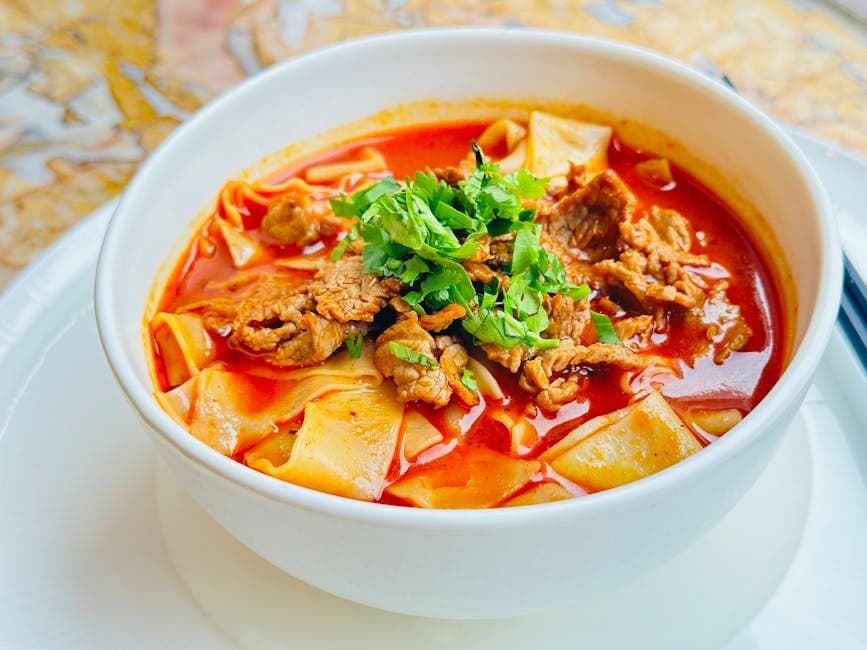
Uzbek Lagman (Hand-Pulled Noodles in Lamb Broth)
Uzbekistan's hand-pulled wheat noodles in a deeply spiced lamb-and-vegetable soup-stew — the Silk Road's most iconic noodle dish.
About This Recipe
Lagman is the great Central-Asian noodle dish — born on the Silk Road from intermarriage between Han Chinese pulled-noodle technique and Persian-Turkic lamb-and-vegetable cooking, now a staple from Xinjiang across Uzbekistan, Kyrgyzstan, and Kazakhstan. The noodles are hand-pulled fresh from a soft dough rolled into ropes and stretched into long springy strands. They are served either soupy (suyuq lagman) — submerged in a fragrant lamb broth — or saucy (qovurma lagman), tossed with a thick stir-fry of meat, tomato, peppers, and onions. The Uzbek version leans soupier and richer, with bell pepper, daikon, green beans, and a final aromatic infusion of cumin and dill. It's the dish to seek out in any Uzbek choykhana (teahouse): a single shareable bowl per diner, a smoky tandyr non flatbread alongside, and a pot of green tea.
Ingredients
Serves 4
- 400 ghigh-protein bread flour (12%+), plus more for dusting
- 200 mlwarm water
- 1 tspfine salt (for dough)
- 60 mlneutral oil, for stretching the noodles
- 500 glamb shoulder, cut into 2 cm cubes (or substitute beef chuck)
- 3 tbspneutral oil
- 2 largeyellow onions, half-mooned
- 1 largecarrot, julienned
- 1daikon radish (200 g), julienned
- 1 eachred and green bell pepper, sliced
- 150 ggreen beans, trimmed and halved
- 3 ripetomatoes, chopped
- 3 tbsptomato paste
- 6 clovesgarlic, minced
- 1 tbspground cumin
- 1 tspground coriander
- 1 tspsweet paprika
- 1.5 tspfine salt, plus more to taste
- 1 tspblack pepper
- 1.5 Llamb or beef stock
- 3 tbspfresh dill, chopped, to finish
- 3 tbspfresh cilantro, chopped, to finish
Instructions
- 1
Make the dough
Mix flour and salt. Add warm water gradually and knead 12–15 minutes until very smooth and elastic. The dough should be quite firm — close to ramen-noodle stiffness. Wrap and rest 60 minutes minimum, 2 hours ideal.
- 2
Shape into ropes
Roll the rested dough into a 30 cm rectangle 1.5 cm thick. Brush all over with oil. Cut into 1 cm ribbons, then roll each ribbon into a smooth round rope. Place all ropes oiled in a covered tray and rest 30 more minutes.
- 3
Pull the noodles
Working with one rope at a time, hold both ends and gently bounce/stretch the dough against the counter, lengthening to about 1.5 m. The dough should stretch easily; if it resists, rest longer. Drape pulled noodles on a floured tray.
- 4
Sear the lamb
In a heavy pot, heat the oil over high. Brown the lamb 4–5 minutes until deeply colored. Remove and reserve.
- 5
Build the base
Reduce heat to medium. Add onions and cook 8 minutes until pale gold. Add carrot, daikon, and bell peppers; cook 5 minutes.
- 6
Add tomato and spices
Stir in garlic, cumin, coriander, paprika, black pepper, salt, tomato paste, and chopped tomatoes. Cook 5 minutes until tomatoes break down.
- 7
Simmer the broth
Return the lamb. Add the stock and bring to a simmer. Cook covered 35 minutes, then add green beans and cook 8 more minutes until everything is tender.
- 8
Cook the noodles
Bring a large pot of well-salted water to a rolling boil. Drop the pulled noodles in and cook 90 seconds — they cook fast because they're thin. Drain immediately.
- 9
Assemble
Divide noodles among 4 deep bowls. Ladle hot broth and vegetables generously over the top, distributing the lamb evenly. Scatter with dill and cilantro. Serve at once with non bread and pickled chili.
Did you make this?
Rate it and help other cooks find the recipes that actually work.
One tap to sign in, and we'll save the rating you just picked.
Everything you need to plan your week — free
- Meal calendar
- Grocery list
- AI recipe ideas
Track what you eat
Snap your meal to log calories and macros, run fasting timers and track water in the free SnapCal app.
Pro Tips
- →
Hand-pulling demands a strong-gluten flour (12%+ protein); cake or all-purpose flour will tear before stretching. Bread flour is the minimum.
- →
Dough rest is non-negotiable — without 60+ minutes' rest, the gluten is too tight and you'll snap noodles instead of stretching them.
- →
If you can't pull noodles, substitute fresh udon or thick wheat noodles. Avoid dried spaghetti — it's the wrong texture entirely.
Variations
- •
Qovurma lagman: drain the noodles and toss with a thicker stir-fry version of the topping (less broth, more reduction) — the saucy version popular in eastern Uzbekistan.
- •
Uyghur lagman: add a teaspoon of Chinese five-spice and a splash of soy sauce for the Xinjiang variant.
- •
Vegetarian lagman: skip the lamb, double the daikon and green beans, and use a strong mushroom-based stock.
Storage
Broth keeps refrigerated 4 days and improves overnight. Cook fresh noodles to order — pre-cooked noodles sitting in broth turn gummy.
History & Origin
Lagman is one of the great Silk Road hybrids — a noodle technique brought west from China at least a thousand years ago and adopted across Central Asia, where it absorbed Persian and Turkic spicing and lamb-based cookery. It is the unifying dish of Uzbek, Kyrgyz, Kazakh, Uyghur, and Dungan kitchens, with each community's slightly different signature.
Frequently Asked Questions
Can I use store-bought noodles?
Yes — fresh udon, thick spaghetti, or even fresh ramen noodles will all stand in. The dish loses some bounce but the broth carries it.
Why won't my dough stretch?
Either the flour is too low in protein or the dough hasn't rested long enough. Use bread flour, rest at least 90 minutes, and oil the ropes generously.
Soupy or saucy — which is more authentic?
Both — Uzbek lagman is most often soupier, while Uyghur and Kyrgyz lagman skew saucy. Neither is wrong; choose by mood.
What's the right cut of lamb?
Shoulder — well-marbled, takes long-simmering well, and shreds into pulled bites in the broth. Avoid lean leg, which dries out.
Nutrition Facts
Per serving (620g / 21.9 oz) · 4 servings total
Time Summary
Have Questions?
Ask our AI cooking assistant anything about this recipe — substitutions, techniques, scaling.
Chat with AI Chef →Featured in Guides
This recipe is featured in the following curated guides:
More Uzbek Recipes
You Might Also Like
Similar dishes from other cuisines around the world.
Browse by Ingredient
More recipes built around the same core ingredients.
Free Kitchen Tools
Calculators and converters that pair with this page — no signup needed.
Put This Into a Plan
Schedule it, shop for it, and track what you already have.
Read Next
Longer reads that go deeper on the ideas behind this dish.
Community
Join the conversation
Sign in to leave a comment and save your favourite recipes