
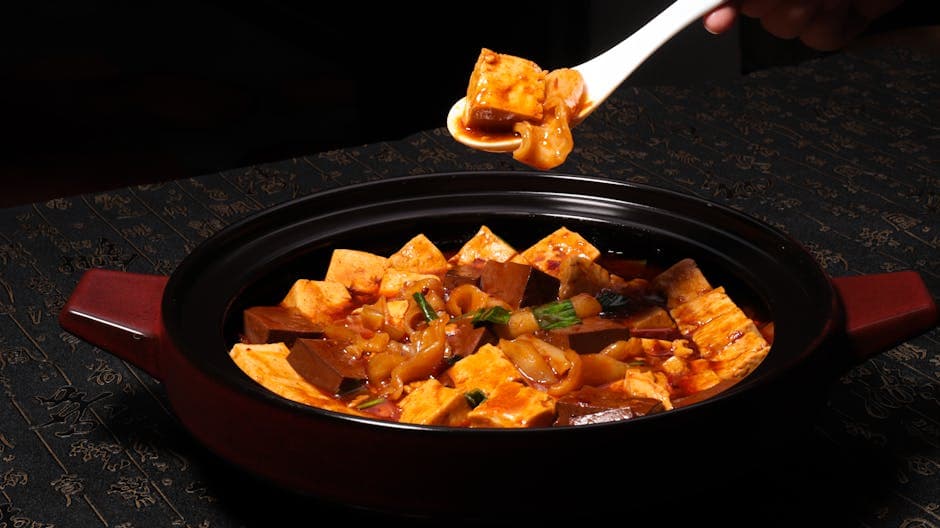
Мапо Тофу (Классический сычуаньский)
Шелковый тофу в остром красном соусе из доубаньцзяна, ферментированных черных бобов, говяжьего фарша и сычуаньского перца — ошеломляющий, пряный и пикантный рай над рисом.
Об этом рецепте
Мапо тофу — это блюдо, которое рассказывает миру о сычуаньской кухне. Оно появилось в скромной лапшичной лавке Чэнду в 1860-х годах и названо в честь рябого лица (ма) пожилой женщины (по), которая подавала его носильщикам, проходящим по мосту Ванфу. Блюдо построено на семи столпах вкуса, которыми руководствуются сычуаньские повара: ма (ошеломляющий), ла (острый), тан (острый), сян (ароматный), су (хрустящий/текстурный), нэн (нежный), сянь (пикантный). Пряно-острая основа состоит из свежеобжаренных сычуаньских перцев горошком и пиксианского доубаньцзяна, ферментированной пасты чили из бобов, без которой не может обойтись ни один настоящий мапо. Шелковый тофу — это фольга — шаткие кубики заварного крема, которые впитывают острый соус, не разваливаясь, и ненадолго бланшируются в подсоленной воде, прежде чем они попадут на огонь. Небольшое количество мелко нарезанной говядины (а иногда и свинины) дает ароматные хрустящие камешки, а не основную массу блюда. Соус завершается блестящей суспензией кукурузного крахмала в три добавления (так называемая лянь цянь) для обеспечения идеальной толщины покрытия. Подаваемый с рисом и зеленым овощем, мапо тофу — это блюдо, которое превращает посетителей, стесняющихся специй, в сычуаньских преданных — по одной ошеломляющей, маслянистой и невероятно ароматной тарелке за раз.
Ингредиенты
Служит 4
- 500 гшелковистый или мягкий тофу, нарезанный кубиками по 2 см.
- 150 гфарш говяжий (или свиной), 15% жира для правильного хруста
- 3 ст. л.Пиксиан доубаньцзян (сычуаньская паста из ферментированных бобов чили)
- 1 ст. л.ферментированная черная фасоль (души), промытая и слегка нарезанная
- 1 ст. л.Сычуаньский порошок чили (грубый, эр цзинь тяо или обращенный к небу)
- 2 ч. л.цельный сычуаньский перец горошком, поджаренный и свежемолотый
- 4 зубчикачеснок, мелко нарезанный
- 1 большой палецсвежий имбирь, мелко нарезанный
- 300 млкуриный или несоленый овощной бульон
- 2 ст. л.кукурузный крахмал, смешанный с 4 столовыми ложками холодной воды
- 3 стеблизеленый лук (только зеленая часть), тонко нарезанный
- 3 ст. л.нейтральное масло
Инструкции
- 1
Бланшируем тофу
Доведите кастрюлю со слегка подсоленной водой до кипения (около 80°C). Положите кубики тофу и подержите 2–3 минуты — это укрепит структуру, чтобы они выдержали жарку, и устранит привкус бобов. Аккуратно откиньте на дуршлаг.
- 2
Поджарьте и измельчите перец горошком
Поджарьте горошины сычуаньского перца в небольшой сковороде на среднем огне в течение 60 секунд, пока они не станут ароматными — в готовом виде они пахнут цедрой грейпфрута. Измельчите до крупного порошка в ступке или мельнице для специй; Свежемолотый не подлежит обсуждению для правильного ма (онемения).
Просейте горькие черные семена, чтобы получить более чистый, обезболивающий эффект.
- 3
Рендеринг мяса
Нагрейте масло в воке на сильном огне, пока оно не начнет мерцать. Добавьте говяжий фарш и жарьте, разбивая лопаткой, 3–4 минуты, пока мясо не станет темно-коричневым, а кусочки не станут хрустящими наггетсами, а не рассыпчатыми на пару. Это Сян Су — ароматный и хрустящий.
- 4
Постройте базу масла чили.
Уменьшите огонь до среднего. Добавьте доубаньцзян и постоянно помешивайте в течение 60–90 секунд — масло должно стать ярко-красным и пахнуть ферментированным перцем чили. Отодвиньте в сторону, добавьте доучи, чеснок, имбирь и порошок чили и жарьте еще 30 секунд, пока все не станет однородным и ароматным.
- 5
Добавьте бульон и тофу.
Влейте бульон и доведите до сильного кипения. Осторожно добавьте бланшированный тофу, затем аккуратно протолкните его по воку задней частью половника (не перемешивайте — кубики сломаются). Варите 3 минуты, чтобы тофу впитал соус.
- 6
Загустить в три сложения (лян цянь)
Перемешайте суспензию кукурузного крахмала, затем добавьте ее в вок тремя отдельными небольшими порциями, перемешивая вок между каждой порцией. Каждое добавление затягивает соус до тех пор, пока он не прилипнет к каждому кубику, не скапливаясь. Это трехэтапное загущение — классическая сычуаньская техника правильного глянцевого покрытия.
- 7
Закончите обезболивающим перцем.
Выключив огонь, посыпьте две трети молотого сычуаньского перца и нарезанную зелень зеленого лука. Сделайте последний легкий поворот и переложите в широкую неглубокую миску. Посыпьте сверху оставшимся перцем, чтобы ошеломляющий аромат достиг посетителя еще до первого укуса.
Вы готовили это блюдо?
Поставьте оценку и помогите другим найти рецепты, которые действительно работают.
Войдите в одно касание, и мы сохраним только что выбранную оценку.
Всё для планирования недели — бесплатно
- Календарь питания
- Список покупок
- Идеи рецептов с ИИ
Следите за питанием
Фотографируйте еду, чтобы записывать калории и макросы, запускайте таймеры голодания и отслеживайте воду в бесплатном приложении SnapCal.
Советы профессионалов
- →
Пиксиан доубаньцзян из провинции Сычуань (ищите «Пи Сянь Доу Бан Цзян» или бренд Хуан Ченг/Дан Дан) — это сердце блюда. Корейский гочуджанг или традиционная паста чили не смогут передать глубину ферментированного вкуса.
- →
Используйте настоящий шелковистый или мягкий тофу, а не твердый. Контраст между трясущимся тофу и хрустящим мясом — фирменный вкус блюда.
- →
Не пропускайте поджаривание и свежее измельчение сычуаньского перца — предварительно измельченный коммерческий порошок теряет летучие обезболивающие масла в течение нескольких недель.
- →
Если вы можете найти сычуаньский зеленый перец горошком (Хань Юань), распустите чайную ложку в масле и полейте в конце, чтобы получить дополнительный цитрусовый, почти ментоловый слой ма.
Вариации
- •
Вегетарианство (су мапо) — замените мясо мелко нарезанным шиитаке и столовой ложкой соевых гранул или измельченных грецких орехов для хрустящей корочки.
- •
Баклажаны Мапо — замените тофу приготовленными на пару палочками баклажанов (кроссовер Юй Сян Цы Цзы).
- •
Менее утомительный вариант — разрежьте пополам горошину сычуаньского перца для гостей, впервые знакомых с кулинарией ма-ла.
- •
Добавьте сверху слегка приготовленный яичный желток, чтобы придать блюду роскошный современный вид в стиле Чэнду.
Хранение
Хранить в холодильнике до 3 дней в закрытом контейнере; тофу слегка затвердевает, а вкус становится глубже. Аккуратно разогрейте в кастрюле с небольшим количеством воды — при нагревании в микроволновой печи шелковистый тофу нагревается неравномерно, а кубики трескаются. Не замораживайте: шелковистый тофу становится рыхлым.
История и происхождение
Тофу Мапо было изобретено примерно в 1862 году в пригороде Чэнду Ванфуцяо женщиной по имени Чэнь Мапо, которая владела небольшим магазином лапши, обслуживающим носильщиков, перевозивших масло между рынками. Носильщики принесли мясо и тофу; она подала огненный, ошеломляющий соус. Ресторан ее семьи Chen Mapo Doufu до сих пор работает в Чэнду.
Часто задаваемые вопросы
Могу ли я вместо этого использовать твердый тофу?
Можно, но это будет не мапо тофу — главное — контраст шелковистости и мяса. Если необходимо, используйте самый мягкий тофу, какой только сможете найти, и пропустите этап бланширования.
Почему мой соус жирный?
Либо вы использовали слишком много масла для начала, либо вы жарили дубаньцзян недостаточно долго — масло должно полностью смешаться за эти 60–90 секунд. Если в конце он собирается в лужу, добавьте еще одну небольшую суспензию.
Где я могу купить дубаньцзян?
В любом китайском продуктовом магазине или в Интернете (в магазинах Mala Market и Yamibuy представлены настоящие бренды Pixian). Найдите небольшую банку из темного стекла или вакуумный пакет; избегайте ярко-красного соуса из фасоли чили в больших пластиковых банках — обычно это сладкая имитация.
Мапо тофу не содержит глютена?
Не по умолчанию — в дубаньцзяне содержится пшеница. Существует безглютеновый доубаньцзян (поиск «безглютеновый пиксиан»), и тамари может заменить любые добавки соевого соуса.
Факты о питании
За порцию (280g) · 4 общее количество порций
Сводка времени
Есть вопросы?
Спросите нашего помощника по кулинарии с искусственным интеллектом что-нибудь об этом рецепте — о заменах, методах, масштабировании.
Чат с AI Chef →Избранное в руководствах
Этот рецепт представлен в следующих руководствах:
Больше рецептов Китайские
Вам также может понравиться
Похожие блюда из кухонь других стран.
Поиск по ингредиенту
Другие рецепты с теми же основными ингредиентами.
Бесплатные кухонные инструменты
Калькуляторы и конвертеры к этой странице — без регистрации.
Превратить в план
Поставьте в календарь, соберите список покупок и следите за запасами.
Календарь планирования питания
Поставьте этот рецепт на нужный день и спланируйте неделю вокруг него.
Приложение для списка покупок
Превратите этот список ингредиентов в список покупок, сгруппированный по отделам.
Импорт рецептов
Сохраните этот рецепт — и любую ссылку на рецепт — в одной упорядоченной библиотеке.
Читать далее
Развёрнутые материалы об идеях, стоящих за этим блюдом.
Сообщество
Присоединяйтесь к разговору
Войдите, чтобы оставить комментарий и сохранить любимые рецепты.