
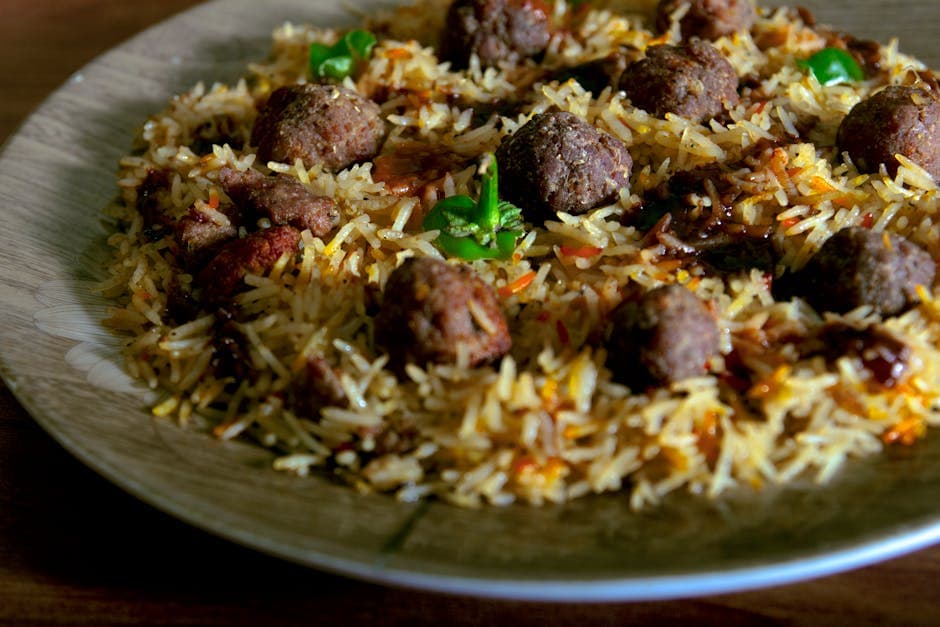
Танзанийский плов (рис с говядиной и пряностями)
Рис для прибрежных праздников Танзании: длиннозерный басмати, приготовленный с обжаренной говядиной, целыми специями и карамелизированным луком.
Об этом рецепте
Плов в Танзании — это праздничное блюдо, которое подают на свадьбах, празднике Ид, Рождестве и приветственных ужинах на побережье Суахили и внутри страны. Он основан на многовековом влиянии Омана, Индии и банту: цельные специи (тмин, кардамон, корица, гвоздика, черный перец), поджаренные в топленом масле, глубоко карамелизованный лук, тушеная говядина и длиннозерный рис басмати, пропитанные пряным говяжьим бульоном, пока каждое зерно не станет отдельным, блестящим и окрашенным в темный цвет пряным маслом. Он темнее, дымнее и острее, чем индийский бирьяни, без йогурта, шафрана и помидоров — только специи, жир, мясо и лук в тщательном балансе. Подается с качумбари (салат из сырых помидоров, лука и чили), чтобы придать блюду сочность.
Ингредиенты
Служит 6
- 500 гговяжья лопатка или голень без костей, нарезанные кусками по 3 см.
- 500 гдлиннозерный рис басмати
- 3 крупныйжелтый лук, очень тонко нарезанный
- 60 млгхи или нейтральное масло
- 6 зубчикачеснок, измельченный
- 2 ст. л.свежий имбирь, измельченный
- 1 ст. л.молотый тмин
- 1 ч. л.молотый кориандр
- 1 ч. л.черный перец
- 1 stickкорица (5 см)
- 6 podsзеленый кардамон, слегка измельченный
- 8 целыйгвоздика
- 1 ч. л.целое семя тмина
- 2 листьябухта
- 1 ст. л.плов масала (по желанию, но традиционно)
- 1 cubeговяжий бульон
- 1.5 ч. л.мелкая соль, плюс еще по вкусу
- 900 млкипяток, разделенный
- 2 среднийкартофель, нарезанный кусочками 3 см (по желанию)
Инструкции
- 1
Промойте и замочите рис
Промойте басмати под холодной водой, пока она не станет прозрачной. Замочить в пресной холодной воде на 20 минут, затем откинуть на сито.
- 2
Обжарить говядину
Перемешайте говядину с молотым тмином, кориандром, черным перцем и 0,5 ч. л. соли. В тяжелой кастрюле нагрейте 2 столовые ложки топленого масла на среднем огне и обжарьте говядину партиями по 3 минуты с каждой стороны. Отложите в сторону.
- 3
Карамелизировать лук
Добавьте в кастрюлю оставшееся топленое масло. Добавьте нарезанный лук и щепотку соли. Готовьте на среднем огне, помешивая каждые 3–4 минуты, в течение 20–25 минут, пока лук не станет темно-коричневым, почти подгоревшим по краям. Этот этап не подлежит обсуждению.
Если лук не потемнеет должным образом, ваш плов будет на вкус бледным и одномерным. Терпение здесь решает все.
- 4
Цветение целых специй
Отодвиньте лук в сторону. В освободившееся место добавьте палочку корицы, кардамон, гвоздику, цельный тмин и лавровый лист. Поджарьте 60 секунд до появления аромата, затем добавьте лук.
- 5
Тушить говядину
Верните подрумяненную говядину. Добавьте чеснок, имбирь, плов масала, если используете, раскрошенный бульон, оставшуюся 1 ч. л. соли и 500 мл кипятка. Накройте крышкой и тушите 45 минут, пока говядина не станет мягкой.
- 6
Добавляем рис и картофель
Добавьте осушенный рис и картофель (если используете). Очень осторожно перемешайте один раз. Вливаем оставшиеся 400 мл кипятка. Жидкость должна находиться на 1 см выше риса — при необходимости отрегулируйте.
- 7
Рис пропарить
Снова доведите до кипения без крышки в течение 2 минут, затем убавьте огонь до самого низкого уровня, плотно накройте крышкой (поместите чистое кухонное полотенце между кастрюлей и крышкой для пароизоляции) и готовьте 18 минут, не мешая.
Не поднимайте крышку, пока не истечет 18 минут — при каждом взгляде выходит пар и рис получается неравномерно приготовленным.
- 8
Отдых и пух
Выключите огонь и дайте постоять 10 минут под крышкой. Аккуратно взбейте вилкой (но не ложкой) и подавайте на тарелке с салатом качумбари.
Вы готовили это блюдо?
Поставьте оценку и помогите другим найти рецепты, которые действительно работают.
Войдите в одно касание, и мы сохраним только что выбранную оценку.
Всё для планирования недели — бесплатно
- Календарь питания
- Список покупок
- Идеи рецептов с ИИ
Следите за питанием
Фотографируйте еду, чтобы записывать калории и макросы, запускайте таймеры голодания и отслеживайте воду в бесплатном приложении SnapCal.
Советы профессионалов
- →
Плов масала продается в готовом виде в бакалейных лавках Восточной Африки и Южной Азии; это ароматная смесь тмина, кардамона, корицы, гвоздики, черного перца и мускатного ореха. Если они недоступны, все специи в этом рецепте охватывают одну и ту же территорию.
- →
Вкусовой основой является лук красного дерева: из недоваренного лука получается бледный и грустный плов. Дайте полные 25 минут; не спешите.
- →
Рис басмати необходим; жасмин и короткозернистый рис не могут обеспечить тот сухой плов суахили, который требует отдельных зерен.
Вариации
- •
Плов йа куку: куриный вариант, с куриным бедром на кости вместо говядины; сократить время тушения до 25 минут.
- •
Плов я самаки: прибрежная версия Занзибара с твердой рыбой и креветками, добавленными в последние 5 минут приготовления на пару.
- •
Вегетарианский плов: используйте смесь корнеплодов (морковь, сладкий картофель, орехи) и заменитель говяжьего бульона; храните все специи целиком.
Хранение
Охладите до 3 дней. Разогрейте, залитый водой, при температуре 160°C в течение 12 минут или в пароварке — ни в коем случае не в микроволновой печи на высокой мощности, которая сушит зерна.
История и происхождение
Плов прибыл в Танзанию через оманские и йеменские торговые дау вдоль побережья Суахили, начиная с 9–10 веков, а позже сформировался в результате миграции индийской наемной рабочей силы в 19 веке. Оно стало праздничным блюдом на танзанийских свадьбах и религиозных праздниках и теперь считается ключевым маркером прибрежной идентичности суахили.
Часто задаваемые вопросы
Почему мой плов бледный, а не темный?
Ваш лук недостаточно подрумянился. Они должны достигать цвета красного дерева — почти обожженного — для фирменного цвета и глубины. Готовьте их на среднем огне в течение полных 25 минут.
Могу ли я использовать рисоварку?
Да — выполните шаги 1–5 в кастрюле, затем переложите все в рисоварку для рисовой фазы, используя стандартное соотношение риса и жидкости 1:1. Результат близок, но вы упустите немного нижней корочки, которую некоторые повара ценят.
В чем разница между танзанийским пловом и индийским бирьяни?
Плов одногоршочный и однотонный — каждое зернышко пропитано специями. Бирьяни — это слой сырого риса поверх частично приготовленного мяса с шафраном и йогуртом, в результате чего получается полосатый многоцветный результат. Плов темнее, дымнее и в нем нет молочных продуктов.
Нужен ли мне плов масала?
Это традиционно и безошибочно, но все специи в этом рецепте хорошо заменяют. Если вам нужен настоящий вкус побережья суахили, поищите готовый плов масала в восточноафриканском бакалейщике.
Факты о питании
За порцию (420g) · 6 общее количество порций
Сводка времени
Есть вопросы?
Спросите нашего помощника по кулинарии с искусственным интеллектом что-нибудь об этом рецепте — о заменах, методах, масштабировании.
Чат с AI Chef →Избранное в руководствах
Этот рецепт представлен в следующих руководствах:
Больше рецептов Tanzanian
Вам также может понравиться
Похожие блюда из кухонь других стран.
Бесплатные кухонные инструменты
Калькуляторы и конвертеры к этой странице — без регистрации.
Превратить в план
Поставьте в календарь, соберите список покупок и следите за запасами.
Календарь планирования питания
Поставьте этот рецепт на нужный день и спланируйте неделю вокруг него.
Приложение для списка покупок
Превратите этот список ингредиентов в список покупок, сгруппированный по отделам.
Импорт рецептов
Сохраните этот рецепт — и любую ссылку на рецепт — в одной упорядоченной библиотеке.
Читать далее
Развёрнутые материалы об идеях, стоящих за этим блюдом.
Бюджетное приготовление еды: полноценное питание для семьи из 4 человек менее чем за 50 фунтов в неделю
15 мин
Полное руководство по тофу: все виды, как его прессовать, готовить и приправлять
11 мин
Диета Дюкана: полное руководство по всем четырем этапам, атака чистым белком и научные обоснования, стоящие за ней
13 мин
Сообщество
Присоединяйтесь к разговору
Войдите, чтобы оставить комментарий и сохранить любимые рецепты.