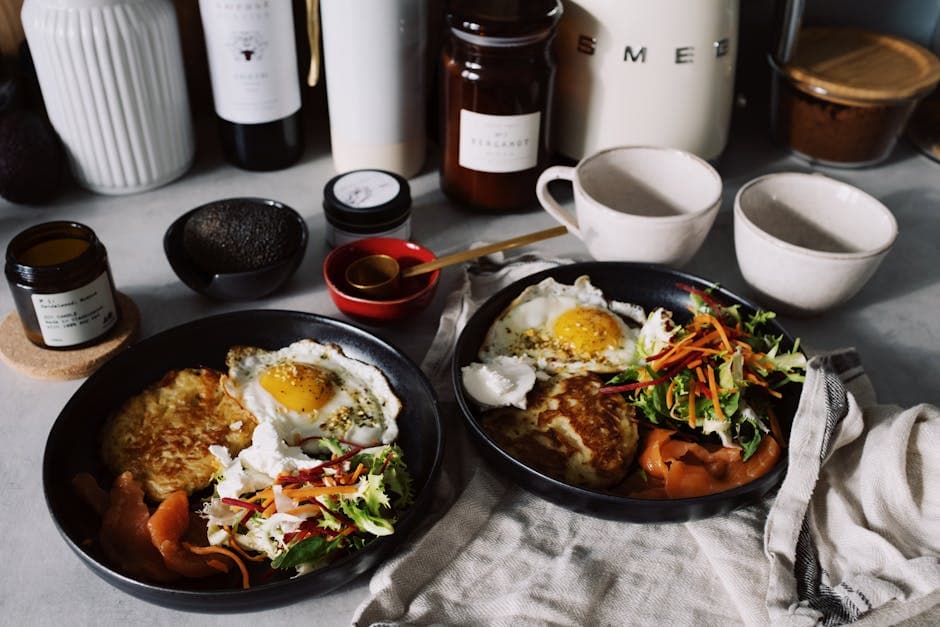
Switzerland's signature potato dish — coarsely grated potatoes pressed into a wide pan and fried until golden, served with bratwurst, fried eggs, or smoked salmon.
Rösti is Switzerland's most beloved dish — a giant cake of coarsely grated potatoes pressed into a wide hot skillet with butter, then fried slowly into a deep-gold disc with a crackling crust and a tender, slightly waxy interior. Originally a Bernese farmer's breakfast (the name derives from the dialect for 'roasted'), it spread across the country and became something of a national symbol — the linguistic divide between French and German Switzerland is literally called the Röstigraben ('rösti ditch'). Served as a hearty side to bratwurst and onion gravy in the German cantons, or topped with smoked salmon and dill crème fraîche in the French ones, or with a fried egg slid on top for solo dinners. The technique is unforgiving: too-watery potatoes won't crisp, too-thin a layer doesn't develop the contrast, too-violent a flip falls apart.
Serves 4
Place whole, scrubbed potatoes in a pot of cold salted water. Bring to a boil, reduce to a simmer, and cook 12 minutes — they should be par-cooked but still firm at the center (a knife meets resistance). Drain. Cool until cold to the touch — at least 2 hours, ideally overnight in the fridge. Cold par-cooked potatoes grate without sogging.
Peel the cold potatoes (the skins slip off easily). Grate on the coarse holes of a box grater into a wide bowl.
Toss with salt, pepper, and nutmeg. Don't compact them; keep them airy.
Heat half the butter and the oil in a 26 cm heavy nonstick or cast-iron skillet over medium heat until the butter foams.
Tip the grated potatoes into the pan. Press gently with a spatula into an even layer the size of the pan — but don't pack tight or you'll get a dense cake. Aim for 2 cm thick.
Cook over medium-low for 15-18 minutes, occasionally pressing gently with a spatula. Listen — the rösti should sizzle steadily. Lift an edge to check after 12 minutes: the underside should be deep golden brown all over. Adjust the heat if it's browning too fast or too slow.
Place a flat plate or platter on top of the pan. With one decisive motion (oven gloves on), invert the pan onto the plate. The rösti comes out, browned side up. Add remaining butter to the empty pan; slide the rösti back in browned-side-up, raw side down.
Cook another 12-15 minutes until the second side is equally deep golden and the rösti feels firm to the touch in the center.
Slide onto a warm board. Cut into wedges. Serve with bratwurst and onion gravy, or smoked salmon and crème fraîche, or simply with a fried egg slid on top.
Par-boil and chill the potatoes overnight — this is the Bernese technique and it's the difference between a good and a great rösti.
Coarse grate, not fine — fine grate makes mashed potatoes, not rösti.
Cook patiently on medium-low — the rich brown crust takes 15 minutes per side, don't rush.
Rösti mit Speck: scatter pre-cooked smoked bacon cubes into the grated potatoes before frying.
Rösti à la berner: top with grated Emmental and a fried egg.
Zürcher Geschnetzeltes met Rösti: serve as a side under Zurich-style veal in cream sauce.
Eat immediately. Refrigerated leftovers reheat OK in a hot skillet but never quite as crisp.
Rösti was originally a Bernese farmer's breakfast in the 19th century, eaten before a long day in the fields. By the 20th century it spread across all of German-speaking Switzerland; in the 1950s it became enough of a cultural symbol that the linguistic division between French and German Switzerland was nicknamed the Röstigraben — the 'rösti ditch'. Today, it's a fixture at every Swiss restaurant from mountain refuges to Michelin-starred Geneva bistros.
Some Swiss cooks do — Zürcher rösti is made with raw grated potatoes. Bernese (the more traditional) is par-boiled and chilled. Both work; the Bernese is more reliable for beginners.
Probably under-cooked or too thin a layer. Cook 15+ minutes per side and aim for 2 cm thick. The crust holds it together.
Per serving (260g) · 4 servings total
Ask our AI cooking assistant anything about this recipe — substitutions, techniques, scaling.
Chat with AI Chef →Join the conversation
Sign in to leave a comment and save your favourite recipes