
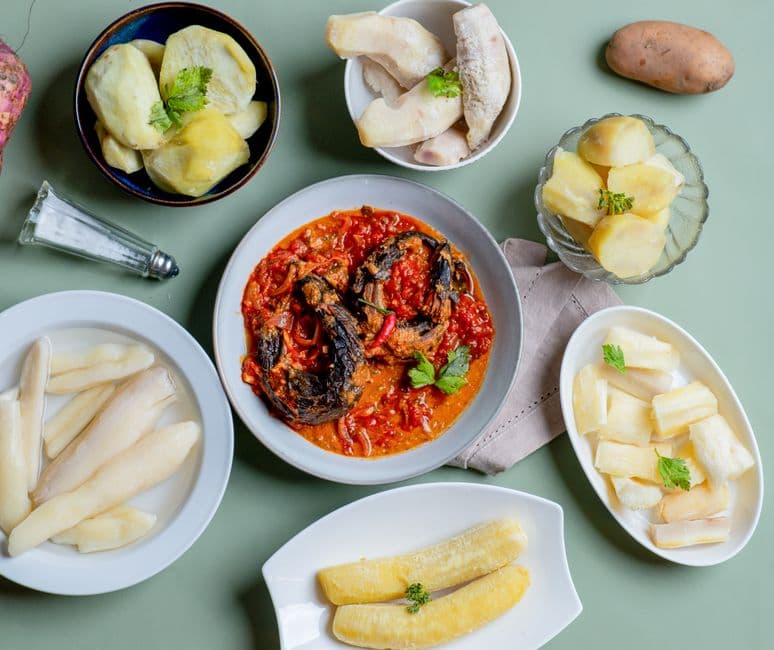
Garba
La comida callejera más emblemática de Abiyán: attiéké con trozos de atún frito o asado, cubierto con cebolla fresca, tomate, chile y un chorrito de limón. Rápido, barato y absolutamente delicioso.
Acerca de esta receta
Garba es el almuerzo de trabajo de Abiyán, un plato tan arraigado en la vida cotidiana de la ciudad que los puestos callejeros temporales que lo sirven se llaman "lugares garba" y ocupan todos los barrios comerciales. El plato es engañosamente simple: attiéké (cuscús de yuca fermentada) al vapor, relleno con trozos de listado frito o atún aleta amarilla, aderezado con cebolla cruda, tomate, chile verde y jugo de limón. Originalmente se asoció con los trabajadores inmigrantes hausa del norte, quienes lo popularizaron en toda la ciudad, y desde entonces se ha convertido en un plato que cruza todas las líneas étnicas y de clase. Comer garba en un concurrido puesto al borde de la carretera, soportando el ruido de la ciudad a tu alrededor, es una experiencia esencial en Abiyán.
Ingredientes
Sirve 2
- 300 gattiéké ya hecho
- 400 gfilete de atún fresco, cortado en trozos de 4 a 5 cm
- 1 grandecebolla, la mitad cruda en rodajas finas y la otra mitad finamente picada para decorar
- 2 medianotomates, picados
- 2 enterochiles verdes, rebanados
- 1 enterolemon, halved
- 1 cdtasal
- 1/2 cdtapimienta blanca
- 1 cdtapimentón
- 1 cubeCubo Maggi, desmenuzado
- 4 cdaaceite vegetal (para freír)
- 2 cdaaceite vegetal (para attiéké)
Instrucciones
- 1
Sazone el atún
Mezcle los trozos de atún con sal, pimienta blanca, pimentón y Maggi desmenuzado. Deje reposar durante 10 minutos.
- 2
Fría el atún
Calienta el aceite en una sartén a fuego alto hasta que esté muy caliente. Agrega los trozos de atún en una sola capa sin que se amontonen. Freír de 3 a 4 minutos por lado hasta que estén bien dorados y ligeramente crujientes por fuera. Retirar y escurrir sobre toallas de papel.
- 3
Cocine al vapor la attiéké
Rompe el attiéké en un colador. Cocine al vapor sobre agua hirviendo durante 8 minutos hasta que esté caliente y esponjoso. Transfiera a un tazón, revuelva con un tenedor y mezcle con 2 cucharadas de aceite vegetal y una pizca de sal.
- 4
Prepare el adorno fresco
Combine el tomate cortado en cubitos, la cebolla picada y el chile en rodajas en un tazón pequeño. Sazone con una pizca de sal y un chorrito de limón. Mezcle.
- 5
Ensamble y sirva
Apile el attiéké en un plato o en un bol. Colocar encima los trozos de atún frito. Coloque encima la guarnición de tomate y cebolla. Coloque las rodajas de cebolla cruda al lado. Exprime generosamente limón sobre todo. Servir inmediatamente.
¿Has preparado esta receta?
Valórala y ayuda a otros a encontrar las recetas que de verdad funcionan.
Inicia sesión con un toque y guardaremos la valoración que acabas de elegir.
Todo lo que necesitas para planificar tu semana — gratis
- Calendario de comidas
- Lista de compras
- Ideas de recetas con IA
Controla lo que comes
Fotografía tu comida para registrar calorías y macros, usa temporizadores de ayuno y controla tu agua en la app gratuita SnapCal.
Consejos profesionales
- →
El aceite debe estar muy caliente cuando agregue el atún; lo que desea es que se dore, no que se cocine suavemente.
- →
No cocines demasiado el atún; debe estar dorado por fuera y apenas cocido en el centro.
- →
Coma garba inmediatamente: el punto es el contraste entre el atún picante y la guarnición fresca.
- →
Pruebe y ajuste la sal al final — los sabores se concentran a medida que los líquidos se reducen, y un pellizco final de sal escamosa agudiza todo el plato.
Variaciones
- •
Utilice caballa o sardinas en lugar de atún para obtener una garba más económica y de sabor más fuerte.
- •
Asa el atún en lugar de freírlo para obtener una versión más ligera.
- •
Agregue aguacate en rodajas y más limón para obtener una guarnición más rica y cremosa.
- •
Vegetariano: reemplace la proteína con champiñones ostra rey asados, tofu ahumado o garbanzos cocidos — ajuste el sazón ligeramente hacia arriba para compensar.
Almacenamiento
Garba es una comida callejera que debe consumirse inmediatamente. Los componentes se pueden conservar por separado en el frigorífico durante 1 día; Vuelva a cocinar el attiéké al vapor y vuelva a freír el atún brevemente antes de armarlo.
Historia y origen
Los orígenes de Garba en Abiyán están ligados a la comunidad hausa del norte de Costa de Marfil y de los países vecinos, que establecieron puestos informales de comida que servían este plato a los trabajadores de las fábricas y a los comerciantes del mercado a partir de los años 1970 y 1980. Inicialmente se consideró un simple alimento para los trabajadores, pero sus sabores atrevidos y su bajo costo lo hicieron irresistible para todas las clases sociales. Hoy en día, garba se considera una institución cultural; incluso hay festivales de garba en Abiyán.
Preguntas frecuentes
¿Qué tipo de atún se utiliza en la auténtica garba?
El listadoo (listao) es el más tradicional y el más utilizado. El aleta amarilla o el atún blanco funcionan igual de bien. Evite el atún enlatado para este plato.
¿Puedo usar attiéké congelado?
El attiéké congelado se vende mucho y funciona perfectamente. Déjelo descongelar a temperatura ambiente durante 20 a 30 minutos antes de cocinarlo al vapor.
¿Puedo hacer esto con anticipación?
Sí — la mayoría de los componentes se pueden preparar hasta un día antes y refrigerar por separado. Recaliente suavemente y ensamble justo antes de servir para que las texturas se mantengan distintas.
¿Qué puedo sustituir si no tengo todos los ingredientes?
Manténgase cerca del papel que juega cada ingrediente: intercambie aromáticos por otros similares (chalota por cebolla, limón por limón), y mantenga el equilibrio grasa-ácido-sal intacto. Las mezclas de especias generalmente se pueden aproximar con lo que hay en la alacena.
Datos nutricionales
Por porción (400g) · 2 porciones totales
Resumen de tiempo
¿Tiene preguntas?
Pregúntele a nuestro asistente de cocina con IA cualquier cosa sobre esta receta: sustituciones, técnicas, escalado.
Chatea con AI Chef →Más recetas de Ivorian
También Te Puede Gustar
Platos similares de otras cocinas del mundo.
Herramientas de Cocina Gratuitas
Calculadoras y conversores que acompañan a esta página — sin registro.
Calculadora para escalar recetas
Reduce a la mitad o duplica cada cantidad de esta receta sin hacer cuentas mentales.
Conversor de medidas
Convierte tazas, gramos, onzas y mililitros en ambos sentidos.
Conversor para freidora de aire
Convierte el tiempo y la temperatura del horno a ajustes de freidora de aire.
Conviértelo en un Plan
Prográmalo, haz la compra y controla lo que ya tienes.
Calendario de planificación de comidas
Coloca esta receta en un día y organiza la semana a su alrededor.
App de lista de la compra
Convierte esta lista de ingredientes en una lista de la compra agrupada por pasillo.
Importador de recetas
Guarda esta receta —y cualquier URL de receta— en una biblioteca ordenada.
Sigue Leyendo
Lecturas más largas que profundizan en las ideas detrás de este plato.
Comunidad
Únete a la conversación
Inicia sesión para dejar un comentario y guardar tus recetas favoritas