
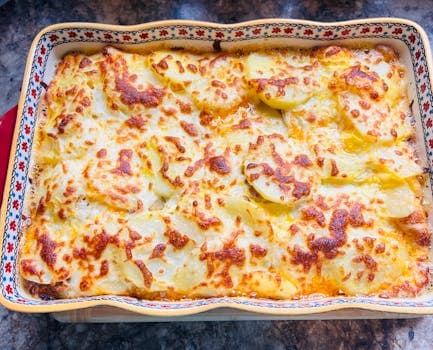
Gratin de Christophene
Chayote cremoso al horno con queso gruyere y hierbas: una guarnición franco-caribeña a la vez elegante y reconfortante.
Acerca de esta receta
Gratin de Christophene (also called chayote or mirliton) is a beloved side dish across the French-Caribbean. The mild, slightly sweet chayote squash is peeled, parboiled and layered in a creamy béchamel sauce enriched with gruyere cheese, then baked until the top is golden and bubbling. It is simultaneously light and comforting, pairing beautifully with roasted meat or fish. The flavour is delicate — the chayote does not overpower, but absorbs the richness of the sauce. Rooted in the everyday cooking of French Caribbean kitchens, Gratin de Christophene equilibra técnica y tradición: the chayote squash is treated with care, drawing on proporciones honradas por el tiempo that los locales han refinado a través de generaciones. The dish carries an firma sensorial inconfundible — aromas que llenan la cocina mientras se cocina, texturas estratificadas que se revelan bocado a bocado, and a profundidad de sabor que proviene del condimento paciente en lugar de atajos. Whether served as a weeknight lunch o como pieza central de una mesa de celebración, it refleja una despensa regional donde los productos locales, los hábitos de condimento y los utensilios de cocina dan forma al resultado final. Los cocineros caseros que preparan este plato a menudo notan lo indulgente que es una vez que se entiende el método principal, and cómo algunas pequeñas elecciones — the freshness of the chayote squash, el orden de las adiciones, el tiempo de descanso al final — separan una buena versión de una memorable. Esta receta repasa esas elecciones para que el plato llegue con el carácter que tiene en su territorio natal.
Ingredientes
Sirve 4
- 1 kgchayote squash(pelados, deshuesados y cortados en rodajas de 1 cm de grosor)
- 40 gmantequilla sin sal
- 40 gharina simple
- 300 mlleche entera(warmed)
- 100 ggruyere cheese(grated)
- 1 pizcanuez moscada
Instrucciones
- 1
preparar el chayote
Pon a hervir una olla con agua con sal. Agregue las rodajas de chayote y cocine a fuego lento durante 8 a 10 minutos hasta que estén tiernas pero aún mantengan su forma. Escurrir bien.
No lo hiervas demasiado o el chayote se volverá blando y absorberá demasiada agua.
- 2
hacer la bechamel
Derrita la mantequilla en una cacerola a fuego medio. Agregue la harina para hacer un roux y cocine durante 2 minutos sin que se dore. Vierta poco a poco la leche tibia, batiendo constantemente para evitar grumos. Cocine a fuego lento durante 5 minutos hasta que espese.
- 3
Sazone la salsa
Remove from heat. Stir in half the gruyere, salt, white pepper and a pinch of nutmeg. Prueba y ajusta el condimento.
- 4
Montar y hornear
Precalienta el horno a 200°C (ventilador 180°C). Coloque la mitad del chayote en una fuente para gratinar con mantequilla, vierta la mitad de la salsa y luego repita con el resto del chayote y la salsa. Cubra con el gruyere restante.
- 5
Hornear hasta que esté dorado
Hornee durante 25 a 30 minutos hasta que la parte superior esté dorada y el gratinado burbujee en los bordes. Reposar 5 minutos antes de servir.
¿Has preparado esta receta?
Valórala y ayuda a otros a encontrar las recetas que de verdad funcionan.
Inicia sesión con un toque y guardaremos la valoración que acabas de elegir.
Todo lo que necesitas para planificar tu semana — gratis
- Calendario de comidas
- Lista de compras
- Ideas de recetas con IA
Cocina con las manos libres
Consigue planes de comida con IA, modo de cocina paso a paso y tus recetas guardadas en la app gratuita Bento.
Consejos profesionales
- →
Pela el chayote con un cuchillo; es resbaladizo y puede sentirse ceroso.
- →
El hueso es comestible y tierno cuando se sancocha; córtelo alrededor o retírelo antes de cocinar.
- →
Una pizca de nuez moscada es tradicional en las salsas bechamel caribeñas: realza el sabor.
- →
Source the freshest chayote squash you can find — es el ancla de sabor del plato.
- →
Sazona en capas mientras avanzas; probar en cada etapa previene un resultado final plano o demasiado salado.
Variaciones
- •
Con Salmón Ahumado: coloque una capa de salmón ahumado entre el chayote y la salsa.
- •
Versión más ligera: reemplaza la mitad de la leche con caldo de verduras para obtener menos calorías.
- •
Vegetariano: reemplaza la proteína principal con hongos, paneer, tofu o legumbres sustanciosas para una versión sin carne.
- •
Más picante: añade chili fresco, pasta de chili o una pizca de cayena con los aromáticos para un perfil más cálido.
- •
Más ligero: reduzca la grasa en un tercio y use caldo en su lugar; el sabor permanece intacto pero el plato se siente menos rico.
Almacenamiento
Refrigere por hasta 2 días. Vuelva a calentar suavemente en un horno tibio para evitar que la parte superior se seque.
Historia y origen
El chayote fue traído al Caribe desde México por los colonos españoles. Los franceses lo adaptaron a su tradición culinaria y crearon este elegante gratinado que rinde homenaje tanto a la influencia colonial como a la adaptación caribeña.
Preguntas frecuentes
¿Puedo preparar el Gratin de Christophene con antelación?
Sí, la mayoría de los componentes se mantienen bien en el refrigerador durante uno o dos días. Recalienta suavemente con un poco de líquido para devolverle la vida.
¿Con qué puedo sustituir el chayote?
Si el chayote es difícil de encontrar, los sustitutos más cercanos comparten su textura y contenido de agua. Ajuste ligeramente el condimento, ya que los sustitutos suelen tener menos carácter propio.
¿Es esta receta auténtica de la cocina caribeña francesa?
Sigue el modelo de cocina casera más aceptado. Existen variantes regionales y señalamos las principales en la sección de variaciones.
¿Por qué mi versión resultó insulsa?
Por lo general, se sazona poco o se apresura la etapa aromática. Aumente el sabor en capas, pruebe sobre la marcha y termine con un toque de ácido o sal para alegrar el plato.
Datos nutricionales
Por porción (280g) · 4 porciones totales
Resumen de tiempo
¿Tiene preguntas?
Pregúntele a nuestro asistente de cocina con IA cualquier cosa sobre esta receta: sustituciones, técnicas, escalado.
Chatea con AI Chef →Destacado en Guías
Esta receta aparece en las siguientes guías seleccionadas:
Más recetas de French-caribbean
También Te Puede Gustar
Platos similares de otras cocinas del mundo.
Herramientas de Cocina Gratuitas
Calculadoras y conversores que acompañan a esta página — sin registro.
Conviértelo en un Plan
Prográmalo, haz la compra y controla lo que ya tienes.
Sigue Leyendo
Lecturas más largas que profundizan en las ideas detrás de este plato.
Comunidad
Únete a la conversación
Inicia sesión para dejar un comentario y guardar tus recetas favoritas