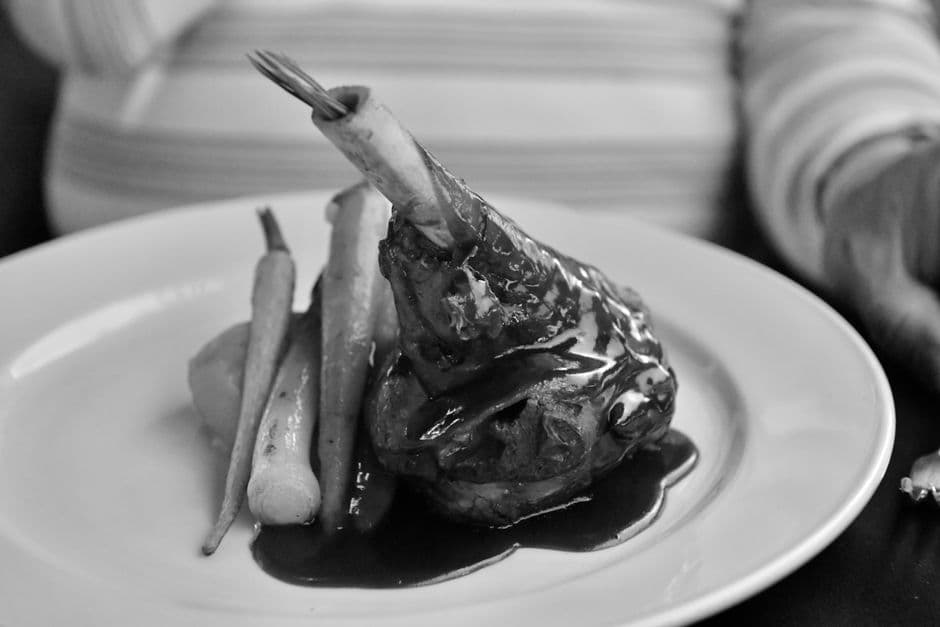
Tender New Zealand lamb shoulder slow-roasted with kumara and herbs to replicate the smoky, earthy flavours of a traditional hāngī.
While nothing replicates the full magic of an earth-oven hāngī, this oven adaptation captures the essence of the technique using a tightly sealed roasting dish and wet aromatics. New Zealand lamb is world-renowned for its sweetness and tenderness, a result of the animals grazing on lush green pastures year-round. This dish combines that prized lamb with kumara, garlic, rosemary and native kawakawa leaves (or bay leaf as a substitute) to produce a deeply satisfying, slow-cooked centrepiece.
Sirve 6
Using a sharp knife, make 12 deep incisions across the lamb shoulder. Push a halved garlic clove and a small sprig of rosemary into each cut.
Rub the lamb all over with olive oil, salt, pepper and smoked paprika. Leave to marinate for at least 30 minutes at room temperature or overnight in the fridge.
Preheat oven to 160 °C. Scatter kumara, potatoes, and onions in a deep roasting dish. Pour in stock and add kawakawa or bay leaves.
Place the lamb on top of the vegetables. Cover the dish tightly with two layers of foil. Roast for 3.5 hours.
Remove foil, increase oven to 220 °C and roast for a further 30 minutes until the lamb is deeply golden and the edges are caramelised.
Rest the lamb for 20 minutes, loosely covered. The meat should pull apart easily with two forks. Serve with the vegetables and pan juices.
Bring lamb to room temperature before roasting for even cooking.
The tighter the foil seal, the more steam is trapped and the more tender the result.
Deglaze the pan with a splash of red wine before serving for a richer gravy.
Pruebe y ajuste la sal al final — los sabores se concentran a medida que los líquidos se reducen, y un pellizco final de sal escamosa agudiza todo el plato.
Use mutton for a stronger, more traditional flavour.
Add pumpkin and parsnip to the vegetable base.
Rub with miso and honey for a fusion twist.
Vegetariano: reemplace la proteína con champiñones ostra rey asados, tofu ahumado o garbanzos cocidos — ajuste el sazón ligeramente hacia arriba para compensar.
Refrigerate leftovers for up to 4 days. Reheat in a covered dish with a little stock.
Lamb has been central to New Zealand's farming identity since European settlers introduced sheep in the 18th century. Today New Zealand is one of the world's leading lamb exporters, and slow-cooked lamb dishes bridge the gap between Māori earth-oven traditions and settler roasting techniques.
Shoulder is preferred for slow-cooking as it has more connective tissue and fat that breaks down into tenderness. Leg can dry out.
Sí — la mayoría de los componentes se pueden preparar hasta un día antes y refrigerar por separado. Recaliente suavemente y ensamble justo antes de servir para que las texturas se mantengan distintas.
Manténgase cerca del papel que juega cada ingrediente: intercambie aromáticos por otros similares (chalota por cebolla, limón por limón), y mantenga el equilibrio grasa-ácido-sal intacto. Las mezclas de especias generalmente se pueden aproximar con lo que hay en la alacena.
Authenticity sits on a spectrum — what matters more is honoring the technique and balance of flavors. If the dish tastes harmonious and respects how cooks in its home region would build it, you're on solid ground.
Por porción (420g) · 6 porciones totales
Pregúntele a nuestro asistente de cocina con IA cualquier cosa sobre esta receta: sustituciones, técnicas, escalado.
Chatea con AI Chef →Únete a la conversación
Inicia sesión para dejar un comentario y guardar tus recetas favoritas
¿Tienes comentarios o necesitas ayuda?
Leemos todos los correos y respondemos en 1–2 días hábiles.
© 2026 MyCookingCalendar. Todos los derechos reservados.