
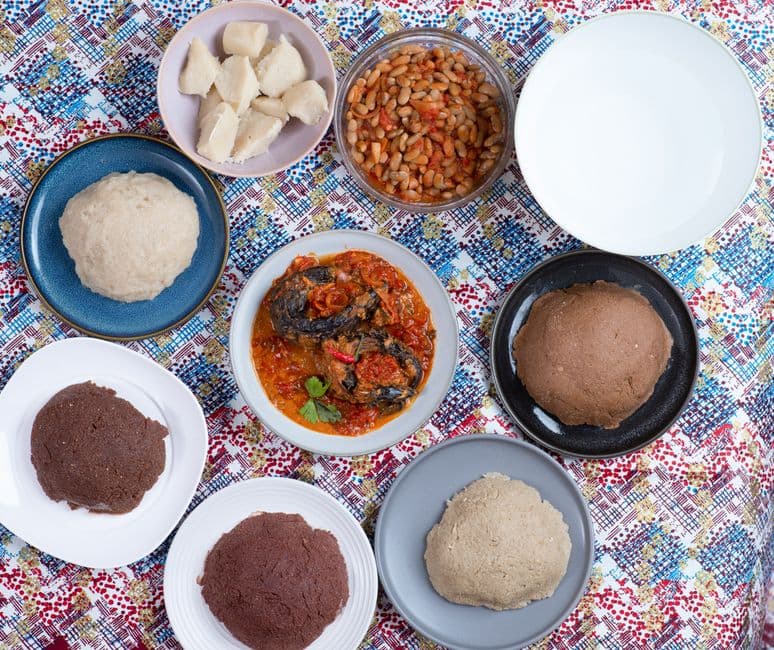
Ibiharage
Un abundante guiso de frijoles rojos de Burundi con tomates, cebollas y especias, un alimento básico diario lleno de proteínas de origen vegetal.
Acerca de esta receta
Ibiharage significa "frijoles" en kirundi, y este guiso de frijoles rojos es una de las fuentes de proteínas más importantes de la cocina de Burundi. Burundi, un país sin salida al mar con recursos ganaderos limitados, depende en gran medida de las legumbres, y el ibiharage se come a diario en la mayoría de los hogares, y a menudo se sirve tanto en el almuerzo como en la cena junto con ugali o arroz. El guiso se condimenta de forma sencilla pero eficaz (cebolla, ajo, tomates y un toque de chile), lo que permite que la riqueza terrosa de los frijoles rojos cocidos a fuego lento ocupe un lugar central. Los frijoles son tan fundamentales para la identidad burundesa que a veces al ibiharage se le llama simplemente "el alimento de Burundi".
Ingredientes
Sirve 6
- 500 gfrijoles rojos secos, remojados durante la noche
- 2 cdacooking oil
- 2cebollas grandes, finamente picadas
- 4 dientesajo, picado
- 3tomates maduros, picados
- 1 cdtacomino molido
- 1 cdtapimentón
- 1chile picado (opcional)
- 1 litroagua o caldo
- al gusto(to taste)
- Fresh parsleypara decorar
Instrucciones
- 1
Cocinar los frijoles
Escurrir los frijoles remojados y colocarlos en una olla grande con agua fresca. Deje hervir y cocine vigorosamente durante 10 minutos, luego reduzca a fuego lento y cocine durante 50 a 60 minutos hasta que estén tiernos. Escurrir reservando 500 ml de líquido de cocción.
- 2
Sofreír los aromáticos
Calienta el aceite en una olla grande a fuego medio. Cocine las cebollas hasta que estén doradas, aproximadamente 6 minutos. Agrega el ajo, el comino, el pimentón y la guindilla; cocine 1 minuto.
- 3
Añadir los tomates
Agregue los tomates y cocine por 5 minutos hasta que se deshagan.
- 4
Combine y cocine a fuego lento
Agregue los frijoles cocidos y el líquido de cocción reservado. Sazone bien con sal y pimienta. Cocine a fuego lento durante 20 minutos hasta que el guiso espese y los sabores se mezclen.
- 5
Ajustar la consistencia
Triture una cucharada de frijoles contra el costado de la olla para espesar el guiso de forma natural. Ajustar el condimento.
- 6
Servir
Adorne con perejil y sirva junto con ugali, arroz o plátano frito.
¿Has preparado esta receta?
Valórala y ayuda a otros a encontrar las recetas que de verdad funcionan.
Inicia sesión con un toque y guardaremos la valoración que acabas de elegir.
Todo lo que necesitas para planificar tu semana — gratis
- Calendario de comidas
- Lista de compras
- Ideas de recetas con IA
Controla lo que comes
Fotografía tu comida para registrar calorías y macros, usa temporizadores de ayuno y controla tu agua en la app gratuita SnapCal.
Consejos profesionales
- →
Agregar sal solo después de que los frijoles estén completamente cocidos evita que se pongan duros.
- →
Se pueden usar frijoles enlatados para ahorrar tiempo: omita el paso de ebullición y reduzca el tiempo de cocción a fuego lento a 20 minutos.
- →
Triturar una pequeña porción de frijoles espesa el guiso de forma natural sin añadir harina.
- →
Pruebe y ajuste la sal al final — los sabores se concentran a medida que los líquidos se reducen, y un último pellizco de sal escamosa afilará todo el plato.
Variaciones
- •
Ibiharage con coco: agrega 100 ml de leche de coco al final para obtener un guiso más rico y cremoso.
- •
Ibiharage especiado: agregue jengibre molido y canela para obtener una versión con influencia del norte de África.
- •
Vegetariano: cambiar la proteína por hongos ostra real asados, tofu ahumado o garbanzos cocidos — ajustar el condimento ligeramente hacia arriba para compensar.
- •
Más picante: agregue un chile fresco finamente picado o una cucharadita de pimienta de Alepo/Urfa triturada a los aromáticos para obtener un picante cálido y en capas en lugar de un solo golpe fuerte.
Almacenamiento
Se mantiene refrigerado por 5 días. Se congela excelentemente por hasta 3 meses. Los frijoles absorben más líquido con el tiempo; agregue agua al recalentarlos.
Historia y origen
Los frijoles rojos se han cultivado en la región de los Grandes Lagos durante siglos y se cree que llegaron a África Central a través de las rutas comerciales árabes y portuguesas desde América en el siglo XVI. Rápidamente se volvieron tan centrales para la agricultura de subsistencia de Burundi que ahora se los considera un elemento cultural indígena básico.
Preguntas frecuentes
¿Necesito remojar los frijoles durante la noche?
El remojo reduce drásticamente el tiempo de cocción y mejora la digestibilidad. Si lo olvida, use el método de remojo rápido: hierva durante 5 minutos, retire del fuego, remoje durante 1 hora, luego escurra y cocine.
¿Puedo usar frijoles negros en su lugar?
Sí, los frijoles negros funcionan bien y le dan al guiso un sabor ligeramente más rico, aunque le darán al líquido un color negro púrpura más oscuro.
¿Puedo hacer esto con anticipación?
Sí — la mayoría de los componentes se pueden preparar con un día de anticipación y refrigerar por separado. Recaliente suavemente y ensamble justo antes de servir para que las texturas se mantengan distintas.
¿Qué puedo sustituir si no tengo todos los ingredientes?
Manténgase cerca del papel que juega cada ingrediente: cambie los aromáticos por otros similares (chalote por cebolla, lima por limón), y mantenga el equilibrio de grasa-ácido-sal intacto. Las mezclas de especias generalmente se pueden aproximar con lo que está en la despensa.
Datos nutricionales
Por porción (320g) · 6 porciones totales
Resumen de tiempo
¿Tiene preguntas?
Pregúntele a nuestro asistente de cocina con IA cualquier cosa sobre esta receta: sustituciones, técnicas, escalado.
Chatea con AI Chef →Más recetas de Burundian
También Te Puede Gustar
Platos similares de otras cocinas del mundo.
Herramientas de Cocina Gratuitas
Calculadoras y conversores que acompañan a esta página — sin registro.
Conviértelo en un Plan
Prográmalo, haz la compra y controla lo que ya tienes.
Calendario de planificación de comidas
Coloca esta receta en un día y organiza la semana a su alrededor.
App de lista de la compra
Convierte esta lista de ingredientes en una lista de la compra agrupada por pasillo.
Nutricionista con IA
Pregunta por sustituciones, macros y porciones de este plato en lenguaje sencillo.
Sigue Leyendo
Lecturas más largas que profundizan en las ideas detrás de este plato.
Dieta rica en proteínas para bajar de peso: una ciencia completa detrás de ella
12 mín.
¿Qué son las macros? Proteínas, carbohidratos y grasas explicados de forma sencilla: una guía completa
13 mín.
Calidad de las proteínas: proteínas completas versus incompletas, puntuación DIAAS y lo que realmente importa
14 mín.
Comunidad
Únete a la conversación
Inicia sesión para dejar un comentario y guardar tus recetas favoritas