
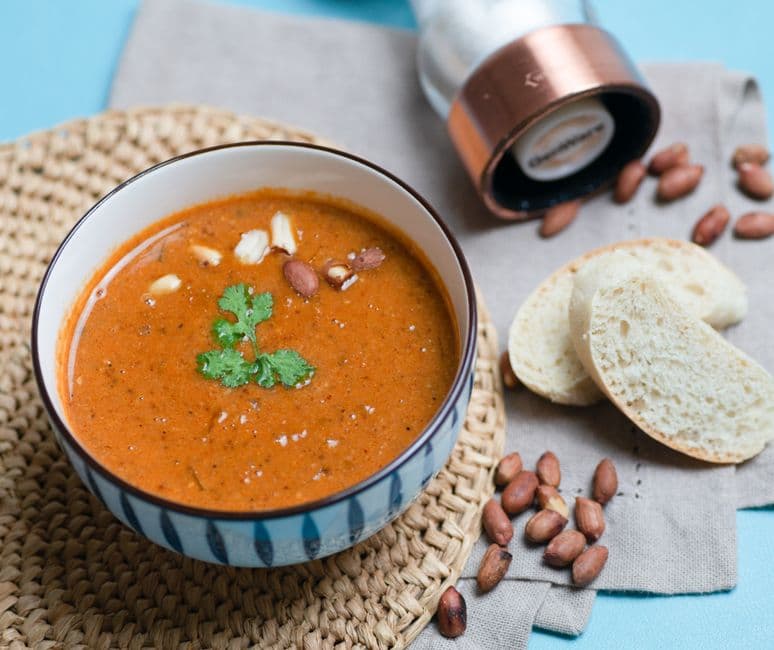
Mafé (Senegalese Peanut Stew)
El gran guiso de maní de África occidental: cordero o ternera estofado a fuego lento en una rica y terrosa salsa de maní con tomates y verduras. Profundamente satisfactorio, cálidamente especiado y suave aterciopelado.
Acerca de esta receta
Mafé (también mafe, tigadèguena o guiso de maní) es uno de los platos más importantes y antiguos de África occidental, y se come desde Senegal hasta Mali y Guinea en innumerables variaciones regionales. El elemento definitorio es la pasta de maní (maní), maní entero tostado molido hasta obtener una pasta espesa y aceitosa, que se cocina con tomate, cebolla y especias hasta obtener una salsa de extraordinaria riqueza y profundidad. La salsa de maní no es dulce sino salada y ligeramente amarga, con una complejidad que se profundiza con la larga cocción. El cordero es la proteína más tradicional en Senegal, pero se utilizan carne de res, pollo y cabra. El mafé se sirve sobre arroz o cuscús y es el plato que preparan las familias senegalesas cuando hay algo que celebrar.
Ingredientes
Sirve 6
- 800 gpaletilla de cordero con hueso(cut into pieces)
- 200 gmantequilla de maní suave(natural, sin azúcar)
- 400 gtomates picados en lata
- 2 cdapasta de tomate
- 2cebollas(diced)
- 3dientes de ajo(minced)
- 1scotch bonnet(left whole)
- 2zanahorias(diced)
- 1sweet potato(diced 3cm)
- 150 gjudías verdes(recortado y partido por la mitad)
- 3 cdaaceite vegetal
- 700 mlagua o caldo
- 2 cdtasal
- 1 cdtapimienta negra
Instrucciones
- 1
Dora la carne
Calienta el aceite en una olla grande. Dore los trozos de cordero en tandas a fuego alto durante 4 minutos por lado. Retirar y reservar.
- 2
Ablandar las cebollas
En la misma olla sofreír la cebolla 8 min hasta que esté dorada. Agrega el ajo y cocina 1 min.
- 3
Agrega los tomates y pega
Agrega los tomates picados y la pasta de tomate. Cocine 10 min hasta que se reduzca y se oscurezca.
- 4
Agrega mantequilla de maní
Agregue la mantequilla de maní con 200 ml de agua caliente para diluirla en la salsa. Agregue el agua restante, el whisky escocés entero, sal y pimienta. Regrese la carne a la olla.
Primero, diluya la mantequilla de maní con agua caliente; agregarla directamente a la olla puede hacer que se atasque y se aglomere.
- 5
Estofar a fuego lento
Llevar a fuego lento. Tape y cocine durante 45 minutos a fuego lento, revolviendo ocasionalmente.
- 6
Añadir las verduras
Agrega las zanahorias y el camote. Cocine a fuego lento 20 min. Agrega las judías verdes en los últimos 8 min. Pruebe y ajuste la sazón.
- 7
Serve
Sirva sobre arroz blanco al vapor. La salsa debe quedar espesa, aterciopelada y con mucho sabor.
¿Has preparado esta receta?
Valórala y ayuda a otros a encontrar las recetas que de verdad funcionan.
Inicia sesión con un toque y guardaremos la valoración que acabas de elegir.
Todo lo que necesitas para planificar tu semana — gratis
- Calendario de comidas
- Lista de compras
- Ideas de recetas con IA
Controla lo que comes
Fotografía tu comida para registrar calorías y macros, usa temporizadores de ayuno y controla tu agua en la app gratuita SnapCal.
Consejos profesionales
- →
La mantequilla de maní natural sin azúcar es esencial: la mantequilla de maní endulzada comercial produce una salsa empalagosamente dulce.
- →
El gorro escocés entero da calor gradualmente: más pinchazos = más calor.
- →
Pruebe y ajuste la sal al final: los sabores se concentran a medida que los líquidos se reducen y una pizca final de sal en escamas agudiza todo el plato.
- →
La mise en place se amortiza sola: pique, mida y premezcle todo antes de que comience el fuego, especialmente para cualquier paso que avance rápido.
Variaciones
- •
Mafé de pollo: use muslos de pollo con hueso; reduzca el estofado a 40 minutos en total
- •
Mafé vegetariano: omitir la carne, doblar el boniato y agregar garbanzos
- •
Agregue camarones secos o salsa de pescado para obtener una base umami más profunda.
- •
Más picante: agregue un chile fresco finamente picado o una cucharadita de pimienta de Alepo/Urfa triturada a los aromáticos para obtener un picante cálido y en capas en lugar de un solo golpe fuerte.
Almacenamiento
Mejora el día 2. Se mantiene refrigerado 4 días. Se congela muy bien durante 3 meses.
Historia y origen
El mafé es uno de los platos de África occidental más antiguos documentados: los guisos de maní aparecen en fuentes escritas del siglo XVII. El plato viajó con la trata de esclavos al sur de Estados Unidos, donde evolucionó hasta convertirse en los guisos de maní de la cocina sureña. La versión senegalesa sigue siendo el más complejo y famoso de todos los guisos de maní de África occidental.
Preguntas frecuentes
¿Puedo usar harina de maní en lugar de mantequilla de maní?
Sí, la harina de maní (maní molido desgrasado) produce una salsa un poco menos rica pero con el mismo sabor. Mezcle 150 g de harina de maní con 200 ml de agua para formar una pasta, luego agréguela a la olla como lo haría con la mantequilla de maní. El mafé tradicional de África occidental en realidad utiliza maní recién tostado y molido; la harina de maní está más cerca de esta forma original que la mantequilla de maní comercial.
¿Puedo hacer esto con anticipación?
Sí, la mayoría de los componentes se pueden preparar hasta con un día de anticipación y refrigerar por separado. Vuelva a calentar suavemente y ensamble justo antes de servir para que las texturas se mantengan distintas.
¿Qué puedo sustituir si no tengo todos los ingredientes?
Manténgase atento al papel que desempeña cada ingrediente: cambie los aromáticos por otros similares (chalote por cebolla, lima por limón) y mantenga intacto el equilibrio entre grasa, ácido y sal. Las mezclas de especias generalmente se pueden aproximar a lo que hay en la alacena.
¿Cómo sé que es auténtico?
La autenticidad se encuentra en un espectro; lo que más importa es honrar la técnica y el equilibrio de sabores. Si el plato tiene un sabor armonioso y respeta cómo lo prepararían los cocineros de su región de origen, está en tierra firme.
Datos nutricionales
Por porción · 6 porciones totales
Resumen de tiempo
¿Tiene preguntas?
Pregúntele a nuestro asistente de cocina con IA cualquier cosa sobre esta receta: sustituciones, técnicas, escalado.
Chatea con AI Chef →Destacado en Guías
Esta receta aparece en las siguientes guías seleccionadas:
Más recetas de cocina senegalesa
También Te Puede Gustar
Platos similares de otras cocinas del mundo.
Explorar por Ingrediente
Más recetas construidas alrededor de los mismos ingredientes principales.
Herramientas de Cocina Gratuitas
Calculadoras y conversores que acompañan a esta página — sin registro.
Conviértelo en un Plan
Prográmalo, haz la compra y controla lo que ya tienes.
Calendario de planificación de comidas
Coloca esta receta en un día y organiza la semana a su alrededor.
App de lista de la compra
Convierte esta lista de ingredientes en una lista de la compra agrupada por pasillo.
Nutricionista con IA
Pregunta por sustituciones, macros y porciones de este plato en lenguaje sencillo.
Sigue Leyendo
Lecturas más largas que profundizan en las ideas detrás de este plato.
Comunidad
Únete a la conversación
Inicia sesión para dejar un comentario y guardar tus recetas favoritas