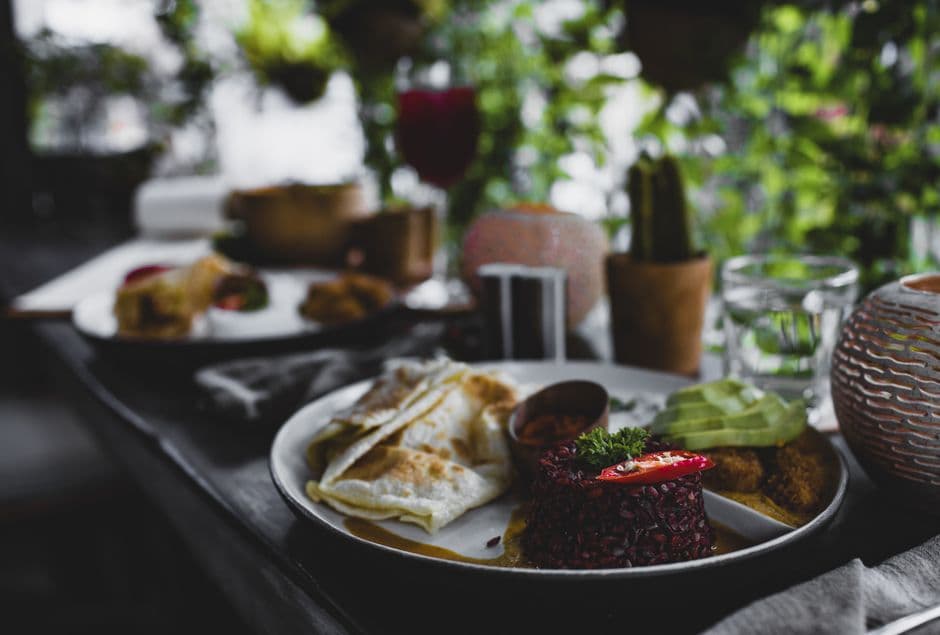
Surinamese-style roti wraps filled with fragrant curried chicken and tender potatoes.
Roti met Kip is one of Suriname's most beloved street foods and home meals, a direct legacy of the Hindustani (South Asian) indentured labourers who arrived in the country from 1873 onwards. The soft, layered roti flatbread (similar to a paratha) is wrapped around a rich, fragrant curry of bone-in chicken pieces and soft-boiled potatoes, creating a complete meal in every parcel. Unlike Indian curries, Surinamese curry tends to be lighter in colour and relatively mild, flavoured with a distinctive blend of masala that has been adapted over generations.
Sirve 4
Combine flour, baking powder, and salt. Add warm water gradually and knead into a smooth, pliable dough. Divide into 4 balls, cover, and rest 30 minutes.
Rub chicken pieces with curry powder, cumin, coriander, turmeric, garlic, ginger, and salt. Let sit 15 minutes.
Heat oil in a deep pan over medium heat. Sauté onion until golden, about 6 minutes. Add chicken and brown on all sides. Add potatoes and water/stock. Cover and simmer 35–40 minutes until chicken is cooked through and potatoes are tender, stirring occasionally.
Roll each dough ball into a thin round (about 25 cm). Brush with ghee, fold in thirds, fold again into a square, then roll out again into a round. Heat a dry tawa or flat pan over high heat. Cook each roti 1–2 minutes per side until golden spots form. Brush with ghee while hot and clap between hands to fluff layers.
Place a roti on each plate. Spoon generous amounts of curried chicken and potatoes onto one half. Fold and serve immediately.
The clapping technique (slapping the cooked roti between your palms) is essential for separating the layers and making it fluffy.
Use bone-in chicken for deeper flavour in the curry.
A authentic Surinamese roti shop adds a boiled egg and long beans to the wrap — try this at home!
Taste and adjust salt at the very end — flavors concentrate as liquids reduce, and a final pinch of flaky salt sharpens the whole dish.
Vegetarian: replace chicken with chickpeas and extra potatoes.
Roti met Djogo Djogo: add split yellow peas to the curry for a more substantial filling.
Más picante: agregar un chile fresco finamente picado o una cucharadita de pimienta Aleppo/Urfa machacada a los aromáticos para obtener un calor cálido y en capas en lugar de un golpe agudo.
Lighter: reduce the fat by a third and finish with a squeeze of citrus or a splash of vinegar to keep brightness without losing body.
Store curry separately from roti. Curry keeps refrigerated for 3 days. Roti is best eaten fresh but can be reheated in a dry pan.
Surinamese roti was developed by the Hindustani community who came from India under indentured labour contracts from 1873 to 1916. They adapted the Indian paratha flatbread and traditional curry to local Surinamese ingredients and tastes, creating a uniquely Surinamese dish that is now embraced by all ethnic groups in the country.
Surinamese curry is typically a blend of coriander, cumin, turmeric, and fenugreek, often lighter and less chilli-hot than Indian curries. Most Surinamese grocery stores sell their own blends.
Yes, a good-quality paratha from an Indian grocery store works well as a shortcut. Warm it in a dry pan before filling.
Sí — la mayoría de los componentes se pueden preparar hasta un día antes y refrigerar por separado. Recalentar suavemente y ensamblar justo antes de servir para que las texturas se mantengan distintas.
Mantente cerca del rol que juega cada ingrediente: intercambia aromáticos por similares (chalota por cebolla, lima por limón) y mantén el equilibrio grasa-ácido-sal intacto. Las mezclas de especias generalmente pueden aproximarse con lo que hay en el armario.
Por porción (420g) · 4 porciones totales
Pregúntele a nuestro asistente de cocina con IA cualquier cosa sobre esta receta: sustituciones, técnicas, escalado.
Chatea con AI Chef →Únete a la conversación
Inicia sesión para dejar un comentario y guardar tus recetas favoritas
¿Tienes comentarios o necesitas ayuda?
Leemos todos los correos y respondemos en 1–2 días hábiles.
© 2026 MyCookingCalendar. Todos los derechos reservados.