
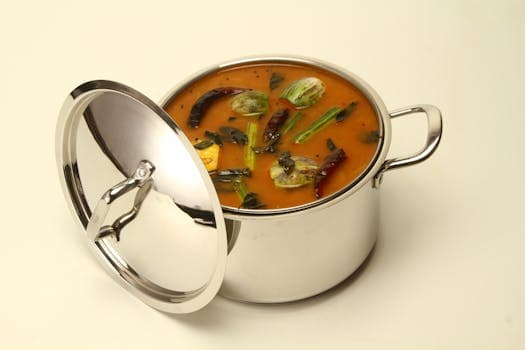
Sambar (curry de lentejas y verduras de Tamil Nadu)
Curry de lentejas y verduras especiadas del sur de la India con acidez de tamarindo y especias aromáticas.
Acerca de esta receta
Sambar es el alma de la cocina del sur de la India, un curry profundamente aromático y sabroso elaborado con gandules (toor dal), tamarindo y una compleja mezcla de especias. Las verduras varían según la temporada y la región, pero normalmente incluyen okra, berenjena, zanahorias y muslos (la parte vegetal, no la de pollo). El tamarindo proporciona un contrapunto ácido a las especias cálidas, y todo el plato se remata con un templado de aceite, semillas de mostaza y hojas de curry que crean una explosiva explosión de sabor. Arraigado en la cocina cotidiana de las cocinas indias, Sambar (curry de verduras y lentejas de Tamil Nadu) equilibra técnica y tradición: el toor dal (guisantes de gandul) remojados se trata con cuidado, basándose en proporciones tradicionales que los lugareños han refinado a lo largo de generaciones. El plato tiene una firma sensorial inconfundible: aromas que llenan la cocina mientras se cocina, texturas en capas que se revelan bocado a bocado y una profundidad de sabor que proviene de los condimentos pacientes en lugar de atajos. Ya sea que se sirva como cena entre semana o como pieza central de una mesa de celebración, refleja una despensa regional donde los productos locales, los hábitos de condimentos y los recipientes para cocinar dan forma al resultado final. Los cocineros caseros que preparan este plato a menudo notan lo indulgente que es una vez que se entiende el método básico, y cómo unas pocas pequeñas elecciones (la frescura del toor dal (guisantes de paloma), remojados, el orden de las adiciones, el tiempo de reposo al final) separan una buena versión de una memorable. Esta receta analiza esas opciones para que el plato llegue con el carácter que tiene en su propio territorio.
Ingredientes
Sirve 4
- 1 tazatoor dal (guandú), remojado
- 2 cdapasta de tamarindo
- 2 cdasambar powder
- 1 cdamustard seeds
- 10 hojascurry leaves
- 2 cdaaceite vegetal
Instrucciones
- 1
Cocina el dal
Cocine el toor dal remojado en una olla a presión con 2 tazas de agua y una pizca de cúrcuma durante 3 silbidos hasta que esté suave y blando.
- 2
Añade verduras y especias.
Al dal cocido, agregue verduras picadas (okra, berenjena, zanahorias, muslos si están disponibles), sambar en polvo y pasta de tamarindo. Cocine a fuego lento durante 15 minutos hasta que las verduras estén tiernas.
- 3
Sazona al gusto
Pruebe y ajuste la sal y la acidez de tamarindo a su preferencia. El curry debe tener un equilibrio entre ácido, especiado y salado.
- 4
Templar con especias
Calienta el aceite en una sartén pequeña. Agrega las semillas de mostaza; reventarán y crujirán. Agrega las hojas de curry. Vierta este templado caliente sobre el sambar.
¿Has preparado esta receta?
Valórala y ayuda a otros a encontrar las recetas que de verdad funcionan.
Inicia sesión con un toque y guardaremos la valoración que acabas de elegir.
Todo lo que necesitas para planificar tu semana — gratis
- Calendario de comidas
- Lista de compras
- Ideas de recetas con IA
Controla lo que comes
Fotografía tu comida para registrar calorías y macros, usa temporizadores de ayuno y controla tu agua en la app gratuita SnapCal.
Consejos profesionales
- →
El polvo de sambar es una mezcla de especias; Búscalo en las tiendas de comestibles indias o haz el tuyo propio con chiles, fenogreco y cilantro.
- →
El tamarindo es esencial para el característico sabor ácido y picante; no te saltes ni sustituyas.
- →
El atemperado (tadka) es fundamental: las chisporroteantes semillas de mostaza y las hojas de curry añaden capas aromáticas.
- →
Consiga el toor dal (guandú) más fresco y remojado que pueda encontrar: es el ancla de sabor del plato.
- →
Sazone en capas a medida que avanza; La degustación en cada etapa evita un resultado final plano o demasiado salado.
Variaciones
- •
Hacer con diferentes verduras según la temporada.
- •
Añade proteínas como paneer o garbanzos.
- •
Utilice diferentes dals como chana dal o urad dal
- •
Vegetariano: reemplace la proteína principal con champiñones, paneer, tofu o frijoles abundantes para obtener una versión sin carne.
- •
Más picante: agregue chile fresco, una pasta de chile o una pizca de cayena con los aromáticos para obtener un perfil más cálido.
Almacenamiento
Se conserva refrigerado 5 días. Sabe mejor al día siguiente a medida que se desarrollan los sabores. Refrigere en un recipiente hermético por hasta 3 a 4 días. Vuelve a calentar suavemente en la estufa a fuego lento con un chorrito de agua o caldo para que se suelte, o en el microondas al 60% de potencia tapado para que se caliente sin secar. Se congela bien hasta por 2 meses en recipientes en porciones; Descongele durante la noche en el refrigerador antes de recalentarlo. Los platos elaborados con elementos lácteos o fritos pueden cambiar de textura después de congelarlos; refrésquelos con una guarnición crujiente.
Historia y origen
Se cree que el sambar se originó en Tamil Nadu, fue creado por cocineros brahmanes tamiles y se ha convertido en el curry básico de la cocina del sur de la India. Se sirve en todas las comidas del sur de la India, desde templos hasta hogares y restaurantes.
Preguntas frecuentes
¿Qué pasa si no puedo encontrar muslos de verduras?
Es una verdura de vaina exclusiva del sur de Asia. Sáltelo o sustitúyalo por judías verdes u otras verduras firmes.
¿Puedo hacerlo menos picante?
Reduzca la cantidad de polvo de sambar. La especia debe ser cálida y aromática, no abrumadora.
¿Puedo preparar sambar (curry de lentejas y verduras de Tamil Nadu) con anticipación?
Sí, la mayoría de los componentes se conservan bien en el frigorífico durante uno o dos días. Vuelve a calentar suavemente con un chorrito de líquido para que vuelva a la vida.
¿Con qué puedo sustituir el toor dal (gandules) remojados?
Si es difícil encontrar toor dal (guandú) remojado, los sustitutos más cercanos comparten su textura y contenido de agua. Ajuste ligeramente el condimento, ya que los sustitutos suelen tener menos carácter propio.
Datos nutricionales
Por porción · 4 porciones totales
Resumen de tiempo
¿Tiene preguntas?
Pregúntele a nuestro asistente de cocina con IA cualquier cosa sobre esta receta: sustituciones, técnicas, escalado.
Chatea con AI Chef →Destacado en Guías
Esta receta aparece en las siguientes guías seleccionadas:
Más recetas de cocina india
También Te Puede Gustar
Platos similares de otras cocinas del mundo.
Herramientas de Cocina Gratuitas
Calculadoras y conversores que acompañan a esta página — sin registro.
Conviértelo en un Plan
Prográmalo, haz la compra y controla lo que ya tienes.
Calendario de planificación de comidas
Coloca esta receta en un día y organiza la semana a su alrededor.
App de lista de la compra
Convierte esta lista de ingredientes en una lista de la compra agrupada por pasillo.
Importador de recetas
Guarda esta receta —y cualquier URL de receta— en una biblioteca ordenada.
Sigue Leyendo
Lecturas más largas que profundizan en las ideas detrás de este plato.
Comunidad
Únete a la conversación
Inicia sesión para dejar un comentario y guardar tus recetas favoritas