
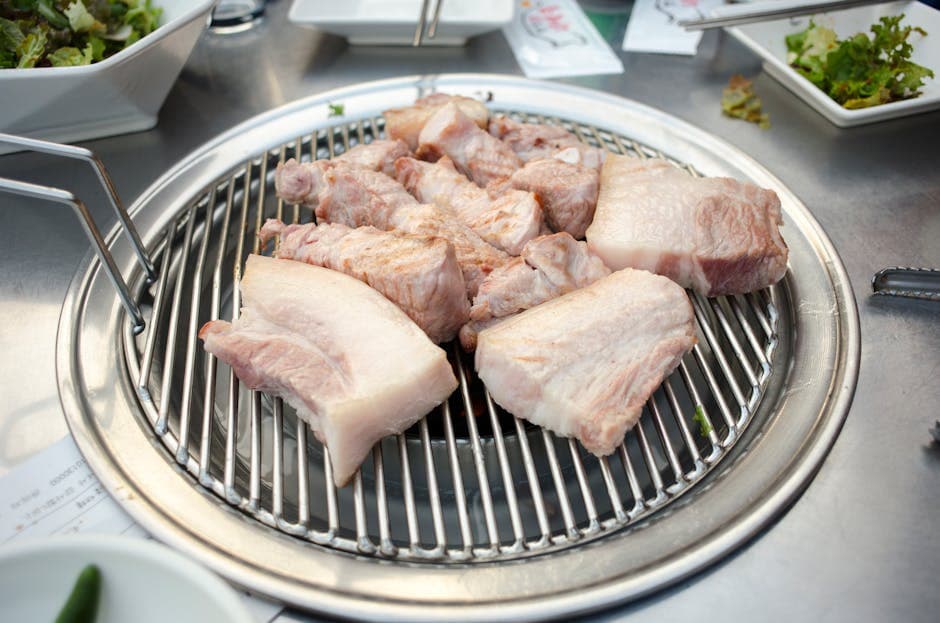
Samgyeopsal — Panceta de Cerdo a la Parrilla Coreana
La experiencia gastronómica más sociable de Corea: panceta de cerdo de corte grueso asada en la mesa sobre una plancha acanalada, envuelta en hojas de perilla y lechuga con gochujang, ajo y kimchi.
Acerca de esta receta
El Samgyeopsal (삼겹살) —literalmente 'carne de tres capas', en referencia a las capas de grasa y músculo de la panceta de cerdo— es la experiencia quintaesencial de la barbacoa coreana. No hay marinado ni salsa sobre la carne en sí: solo lonchas gruesas de panceta asadas directamente sobre una plancha caliente de hierro fundido acanalado, que se doran maravillosamente en su propia grasa. La experiencia es tanto ritual social como comida: el cocinero (normalmente la persona más joven de la mesa según la tradición coreana) atiende la parrilla, corta con tijeras la carne cocida en trozos más pequeños y cada uno monta sus propios ssam (envueltos) con una selección cuidadosamente elegida de acompañamientos. Se disfruta mejor en compañía, idealmente con cerveza coreana fría o soju.
Ingredientes
Sirve 4
- 800 gpanceta de cerdo(con piel, en lonchas de 5–7 mm; pide a tu carnicero que la corte)
- 1 cabezaajo(separado en dientes, cortados por la mitad)
- 200 gkimchi(el añejo (bien fermentado) es el mejor)
- 1 cabezahojas de lechuga mantequilla o de perilla (kkaennip)(para envolver)
- 4 cdassamjang(pasta coreana para mojar de barbacoa)
- 2 cdagochujang
- 1 cdaaceite de sésamo
- 100 gcebolleta en rodajas(para la ensalada pajeon de aderezo)
- 1 cdasalsa de soja(para la ensalada de cebolleta)
- 1 cdtavinagre de arroz(para la ensalada de cebolleta)
- 1 cdtagochugaru(para la ensalada de cebolleta)
- 1 cdasemillas de sésamo(tostadas)
Instrucciones
- 1
Preparar los acompañamientos
Prepara la ensalada de cebolleta (pajori): mezcla la cebolleta en rodajas con salsa de soja, vinagre de arroz, aceite de sésamo, gochugaru y semillas de sésamo. Reserva para que se ablande un poco. Dispón el kimchi, el ssamjang, las mitades de ajo y la lechuga/perilla en la mesa.
El pajori es la ensalada de cebolleta que corona el envuelto ssam: su crujido fresco y ácido es lo que lo une todo.
- 2
Calentar la parrilla
Calienta una plancha acanalada de hierro fundido, una parrilla portátil de butano o una sartén de fondo grueso a fuego fuerte hasta que esté muy caliente: una gota de agua debería evaporarse al instante. Engrasa ligeramente la superficie.
- 3
Asar el cerdo
Coloca las lonchas de panceta sobre la parrilla caliente en una sola capa (cocina por tandas si hace falta). Cocina sin mover durante 3–4 minutos hasta que la grasa se funda y la parte inferior esté dorada y empezando a quedar crujiente. Da la vuelta y cocina el otro lado 2–3 minutos. La grasa debe quedar crujiente y la carne dorada.
Resiste la tentación de mover el cerdo demasiado pronto. Deja que desarrolle una buena costra dorada antes de voltearlo.
- 4
Cortar con tijeras y asar el ajo
Usa unas tijeras de cocina para cortar el cerdo asado en trozos de bocado directamente sobre la parrilla. Añade las mitades de ajo a la plancha y ásalas junto al cerdo hasta que estén doradas y ligeramente chamuscadas. Los ajos se comen enteros en el envuelto.
- 5
Montar el envuelto ssam
Coloca una hoja de lechuga o perilla en la palma de la mano. Añade uno o dos trozos de cerdo, una cucharadita de ssamjang y/o gochujang, un trozo de ajo chamuscado, algo de kimchi y una pizca de ensalada de cebolleta. Envuelve la hoja alrededor de todo y cómelo de un solo bocado: esto es etiqueta innegociable en la cultura de la barbacoa coreana.
El ssam debe ser de un solo bocado. Intentar tomar medio ssam se considera poco refinado en la cultura gastronómica coreana.
¿Has preparado esta receta?
Valórala y ayuda a otros a encontrar las recetas que de verdad funcionan.
Inicia sesión con un toque y guardaremos la valoración que acabas de elegir.
Todo lo que necesitas para planificar tu semana — gratis
- Calendario de comidas
- Lista de compras
- Ideas de recetas con IA
Cocina con las manos libres
Consigue planes de comida con IA, modo de cocina paso a paso y tus recetas guardadas en la app gratuita Bento.
Consejos profesionales
- →
La calidad de la panceta lo es todo aquí: las lonchas gruesas y bien veteadas dan resultados muy superiores. Pide a tu carnicero panceta de corte grueso al estilo coreano.
- →
El kimchi añejo y muy fermentado (mukeunji) es mejor que el kimchi fresco para este plato: la acidez corta la grasa a la perfección.
- →
Beber soju con samgyeopsal es una tradición coreana casi sagrada. Como alternativa, la cerveza OB fría o el vino de arroz makgeolli son excelentes compañeros.
Variaciones
- •
Chadolbaegi: corta falda de ternera muy fina como papel (congelarla lo facilita) para una alternativa más magra a la panceta.
- •
Samgyeopsal marinado (daepateon): marina el cerdo en una mezcla de pera rallada, salsa de soja y sésamo para una versión más dulce.
- •
Versión a la parrilla de interior: una buena sartén acanalada de hierro fundido sobre el fuego doméstico da excelentes resultados; asegúrate de que la cocina esté bien ventilada.
Almacenamiento
La panceta cocida debe comerse de inmediato. El cerdo crudo en lonchas se puede refrigerar 2 días, o congelar 2 meses.
Historia y origen
La panceta de cerdo ha sido central en la cocina coreana durante siglos, pero el samgyeopsal en su forma moderna —lonchas gruesas asadas en la mesa— surgió como formato popular en las décadas de 1970 y 1980, a medida que la economía de Corea del Sur crecía y la cultura de restaurantes se expandía. El plato quedó arraigado en la cultura laboral como la comida definitiva para las cenas de empresa (hweshik), a menudo acompañadas de rondas obligatorias de soju. El 3 de marzo (3/3) es extraoficialmente el 'Día del Samgyeopsal' en Corea del Sur, celebrado con el consumo de panceta de cerdo en todo el país.
Preguntas frecuentes
¿Qué es el ssamjang?
El ssamjang (쌈장) es un condimento coreano espeso e intensamente sabroso hecho con doenjang (pasta de soja fermentada), gochujang, aceite de sésamo, ajo y otros condimentos. Es la salsa esencial para mojar en los envueltos de barbacoa coreana. Cómpralo ya hecho en cualquier supermercado coreano.
¿Puedo cocinar samgyeopsal en una cocina de gas normal?
Por supuesto: una plancha de hierro fundido o una sartén de fondo grueso a máxima potencia da excelentes resultados. Usa el extractor (la grasa salpica) o abre las ventanas.
¿Qué es la perilla y dónde la encuentro?
El kkaennip (hojas de perilla/sésamo) son hojas de hierba grandes con un ligero sabor anisado, emparentadas con el shiso. Se venden frescas en supermercados coreanos. La lechuga mantequilla o las hojas de romana son un sustituto muy usado.
Datos nutricionales
Por porción (350g) · 4 porciones totales
Resumen de tiempo
¿Tiene preguntas?
Pregúntele a nuestro asistente de cocina con IA cualquier cosa sobre esta receta: sustituciones, técnicas, escalado.
Chatea con AI Chef →Destacado en Guías
Esta receta aparece en las siguientes guías seleccionadas:
Más recetas de cocina coreana
También Te Puede Gustar
Platos similares de otras cocinas del mundo.
Explorar por Ingrediente
Más recetas construidas alrededor de los mismos ingredientes principales.
Herramientas de Cocina Gratuitas
Calculadoras y conversores que acompañan a esta página — sin registro.
Conviértelo en un Plan
Prográmalo, haz la compra y controla lo que ya tienes.
Sigue Leyendo
Lecturas más largas que profundizan en las ideas detrás de este plato.
Comunidad
Únete a la conversación
Inicia sesión para dejar un comentario y guardar tus recetas favoritas