
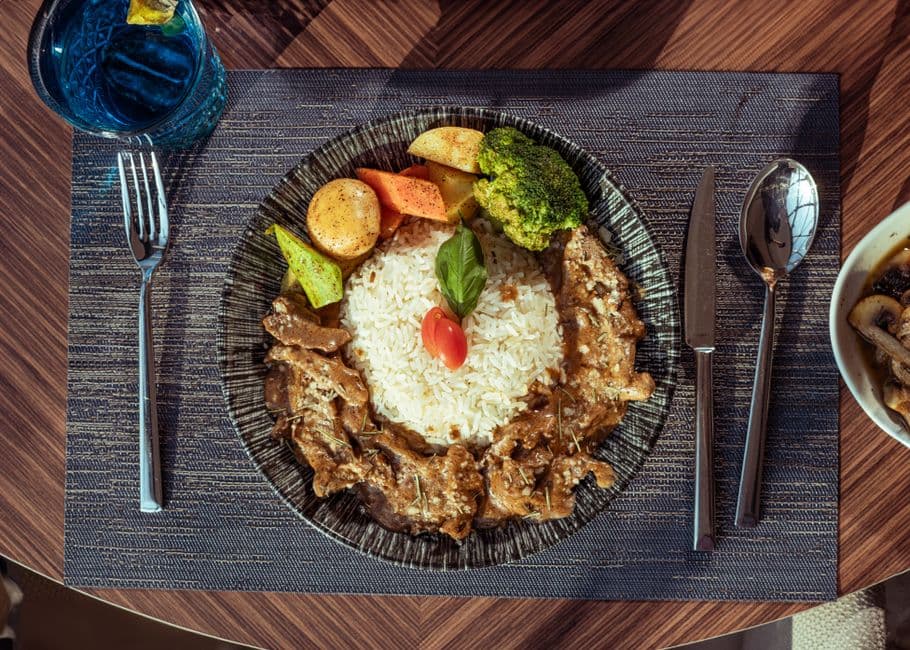
Beef Stroganoff
Tender strips of beef in a rich, tangy sour cream and mustard sauce with sautéed mushrooms — the legendary Russian classic beloved worldwide.
About This Recipe
Beef Stroganoff (бефстроганов) is one of Russia's greatest contributions to global cuisine, named after the Stroganov family of Russian aristocrats and first recorded in the nineteenth century in Saint Petersburg. The dish is a study in elegant simplicity: thin strips of the finest beef tenderloin are quickly seared to remain just pink, then combined with a velvety sauce of sautéed mushrooms, shallots, beef stock, Dijon mustard and thick smetana sour cream. The key is speed — the beef should never be overcooked, and the sauce should be added to the meat at the very last moment. In Russia, the dish is typically served with potato straws or boiled potatoes; the egg noodle pairing is a Western adaptation. The best stroganoff is made with the best beef and the best sour cream — quality ingredients are everything.
Ingredients
Serves 4
- 600 gbeef tenderloin or sirloin(cut into thin strips 1cm x 5cm)
- 300 gbutton or cremini mushrooms(sliced)
- 2 mediumshallots(finely sliced)
- 2 clovesgarlic(minced)
- 200 mlbeef stock
- 200 mlsmetana or full-fat sour cream
- 1 tablespoonDijon mustard
- 1 tablespoontomato paste
- 2 tablespoonsbutter
- 2 tablespoonsvegetable oil
- 1 tablespoonWorcestershire sauce
- 1 teaspoonpaprika
- 2 tablespoonsfresh flat-leaf parsley(chopped)
Instructions
- 1
Prepare and season the beef
Pat the beef strips completely dry with paper towels — moisture is the enemy of a good sear. Season generously with salt, black pepper and paprika and toss to coat.
Drying the beef thoroughly is essential for achieving a proper sear rather than steaming the meat.
- 2
Sear the beef
Heat the oil in a large frying pan over very high heat until smoking. Add the beef strips in a single layer (work in batches to avoid crowding) and sear for 1–1.5 minutes without moving, then toss and sear for another 30 seconds. The beef should be browned outside but still pink inside. Remove to a plate and set aside.
- 3
Sauté mushrooms and shallots
Reduce heat to medium-high. Add the butter to the same pan. Add the shallots and cook for 3 minutes until softened. Add the mushrooms and cook, stirring occasionally, for 5–6 minutes until golden and any liquid has evaporated.
- 4
Build the sauce
Add the garlic and cook for 30 seconds. Stir in the tomato paste and cook for 1 minute. Add the Worcestershire sauce and beef stock, scraping up any browned bits from the base of the pan. Simmer for 3–4 minutes until reduced by a third.
- 5
Add sour cream and finish
Reduce heat to very low. Stir the Dijon mustard into the sour cream, then add to the pan. Stir gently to combine — do not allow the sauce to boil or the sour cream will curdle. Taste and adjust seasoning.
- 6
Return beef and serve
Return the seared beef and any resting juices to the pan. Fold gently into the sauce and warm through for 1–2 minutes over low heat. Scatter with chopped parsley and serve immediately over potato straws, boiled potatoes or egg noodles.
Did you make this?
Rate it and help other cooks find the recipes that actually work.
One tap to sign in, and we'll save the rating you just picked.
Everything you need to plan your week — free
- Meal calendar
- Grocery list
- AI recipe ideas
Track what you eat
Snap your meal to log calories and macros, run fasting timers and track water in the free SnapCal app.
Pro Tips
- →
Never boil the sauce once the sour cream is added — low heat and gentle stirring prevent curdling.
- →
Sear the beef in batches — crowding the pan causes steaming and prevents the characteristic caramelisation.
- →
Full-fat sour cream is essential; low-fat versions curdle far more easily.
- →
Taste and adjust salt at the very end — flavors concentrate as liquids reduce, and a final pinch of flaky salt sharpens the whole dish.
Variations
- •
Mushroom Stroganoff omits the beef entirely for a rich vegetarian version — use large portobello mushrooms.
- •
Some Soviet-era versions used a small amount of brandy to deglaze before adding the stock.
- •
Vegetarian: swap the protein for roasted king oyster mushrooms, smoked tofu or cooked chickpeas — adjust seasoning slightly upward to compensate.
- •
Spicier: add a finely chopped fresh chile or a teaspoon of crushed Aleppo/Urfa pepper to the aromatics for warm, layered heat instead of a single sharp hit.
Storage
Best served immediately. Leftovers keep for 2 days in the fridge; reheat very gently over low heat to prevent the sauce from splitting.
History & Origin
The dish is first documented in a Russian cookbook of 1871 and named after Count Pavel Stroganov, a prominent St Petersburg nobleman. It gained international fame in the twentieth century, spreading through Europe via Russian emigres after the Revolution, and was further popularised in the United States during the mid-century as a dinner party staple.
Frequently Asked Questions
My sauce has curdled — can I fix it?
Remove from heat immediately, add a tablespoon of cold butter and stir vigorously. If the damage is severe, blend briefly with a stick blender to re-emulsify. Prevention: always use full-fat sour cream and never allow the sauce to boil.
Can I make this ahead of time?
Yes — most of the components can be prepared up to a day in advance and refrigerated separately. Reheat gently and assemble just before serving so textures stay distinct.
What can I substitute if I don't have all the ingredients?
Stay close to the role each ingredient plays: swap aromatics for similar ones (shallot for onion, lime for lemon), and keep the fat-acid-salt balance intact. Spice blends can usually be approximated with what's in the cupboard.
How do I know it's authentic?
Authenticity sits on a spectrum — what matters more is honoring the technique and balance of flavors. If the dish tastes harmonious and respects how cooks in its home region would build it, you're on solid ground.
Nutrition Facts
Per serving (380g / 13.4 oz) · 4 servings total
Time Summary
Have Questions?
Ask our AI cooking assistant anything about this recipe — substitutions, techniques, scaling.
Chat with AI Chef →Featured in Guides
This recipe is featured in the following curated guides:
More Russian Recipes
You Might Also Like
Similar dishes from other cuisines around the world.
Browse by Ingredient
More recipes built around the same core ingredients.
Free Kitchen Tools
Calculators and converters that pair with this page — no signup needed.
Put This Into a Plan
Schedule it, shop for it, and track what you already have.
Read Next
Longer reads that go deeper on the ideas behind this dish.
Community
Join the conversation
Sign in to leave a comment and save your favourite recipes