
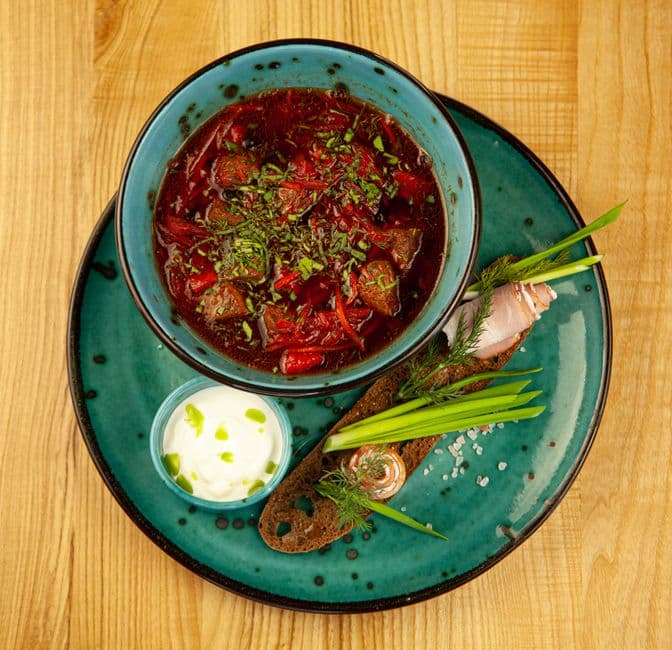
Borscht
Russia's iconic deep-crimson beetroot soup, rich with cabbage, potato and tender beef, finished with a generous dollop of smetana sour cream.
About This Recipe
Borscht (борщ) is perhaps the most famous soup in the world and exists in as many versions as there are Russian, Ukrainian and Eastern European grandmothers. The Russian version is a hearty, complete meal: a deeply flavoured beef broth with tender chunks of meat, earthy beetroot, sweet cabbage, potato and carrots, all simmered together until the broth turns an extraordinary crimson colour. A swirl of thick smetana (Russian sour cream) stirred in at the table cools the colour to a vivid magenta and enriches the already complex broth. Borscht improves enormously the next day as the flavours meld, and it is typically served with a slice of dark rye bread and a sprig of fresh dill. Every household claims a definitive version, and the debate over whether to add vinegar, sugar or both — and whether fresh or pickled beets are superior — is a matter of fierce regional pride.
Ingredients
Serves 6
- 500 gbeef chuck or brisket(cut into chunks)
- 2 largebeetroots(peeled and grated or julienned)
- 300 gwhite cabbage(finely shredded)
- 3 mediumpotatoes(peeled and diced)
- 2 mediumcarrots(grated)
- 1 largeonion(finely chopped)
- 2 tablespoonstomato paste
- 3 tablespoonsvegetable oil
- 2 litresbeef stock or water
- 2 tablespoonsred wine vinegar
- 1 teaspoonsugar
- 4 clovesgarlic(minced)
- 2 tablespoonsfresh dill(to serve)
- 150 mlsmetana or sour cream(to serve)
Instructions
- 1
Cook the beef
Place the beef in a large pot with the beef stock. Bring to a boil, skim any foam from the surface, then reduce to a simmer. Cook for 50–60 minutes until the beef is just tender. Remove the beef, shred or cut into smaller pieces and return to the pot. Reserve the broth.
Skimming the foam in the first 10 minutes of simmering is important for a clear, clean-tasting broth.
- 2
Prepare the beetroot zazharka
Heat the oil in a frying pan over medium heat. Add the onion and carrot and cook for 8 minutes until softened. Add the grated beetroot and stir to combine. Add the tomato paste and cook for 5 minutes. Add the vinegar and sugar, stir and cook for another 3 minutes. The beetroot should be soft and the zazharka (fried base) should be a rich, deep red.
- 3
Build the soup
Add the potatoes and shredded cabbage to the beef broth. Bring to a simmer and cook for 10 minutes until the potatoes are almost tender.
- 4
Add the zazharka
Add the beetroot zazharka to the pot, stir well and simmer for a further 10 minutes until the potatoes and cabbage are completely tender. The soup will turn a brilliant deep crimson.
- 5
Add garlic and season
Stir in the minced garlic and simmer for 2 more minutes. Season generously with salt and black pepper. Taste and adjust the sweet-sour balance with a little more vinegar or sugar as needed.
- 6
Serve
Ladle into deep bowls and top each with a generous spoonful of smetana and a scattering of fresh dill. Serve with thick slices of dark rye bread.
Did you make this?
Rate it and help other cooks find the recipes that actually work.
One tap to sign in, and we'll save the rating you just picked.
Everything you need to plan your week — free
- Meal calendar
- Grocery list
- AI recipe ideas
Track what you eat
Snap your meal to log calories and macros, run fasting timers and track water in the free SnapCal app.
Pro Tips
- →
Adding the vinegar to the beetroot during frying (rather than the soup) preserves the vibrant red colour.
- →
Borscht is better the next day — make a large batch and refrigerate overnight.
- →
Use fresh dill, not dried — it is essential to the finished dish.
- →
Taste and adjust salt at the very end — flavors concentrate as liquids reduce, and a final pinch of flaky salt sharpens the whole dish.
Variations
- •
Vegetarian borscht omits the beef and uses vegetable stock — it is equally delicious.
- •
Cold borscht (kholodnik) is a chilled summer version popular across Eastern Europe, finished with kefir.
- •
Spicier: add a finely chopped fresh chile or a teaspoon of crushed Aleppo/Urfa pepper to the aromatics for warm, layered heat instead of a single sharp hit.
- •
Lighter: reduce the fat by a third and finish with a squeeze of citrus or a splash of vinegar to keep brightness without losing body.
Storage
Refrigerate for up to 5 days. The colour will deepen further as it sits. Reheat gently; add a splash of water if it has thickened.
History & Origin
Borscht has been eaten across Eastern Europe and Russia since at least the seventeenth century. Though most commonly associated with Ukrainian origins, borscht in various forms is a foundational dish in Russian, Polish, Lithuanian and Belarusian cuisines. Its exact origins are debated, but it has been a daily staple across the Slavic world for hundreds of years.
Frequently Asked Questions
Why does my borscht lose its red colour when heated?
Beetroot's colour (betalains) is sensitive to heat and alkali. Adding vinegar during the cooking of the beetroot creates an acidic environment that stabilises the colour. Don't boil the soup vigorously after adding the beetroot zazharka.
Can I make this ahead of time?
Yes — most of the components can be prepared up to a day in advance and refrigerated separately. Reheat gently and assemble just before serving so textures stay distinct.
What can I substitute if I don't have all the ingredients?
Stay close to the role each ingredient plays: swap aromatics for similar ones (shallot for onion, lime for lemon), and keep the fat-acid-salt balance intact. Spice blends can usually be approximated with what's in the cupboard.
How do I know it's authentic?
Authenticity sits on a spectrum — what matters more is honoring the technique and balance of flavors. If the dish tastes harmonious and respects how cooks in its home region would build it, you're on solid ground.
Nutrition Facts
Per serving (500g / 17.6 oz) · 6 servings total
Time Summary
Have Questions?
Ask our AI cooking assistant anything about this recipe — substitutions, techniques, scaling.
Chat with AI Chef →Featured in Guides
This recipe is featured in the following curated guides:
More Russian Recipes
You Might Also Like
Similar dishes from other cuisines around the world.
Browse by Ingredient
More recipes built around the same core ingredients.
Free Kitchen Tools
Calculators and converters that pair with this page — no signup needed.
Put This Into a Plan
Schedule it, shop for it, and track what you already have.
Read Next
Longer reads that go deeper on the ideas behind this dish.
Community
Join the conversation
Sign in to leave a comment and save your favourite recipes