
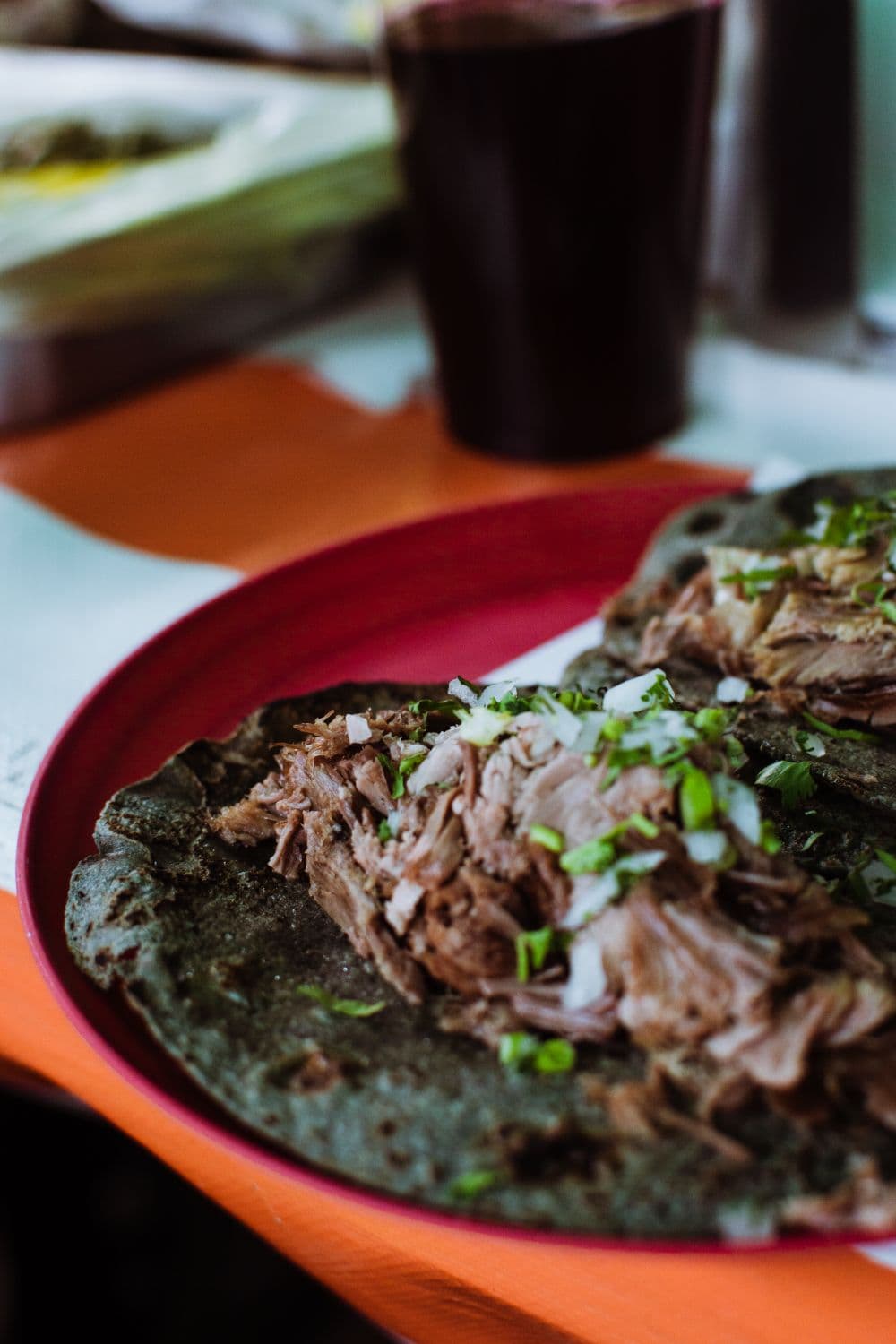
Cochinita Pibil
Yucatecan slow-roasted pork marinated in achiote and bitter orange, wrapped in banana leaves.
About This Recipe
Cochinita Pibil is the crown jewel of Yucatecan cuisine — pork shoulder marinated in a vivid orange-red paste of achiote (annatto), bitter orange, spices and garlic, wrapped in banana leaves and slow-roasted until gloriously tender, yielding, and perfumed with the unique earthy floral notes that only achiote can provide. It is one of the great dishes of Mexico, largely unknown outside the Yucatán Peninsula until it was romanticized in international food culture. The word 'pibil' refers to the traditional underground pit oven (pib) in which the whole pig was historically cooked — a Mayan technique that predates Spanish colonization by thousands of years. Today it is most commonly made in a regular oven or pressure cooker, but the banana leaves remain essential: they infuse the pork with a subtle vegetal sweetness and keep the moisture in during the long cook. Achiote paste, made from annatto seeds and spices, gives the pork its distinctive brick-red color and flavor. Served in handmade corn tortillas with pickled red onion (cebollas encurtidas) — a mandatory accompaniment that provides sharp acidity to cut through the richness — habanero salsa and lime, cochinita pibil tacos are one of the most complete eating experiences in Mexican food. Make this for a party: it feeds many, benefits from advance preparation, and never fails to impress.
Ingredients
Serves 8
- 3 lbspork shoulder(bone-in)
- 4 ozachiote paste (Condimento El Yucateco)
- ½ cupbitter orange juice(or ¼ cup orange + ¼ cup lime juice)
- ¼ cupwhite vinegar
- 6 clovesgarlic
- 1 tspcumin
- 1 tspMexican oregano
- ½ tspblack pepper
- 1 tspsalt
- 4 largebanana leaves(thawed if frozen, wiped clean)
- 1 largered onion(thinly sliced, for pickling)
- 1 cupwhite vinegar(for pickled onions)
- 1 tspsalt(for pickled onions)
- 1 tspdried oregano(for pickled onions)
- corn tortillas, habanero salsa, lime(to serve)
Instructions
- 1
Make the marinade
Blend achiote paste, bitter orange juice, vinegar, garlic, cumin, oregano, pepper and salt until smooth. Pierce pork all over with a fork.
- 2
Marinate
Rub marinade all over the pork, getting into the pierced holes. Cover and refrigerate at least 4 hours, ideally overnight.
- 3
Make pickled red onions
Combine sliced red onion with vinegar, salt and oregano. Let sit at room temperature 1 hour, then refrigerate. These keep for weeks.
- 4
Wrap in banana leaves
Lay 2 banana leaves overlapping in a roasting pan. Place pork in center. Pour any remaining marinade over the pork. Fold leaves to completely enclose the pork. Top with remaining leaves.
Pass banana leaves briefly over a gas flame — they become pliable and release more flavor.
- 5
Slow roast
Cover tightly with foil. Roast at 325°F for 2½–3 hours until pork is fork-tender and falling apart.
- 6
Shred and serve
Unwrap and pull pork into shreds with two forks, mixing with the brick-red cooking juices. Serve in warm corn tortillas topped with pickled red onions, habanero salsa and lime.
Did you make this?
Rate it and help other cooks find the recipes that actually work.
One tap to sign in, and we'll save the rating you just picked.
Everything you need to plan your week — free
- Meal calendar
- Grocery list
- AI recipe ideas
Track what you eat
Snap your meal to log calories and macros, run fasting timers and track water in the free SnapCal app.
Pro Tips
- →
The overnight marinade is the most important step — achiote needs time to penetrate the pork.
- →
Banana leaves are found frozen in Latin or Asian grocery stores. In a pinch, use heavy-duty foil (but the flavor will differ).
- →
Pickled red onions are non-negotiable — they provide the essential acidity that makes the dish complete.
Variations
- •
Chicken Pibil: use bone-in chicken thighs, reduce roasting time to 1 hour.
- •
Lamb Pibil: bone-in lamb shoulder with the same marinade — spectacular.
Storage
Refrigerate up to 4 days. Freezes excellently up to 3 months — reheats with all its moisture.
History & Origin
Cochinita Pibil originates with the Maya people of the Yucatán Peninsula, who cooked animals in underground pits (pib) for ritual and celebratory occasions long before Spanish contact. The Spanish introduction of pigs and achiote's development as a spice paste combined with the indigenous pit-roasting technique to create the dish as it exists today. It remains central to Yucatecan food culture.
Frequently Asked Questions
Where do I find achiote paste?
Look in the Latin foods aisle of grocery stores (Condimento El Yucateco in brick form). Latin grocery stores stock it reliably. Online retailers also sell it. Don't confuse it with achiote powder — the paste has more ingredients and complexity.
What can I use instead of bitter orange?
Equal parts fresh orange juice and fresh lime juice approximates the flavor well. Some recipes use grapefruit juice. The key is the sour-citrus quality that regular sweet orange juice lacks.
Can I use a slow cooker?
Yes — line the slow cooker with banana leaves, add marinated pork and cook on LOW 8 hours. Finish by shredding and simmering in the juices in a skillet to concentrate flavor.
Nutrition Facts
Per serving (350g / 12.3 oz) · 8 servings total
Time Summary
Have Questions?
Ask our AI cooking assistant anything about this recipe — substitutions, techniques, scaling.
Chat with AI Chef →Featured in Guides
This recipe is featured in the following curated guides:
More Mexican Recipes
You Might Also Like
Similar dishes from other cuisines around the world.
Browse by Ingredient
More recipes built around the same core ingredients.
Free Kitchen Tools
Calculators and converters that pair with this page — no signup needed.
Put This Into a Plan
Schedule it, shop for it, and track what you already have.
Read Next
Longer reads that go deeper on the ideas behind this dish.
Community
Join the conversation
Sign in to leave a comment and save your favourite recipes