
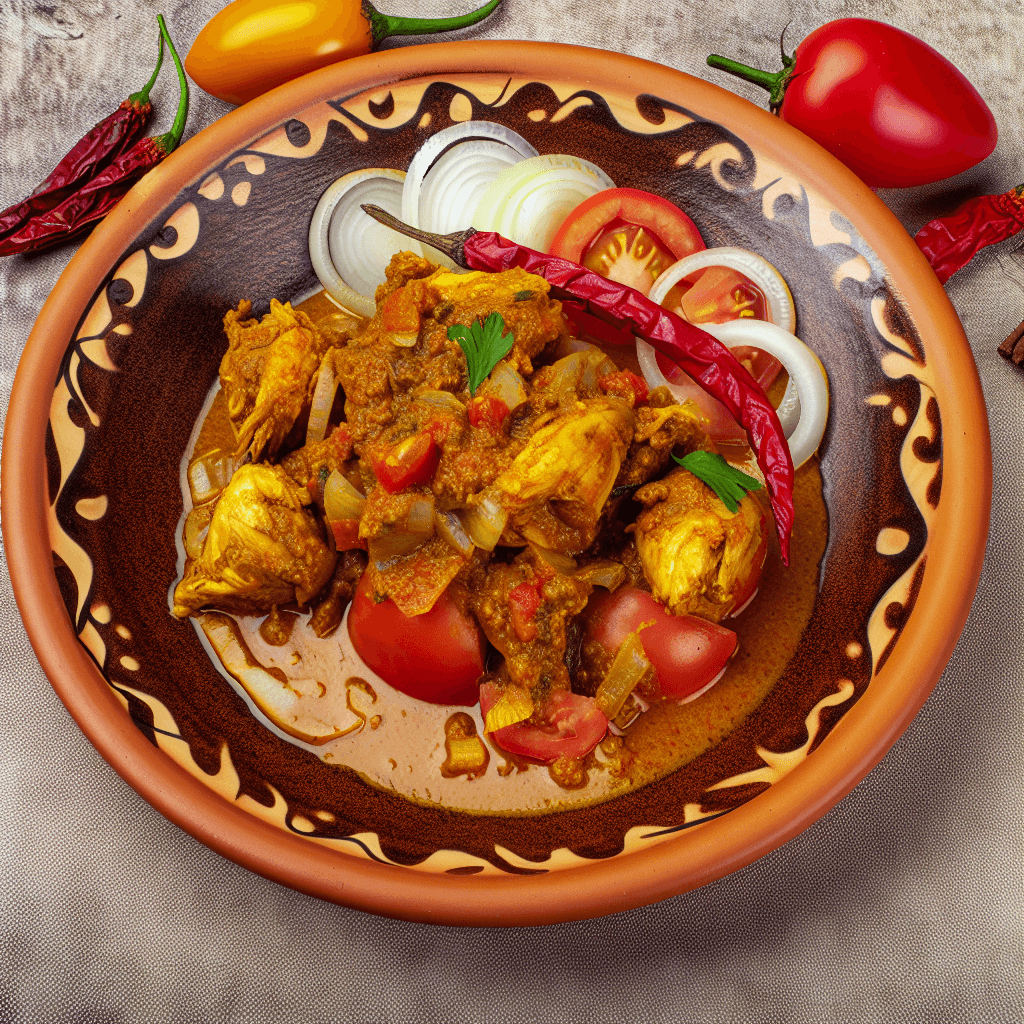
Saint Helena Curry
Mild, fragrant curry reflecting Saint Helena's East India Company heritage.
About This Recipe
Saint Helena Curry occupies a unique position in the world's curry traditions — it is a genuinely mild, warmly spiced dish shaped not by any single culinary culture but by the extraordinary flow of ingredients, sailors and settlers that passed through this tiny island over four centuries of maritime trade. From 1659 to 1834, Saint Helena was the victualling station of the British East India Company, meaning every Company ship travelling between England and India stopped here to resupply. Indian sailors, Malay workers, enslaved Africans, British soldiers and Chinese merchants all contributed to the island's culinary fabric. Curry — adapted to local pantry conditions, toned down from its South Asian origins to suit British colonial palates — became a permanent part of Saint Helena's everyday cooking. The Saint Helena version is characterised by its deliberate mildness and its reliance on a good-quality curry powder blend rather than fresh whole spices. This is not a shortcut but a reflection of how curry evolved in isolated island communities where access to fresh aromatics was limited: the curry powder (often a mild, British-style blend heavy on coriander, cumin and turmeric) is bloomed in the oil with onions, giving the sauce its golden hue and warm, rounded flavour. Chicken is the most common protein today, though historically mutton was equally prevalent when the island's sheep were slaughtered. The finished curry is lighter and brothier than a South Asian curry, with a clean tomato backbone and a warmth that lingers without building to heat. It is always served with steamed rice and mango chutney — a combination that perfectly embodies the island's position between Britain, Africa and India.
Ingredients
Serves 4
- 700 gboneless chicken thighs(cut into 4 cm pieces)
- 1.5 tbspmild curry powder(British-style, such as Rajah or Sharwood's)
- 2ripe tomatoes(roughly chopped)
- 1 mediumonion(finely diced)
- 3 clovesgarlic(minced)
- 1 tspfresh ginger(grated)
- 200 mlchicken stock
- 2 tbspneutral oil
- 1 tspsalt
- 2 tbspplain yoghurt(optional, to stir in at the end)
Instructions
- 1
Build the aromatic base
Heat oil in a wide, heavy saucepan over medium heat. Add onion and fry, stirring occasionally, for 8–10 minutes until soft, translucent and beginning to turn light golden at the edges. Take your time here — properly softened onion is the foundation of the sauce.
Rushing the onions produces a sharp, raw flavour that never fully cooks out of the finished curry.
- 2
Add garlic, ginger and curry powder
Add garlic and ginger to the softened onion and stir for 1 minute. Add curry powder and stir vigorously for 60–90 seconds, coating the onion mixture completely. The spices will become very fragrant and the mixture will look dry — this blooming stage cooks off the raw starch in the spice blend and develops the warm, rounded flavour the curry is known for.
If the curry powder starts to catch on the base, add a splash of stock immediately to prevent it burning.
- 3
Cook down the tomatoes
Add the chopped tomatoes and stir well. Increase heat to medium-high and cook for 7–8 minutes, pressing the tomatoes with the spoon to help them break down into a thick, spiced paste. The tomatoes should fully lose their shape and their raw acidity should be cooked off.
- 4
Brown the chicken
Add the chicken pieces to the spiced tomato paste and stir to coat every piece thoroughly. Increase heat to high and cook for 4–5 minutes, stirring regularly, until the chicken loses its pink colour and begins to take on a light golden colour where it contacts the pan.
- 5
Add stock and simmer
Pour in the chicken stock, season with 1 tsp salt, and stir to incorporate all the caramelised bits from the base of the pan. Bring to a boil, then reduce to a gentle simmer. Cover and cook for 25–30 minutes until the chicken is tender and the sauce has thickened slightly.
- 6
Finish and adjust
Taste the curry carefully and adjust salt. If using yoghurt, remove the pan from the heat, stir in the yoghurt a tablespoon at a time, and return to the lowest possible heat for 2 minutes — do not boil after adding yoghurt or it will split. The finished sauce should be warmly golden, lightly thickened and clinging to the chicken pieces.
- 7
Serve Saint Helena style
Ladle over steamed white rice, with a generous spoonful of mango chutney served separately for each person. A small side salad of sliced cucumber and tomato is the traditional island accompaniment.
Did you make this?
Rate it and help other cooks find the recipes that actually work.
One tap to sign in, and we'll save the rating you just picked.
Everything you need to plan your week — free
- Meal calendar
- Grocery list
- AI recipe ideas
Cook this hands-free
Get AI meal plans, step-by-step cooking mode, and your saved recipes in the free Bento app.
Pro Tips
- →
Use a good-quality mild curry powder — Rajah or Sharwood's mild blend are the island-standard brands; supermarket own-brand mild curry powder often lacks complexity.
- →
Bloom the curry powder in the onion mixture for the full 60–90 seconds — this step transforms the raw, dusty spice flavour into something warm, rounded and three-dimensional.
- →
Cook the tomatoes until the oil visibly separates at the edges — this tells you the tomatoes are fully cooked and the sauce base is ready for the chicken.
- →
Stir yoghurt into the finished curry off the heat — adding it to a boiling curry causes it to split into curds and whey rather than enriching the sauce.
- →
The curry improves significantly overnight as the spices continue to develop; make it a day ahead and reheat gently for the best flavour.
Variations
- •
Mutton curry: substitute bone-in mutton or lamb shoulder pieces and increase the simmer time to 55–65 minutes for fall-off-the-bone tenderness — this is the traditional version before chicken became the island's dominant protein.
- •
Potato and pea curry: add 2 diced potatoes with the stock and 100 g frozen peas in the last 5 minutes — a vegetable-forward version that stretches the dish comfortably to serve 6.
- •
Coconut milk version: replace the chicken stock with coconut milk for a creamier, slightly sweeter sauce that reflects the island's Indian Ocean trade connections.
- •
Spicier version: add 1 tsp of hot curry powder alongside the mild, or add a finely chopped green chilli with the garlic — this departs from the traditional mild version but is popular with younger generations on the island.
Storage
Store covered in the refrigerator for up to 3 days. The flavour deepens and the spices meld considerably overnight — this curry is genuinely better on day two. Reheat gently over low-medium heat with a splash of stock if needed. Freezes well for up to 2 months.
History & Origin
Saint Helena's curry tradition developed during the island's years as the British East India Company's primary South Atlantic victualling station, from 1659 until the Company's charter lapsed in 1834. Indian sailors, lascars (South Asian seamen contracted on Company ships), and later imported labourers brought curry knowledge directly from the subcontinent. The island's version evolved to suit the available larder — mild curry powder became the dominant seasoning as fresh whole spices were not always available, and the dish absorbed influences from the Malay, African and European communities that also settled on Saint Helena.
Frequently Asked Questions
Is Saint Helena curry very spicy?
No — it is traditionally mild, shaped by the British colonial preference for warmly spiced rather than fiery food. One and a half tablespoons of mild curry powder gives a fragrant, golden curry with gentle warmth but no heat. If you enjoy more heat, add a chopped green chilli with the garlic or mix in half a teaspoon of hot curry powder.
Can I use a different protein?
Yes — mutton or lamb is the historically traditional choice on the island and gives a richer, more intensely flavoured result; use bone-in pieces and simmer for 55–65 minutes. Prawns work beautifully but need only 5 minutes in the sauce rather than 30. Chickpeas can replace the chicken for a vegetarian version.
Can I make this curry ahead?
Yes, and it is highly recommended. The spices continue to develop overnight, and a day-old Saint Helena curry has noticeably more depth and complexity than the freshly made version. Refrigerate covered and reheat gently, adding a splash of stock if the sauce has thickened too much.
What curry powder should I use?
A mild, British-style curry powder is most authentic — brands like Rajah mild or Sharwood's mild are the standard. These blends are heavier on coriander, turmeric and cumin, lighter on chilli than South Asian curry powders, and produce the warm golden colour and rounded flavour associated with Saint Helena curry. Avoid hot or madras-style powders, which change the character of the dish significantly.
Why is my curry sauce thin?
Either the tomatoes were not cooked down sufficiently (they should form a paste before the chicken goes in) or the lid was kept on throughout the final simmer. Remove the lid for the last 10 minutes of cooking to allow the sauce to reduce and concentrate to the correct thick, clingy consistency.
Nutrition Facts
Per serving · 4 servings total
Time Summary
Have Questions?
Ask our AI cooking assistant anything about this recipe — substitutions, techniques, scaling.
Chat with AI Chef →More Saint-helenian Recipes
You Might Also Like
Similar dishes from other cuisines around the world.
Free Kitchen Tools
Calculators and converters that pair with this page — no signup needed.
Put This Into a Plan
Schedule it, shop for it, and track what you already have.
Read Next
Longer reads that go deeper on the ideas behind this dish.
Community
Join the conversation
Sign in to leave a comment and save your favourite recipes