
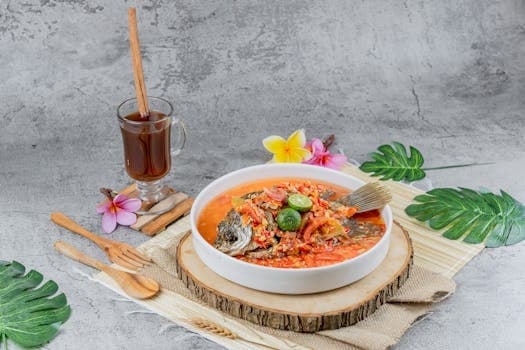
Caymanian Fish Tea
A light, peppery fish broth sipped as a morning tonic or served as a starter — a Cayman staple.
About This Recipe
Fish tea is a Caribbean misnomer of the most delightful kind — it contains neither tea leaves nor anything remotely related to Camellia sinensis. The name refers instead to the drink's consistency and the manner in which it is traditionally served: in a mug, sipped rather than spooned, as a clear, intensely flavoured fish broth that functions as a tonic, a breakfast, and a hangover cure simultaneously. In the Cayman Islands it is consumed at dawn on fishing boats, at early-morning beachside shacks, and in kitchens throughout the archipelago as part of the same morning culture that drives Jamaicans to their fish tea vendors and Trinidadians to their pelau pot. The preparation is radically simple and demands only the freshest fish. Snapper or grouper — head, tail, and all — goes into a pot of cold water with the allspice berries, bruised green onion stalks, and a whole scotch bonnet kept carefully intact and unpierced. The pod is left whole deliberately: puncture it and you release a flood of capsaicin into the broth; leave it whole and it imparts a rounded, fruity warmth and fragrance without the heat becoming aggressive. The pot comes to a boil, simmers for 20 minutes, then the fish is lifted out, its flesh stripped from the bones, and the broth strained clear before being reunited with the flaked meat. What arrives in the mug is deceptively quiet in colour — pale gold, slightly green from the onion — but explosive in flavour: briny, allspice-warm, gently herbaceous with the clean sea character of freshly caught reef fish. It is restorative in the most literal sense.
Ingredients
Serves 4
- 600 gsnapper or grouper(whole or pieces, cleaned)
- 1 wholescotch bonnet pepper(left whole, unpierced)
- 3 stalksgreen onion(bruised)
- 4 wholeallspice berries
- 1.5 litreswater
- 1 tspsalt
Instructions
- 1
Prepare the fish
If using whole fish, clean and scale them but keep them whole — the head, spine, and skin contribute enormous amounts of gelatin and flavour to the broth. Pat dry. If using fish pieces, include at least some bone-in portions for the same reason. Rinse briefly in cold water and set aside.
The head is the most flavourful part of the fish for broth. Ask your fishmonger specifically for the head if buying fillets — it is usually very cheap or free.
- 2
Build the broth
Place the fish, green onion stalks (bruised by pressing firmly with the flat of a knife), allspice berries, and the whole unpierced scotch bonnet into a large saucepan. Pour over 1.5 litres of cold water — starting with cold water extracts more flavour from the fish than starting with boiling. Add the salt. Bring slowly to a boil over medium-high heat.
Do not pierce the scotch bonnet under any circumstances. A single puncture releases enough capsaicin to make the broth painfully hot. Keep it whole for a fragrant, gently warming broth.
- 3
Simmer gently for 20 minutes
As the broth approaches a boil, a grey foam may rise to the surface — skim it away with a large spoon for a cleaner result. Reduce heat to a moderate simmer (gentle, rolling bubbles) and cook uncovered for 18–20 minutes. The fish is cooked through when the flesh separates from the bone at the spine and turns opaque throughout.
- 4
Remove fish and strain broth
Lift the fish carefully from the broth using a slotted spoon or tongs and set aside to cool briefly. Remove and carefully discard the whole scotch bonnet — do not press on it or allow it to burst. Strain the broth through a fine-mesh sieve into a clean pot, pressing gently on the green onion to extract their flavour, then discarding all solids.
- 5
Flake the fish and return to broth
Once the fish is cool enough to handle, use your fingers to carefully pick the flesh from the bones in generous flakes. Discard all bones, skin, and the spent aromatics. Return the flaked flesh to the strained, clear broth in the clean pot.
- 6
Season and serve
Taste the broth and adjust salt. It should be clean, bright, and savoury with a subtle allspice warmth. Reheat gently to a simmer if needed. Ladle into mugs or deep bowls, ensuring a good portion of fish meat in each serving. Offer lime wedges, additional allspice, or hot sauce on the side for those who want more heat.
Did you make this?
Rate it and help other cooks find the recipes that actually work.
One tap to sign in, and we'll save the rating you just picked.
Everything you need to plan your week — free
- Meal calendar
- Grocery list
- AI recipe ideas
Cook this hands-free
Get AI meal plans, step-by-step cooking mode, and your saved recipes in the free Bento app.
Pro Tips
- →
The fish head is essential for a rich, gelatinous broth. A head-only broth without body flesh is perfectly traditional and produces particularly deep flavour.
- →
Leave the scotch bonnet completely whole and intact throughout cooking — even a hairline crack will release significant heat. Inspect it before adding to the pot.
- →
Use the freshest possible fish. Fish tea is essentially a fish stock, and the freshness of the fish is more apparent here than in almost any other preparation. Dull, old fish makes dull broth.
- →
For an even clearer broth, start the fish in cold water and bring to temperature slowly rather than adding it to already-boiling liquid.
- →
A squeeze of fresh lime in each mug at the table transforms the broth — the citrus acid brightens all the flavours and is the classic Caymanian finishing touch.
Variations
- •
Hearty version: add peeled green banana slices and cubed yam or breadfruit to the simmering broth 15 minutes before the fish is done, producing a more substantial meal-in-a-bowl.
- •
Spicy version: pierce the scotch bonnet before adding, or add half a scotch bonnet seeded and chopped, for a broth with significant heat — popular with those who consider the mild version insufficiently invigorating.
- •
Lime-coriander finish: add a small bunch of fresh coriander (cilantro) to the broth when straining, and squeeze a generous amount of lime into each serving for a brighter, more citrus-forward result.
- •
Whole fish served alongside: rather than flaking the fish into the broth, serve the whole cooked fish alongside the strained broth for a more impressive presentation at the table.
Storage
Refrigerate in a sealed container for up to 2 days. The broth thickens slightly as it chills due to the gelatin from the fish bones. Reheat gently over low-medium heat to just below a boil — do not boil vigorously as this can make the fish tough and cloudy the broth. Do not freeze as both the fish texture and broth clarity suffer.
History & Origin
Fish tea is documented throughout the Caribbean as a morning preparation consumed by fishermen returning from overnight trips, made from whatever bycatch or bony fish was too small or damaged to sell. It represents the pan-Caribbean tradition of using the whole animal — head, spine, and tail — to extract maximum nourishment from a minimal amount of fish. The Caymanian version's reliance on allspice and scotch bonnet reflects the islands' close culinary relationship with Jamaica, from which many Caymanian families trace descent. The dish appears in historical records of Caymanian fishing communities dating to at least the early 20th century.
Frequently Asked Questions
Why is it called 'fish tea' if there is no tea in it?
The name refers to the drink's consistency and the way it is served — sipped from a mug as a tonic in the manner that tea is consumed in British Caribbean culture. It has nothing to do with Camellia sinensis. The name also emphasises that the broth is thin and clear, unlike a thick fish stew, and that it is consumed as a restorative drink rather than a full meal.
Can I make fish tea with fillets rather than whole fish?
You can, but the broth will be noticeably thinner and less flavourful. Fish bones, the head, and the skin contribute the gelatin and deep savoury flavour that makes fish tea distinct from plain hot fish water. If using fillets, add a separate fish stock (even a bouillon cube) and ask for fish bones from your fishmonger to simmer alongside.
How hot is fish tea with the scotch bonnet left whole?
With the scotch bonnet kept whole and unpierced, the heat level is mild to moderate — you taste a warm, fruity glow in the back of the throat rather than sharp, burning heat on the tongue. The pepper contributes primarily fragrance and warmth. Children in the Caribbean commonly drink the mild version at breakfast.
What fish works best for fish tea?
Any firm, fresh white-fleshed reef fish works well — snapper, grouper, porgy, and sea bass are all excellent. Oily fish like mackerel produce a heavier, more pronounced broth that some people love and others find too strong. Avoid frozen fish if at all possible; the broth's quality directly reflects the freshness of its ingredients.
Nutrition Facts
Per serving · 4 servings total
Time Summary
Have Questions?
Ask our AI cooking assistant anything about this recipe — substitutions, techniques, scaling.
Chat with AI Chef →More Caymanian Recipes
You Might Also Like
Similar dishes from other cuisines around the world.
Free Kitchen Tools
Calculators and converters that pair with this page — no signup needed.
Put This Into a Plan
Schedule it, shop for it, and track what you already have.
Read Next
Longer reads that go deeper on the ideas behind this dish.
Community
Join the conversation
Sign in to leave a comment and save your favourite recipes