
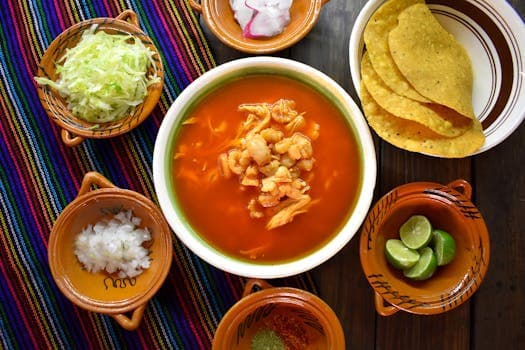
Red Pozole (Pozole Rojo)
Rich Mexican hominy stew with pork in a deep red chile broth — a festive Mexican tradition.
About This Recipe
Pozole is Mexico's great communal stew — a thick, richly flavored broth of slow-simmered pork and hominy (nixtamalized corn kernels) in a deep red chile sauce, garnished extravagantly at the table with shredded cabbage, radish, lime, dried oregano, tostadas and avocado. It is the quintessential celebration dish of Mexico, served at quinceañeras, weddings, New Year's Eve parties and Día de los Muertos, and it has been feeding Mexicans on ceremonial occasions since Aztec times. The hominy — large, plump corn kernels treated with alkali — gives pozole its most distinctive quality: a slightly chewy, earthy bite that soaks up the rich red broth in a way that regular corn cannot. The broth develops its depth from pork bones and shoulder slow-simmered for hours, infused with the bold flavors of ancho and guajillo chiles, garlic and Mexican oregano. Red pozole (rojo) is the most common; white (blanco) and green (verde) versions also exist. The garnishes are not optional — they are the dish. The contrast of hot, rich broth against cold, crisp cabbage and radish, the brightness of lime, the crunch of tostada — these are as important as the stew itself. Pozole makes a magnificent weekend cooking project that fills the house with extraordinary aromas and feeds a crowd generously.
Ingredients
Serves 8
- 2 lbspork shoulder(cut into 2-inch chunks)
- 1 lbpork neck bones or ribs(for broth)
- 2 cans (30 oz)hominy(drained and rinsed)
- 5ancho chiles(stemmed and seeded)
- 4guajillo chiles(stemmed and seeded)
- 2chipotle chiles in adobo
- 1 largewhite onion(halved)
- 8 clovesgarlic
- 2 tspdried Mexican oregano
- 1 tspcumin
- 2 tspsalt(plus more to taste)
- shredded cabbage, sliced radishes, lime wedges, dried oregano, tostadas, avocado, onion(all for garnish)
Instructions
- 1
Make the broth
Place pork shoulder and neck bones in a large pot with onion, 4 cloves garlic, salt and 3 quarts water. Bring to a boil, skim foam, reduce heat and simmer 1½ hours until pork is tender. Remove pork; strain broth and reserve.
- 2
Make the chile sauce
Toast ancho and guajillo chiles in a dry skillet 30 seconds per side. Submerge in hot water 20 minutes. Blend with soaking water, remaining garlic, chipotle, oregano and cumin until completely smooth. Strain through a sieve.
Straining the chile sauce removes the bitter skin fragments and creates a silkier broth.
- 3
Fry the sauce
Heat 2 tablespoons oil in the pot over high heat. Add chile sauce — it will splatter. Fry, stirring, 5 minutes until darkened to a deep red-brown.
- 4
Combine and finish
Add reserved pork broth to the pot. Add shredded pork and hominy. Simmer 30 minutes. Adjust salt and seasoning — pozole broth should be bold and well-salted.
- 5
Serve
Ladle into bowls. Serve with an extravagant spread of garnishes for each diner to add their own.
Did you make this?
Rate it and help other cooks find the recipes that actually work.
One tap to sign in, and we'll save the rating you just picked.
Everything you need to plan your week — free
- Meal calendar
- Grocery list
- AI recipe ideas
Track what you eat
Snap your meal to log calories and macros, run fasting timers and track water in the free SnapCal app.
Pro Tips
- →
Making the broth from scratch with pork bones is the most important step — it is the foundation of everything.
- →
Toast the dried chiles briefly — just until fragrant, not burnt. Burnt chiles make bitter pozole.
- →
Pozole improves enormously overnight — the hominy absorbs the flavors and the broth deepens.
Variations
- •
Pozole Verde: green version using tomatillos, jalapeños, serranos, pepitas and fresh herbs.
- •
Pozole Blanco: no chile sauce — the pork broth remains pale and is served with the same garnishes.
- •
Chicken Pozole: substitute pork for a lighter, faster version.
Storage
Refrigerate up to 5 days. Reheat gently with a splash of water or broth. Freezes excellently up to 3 months.
History & Origin
Pozole has been made in Mexico for at least 2,000 years, dating to Aztec civilization where hominy corn was a sacred crop. Pre-Columbian pozole had a ritual significance and was made with human flesh for sacrificial ceremonies — a dark history recorded by Spanish conquistadors who banned the dish before reintroducing it with pork as the protein. Today it is Mexico's most beloved celebration food.
Frequently Asked Questions
What is hominy and where do I find it?
Hominy is dried corn kernels treated with alkali (nixtamalization), which removes the hull, improves nutrition and creates a unique chewy texture. Find it canned in the Latin foods aisle (Juanita's is a good brand).
Can I use chicken instead of pork?
Yes — use 2 lbs bone-in chicken thighs. Simmer 45 minutes instead of 90. The result is lighter and quicker but equally delicious.
What are the traditional garnishes?
Shredded green cabbage, thinly sliced radishes, lime wedges, dried Mexican oregano, dried chile flakes, tostadas or tortilla chips, diced white onion, avocado slices. The garnishes are served in individual bowls and applied by each diner.
Nutrition Facts
Per serving (350g / 12.3 oz) · 8 servings total
Time Summary
Have Questions?
Ask our AI cooking assistant anything about this recipe — substitutions, techniques, scaling.
Chat with AI Chef →Featured in Guides
This recipe is featured in the following curated guides:
More Mexican Recipes
You Might Also Like
Similar dishes from other cuisines around the world.
Browse by Ingredient
More recipes built around the same core ingredients.
Free Kitchen Tools
Calculators and converters that pair with this page — no signup needed.
Put This Into a Plan
Schedule it, shop for it, and track what you already have.
Read Next
Longer reads that go deeper on the ideas behind this dish.
Community
Join the conversation
Sign in to leave a comment and save your favourite recipes