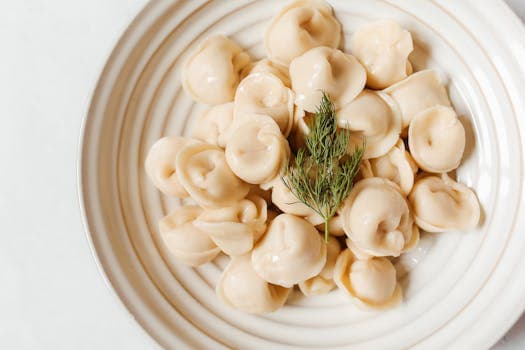
Pelmeni are the soul of Siberian cuisine — tiny dumplings of pure practicality and comfort. Originally made in large batches and frozen outdoors during the harsh Siberian winters, they were a calorie-dense, easily stored food source. Today they remain Russia's most beloved comfort food, served simply with sour cream or drowned in broth.
Serves 4
Mix flour, egg, water, and ½ tsp salt into a smooth dough. Wrap and rest 30 min.
Combine ground meats, grated onion, remaining salt, and pepper.
Roll dough thinly. Cut circles 7 cm across. Place a small ball of filling in each, fold into a half-moon, and pinch edges. Bring the two corners together.
Cook pelmeni in salted boiling water until they float plus 3 more min, about 8 min total.
Drain and serve with sour cream or melted butter.
Grate the onion rather than chop — it keeps the filling moist and integrates better.
Taste and adjust salt at the very end — flavors concentrate as liquids reduce, and a final pinch of flaky salt sharpens the whole dish.
Mise en place pays for itself: chop, measure and pre-mix everything before the heat goes on, especially for any step that moves fast.
Read the recipe through once before starting — knowing what's coming prevents the small timing mistakes that compound into bigger ones.
Fill with mushroom and potato (vegetarian)
Add dill to the filling
Serve in broth as a soup
Vegetarian: swap the protein for roasted king oyster mushrooms, smoked tofu or cooked chickpeas — adjust seasoning slightly upward to compensate.
Freeze uncooked on a tray, then bag. Cook directly from frozen — no need to thaw.
Pelmeni are thought to have originated with the indigenous peoples of Siberia and the Ural region, with influences from Mongolian and Chinese dumplings. They spread throughout Russia as Siberia was colonised, becoming a national staple.
Yes — freeze on a tray before bagging. Cook from frozen, adding 2 min extra.
Yes — most of the components can be prepared up to a day in advance and refrigerated separately. Reheat gently and assemble just before serving so textures stay distinct.
Stay close to the role each ingredient plays: swap aromatics for similar ones (shallot for onion, lime for lemon), and keep the fat-acid-salt balance intact. Spice blends can usually be approximated with what's in the cupboard.
Authenticity sits on a spectrum — what matters more is honoring the technique and balance of flavors. If the dish tastes harmonious and respects how cooks in its home region would build it, you're on solid ground.
Per serving · 4 servings total
Ask our AI cooking assistant anything about this recipe — substitutions, techniques, scaling.
Chat with AI Chef →Join the conversation
Sign in to leave a comment and save your favourite recipes
Have feedback or need help?
We read every email and reply within 1–2 business days.
© 2026 MyCookingCalendar. All rights reserved.