
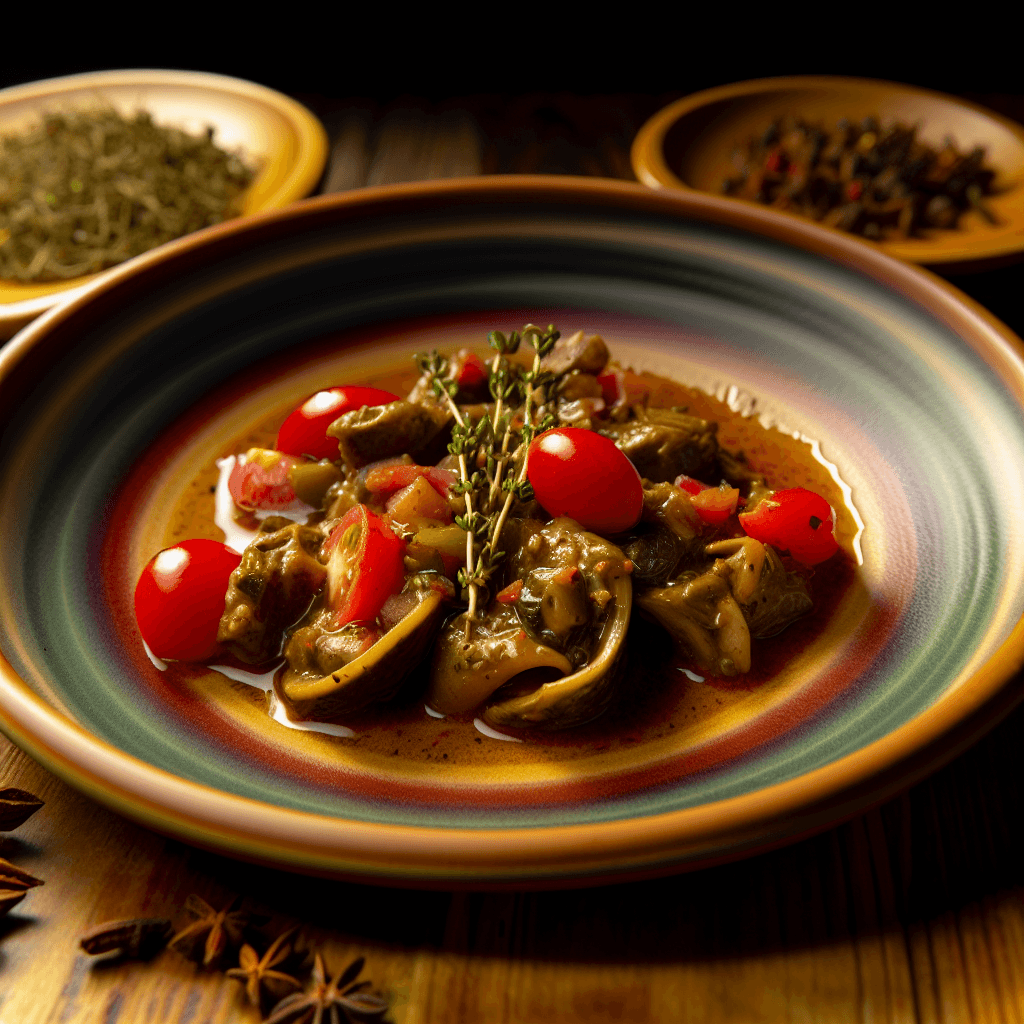
Caymanian Turtle Stew
A traditional slow-cooked green sea turtle stew seasoned with island spices — the Cayman Islands' most iconic dish.
About This Recipe
Turtle stew occupies a position in Caymanian culture unlike almost any other dish in the Caribbean. The Cayman Islands were originally named 'Las Tortugas' by Columbus in 1503 for the abundance of sea turtles found in these waters, and green sea turtle hunting sustained the islands' population for centuries — providing meat, oil, and trading currency when little else was available in this low-lying, resource-poor archipelago. The dish is consequently not just food; it is a symbol of survival, identity, and the islands' defining relationship with the sea. The recipe follows the structure of the classic Caribbean brown stew: meat browned in oil to develop colour and flavour, aromatics built in the resulting fond, tomatoes and water added to create a braising liquid, then a long, low simmer to tenderise the inherently firm turtle muscle. Allspice and thyme are the defining seasonings — particularly allspice, whose warm, clove-like quality permeates the sauce and is inseparable from Caymanian flavour memory. The meat is dense and deeply flavoured, somewhat resembling veal or very lean beef with a subtle marine character that speaks of its origin. Today, the only legal source of green sea turtle meat in the Cayman Islands is the Cayman Turtle Centre in West Bay, which operates the world's only commercial green sea turtle farm. Outside the islands, the recipe can be recreated with lean veal or beef — an imperfect but respectful substitute that preserves the technique and seasoning profile that generations of Caymanian cooks have refined.
Ingredients
Serves 6
- 1 kgfarmed turtle meat(cut into chunks)
- 400 gcanned crushed tomatoes
- 1 largeonion(diced)
- 1 tspground allspice
- 4 sprigsfresh thyme
- 2 tbspvegetable oil
Instructions
- 1
Season and prepare the meat
Pat the turtle meat chunks dry with paper towels. Season all over with salt, pepper, and half of the ground allspice. Allow to rest at room temperature for 15–20 minutes while you prepare the other ingredients — this dry seasoning helps build a better crust when searing.
- 2
Brown meat in batches
Heat the vegetable oil in a large, heavy Dutch oven or cast-iron pot over high heat until the oil shimmers and just begins to smoke. Add the meat in a single layer — work in 2–3 batches to avoid crowding — and brown without stirring for 3–4 minutes per side until a deep mahogany crust forms. Transfer browned pieces to a plate.
The browned crust is the flavour foundation of the entire stew. Don't rush this step or skip it — grey, un-browned meat produces a dull, flat stew.
- 3
Build the aromatic base
Reduce heat to medium. Add the diced onion to the pot with the remaining oil and fat from browning. Cook for 6–7 minutes, stirring and scraping the brown bits from the bottom of the pot with a wooden spoon, until the onion is soft and golden. Add the remaining allspice and cook for 1 minute until fragrant.
- 4
Add tomatoes, thyme, and liquid
Pour in the crushed tomatoes, nestling in the thyme sprigs among them. Add 500 ml of water and stir to combine everything. Return the browned meat and any accumulated juices to the pot. Bring to a vigorous boil over high heat, then skim any foam from the surface.
- 5
Long, low braise
Reduce heat to the lowest setting, cover with a tight-fitting lid, and simmer for 1 hour 45 minutes to 2 hours. Check every 30 minutes — the liquid should be at a gentle, barely visible simmer. Add water if the level drops below the meat. The stew is done when the meat separates easily with the gentlest fork pressure.
A pressure cooker dramatically reduces this time: after browning and building the base, cook at high pressure for 45 minutes, then natural-release for 15 minutes.
- 6
Finish and serve
Remove the thyme sprigs. Taste the sauce and adjust salt and pepper — it should be deeply savoury, with a pronounced allspice note and a rich tomato body. Serve in deep bowls over coconut rice and peas, with the sauce ladled generously over the meat.
Did you make this?
Rate it and help other cooks find the recipes that actually work.
One tap to sign in, and we'll save the rating you just picked.
Everything you need to plan your week — free
- Meal calendar
- Grocery list
- AI recipe ideas
Cook this hands-free
Get AI meal plans, step-by-step cooking mode, and your saved recipes in the free Bento app.
Pro Tips
- →
Slow cooking is essential — turtle meat is exceptionally firm and requires at least 2 hours of low simmering to become genuinely tender. There are no shortcuts except a pressure cooker.
- →
A pressure cooker is the most practical tool here: 45 minutes at high pressure followed by natural-release produces results comparable to a 2-hour stovetop braise.
- →
The stew improves enormously the next day. If time allows, make it a day ahead, refrigerate overnight, and reheat gently — the meat absorbs more flavour and the sauce deepens.
- →
Use whole allspice berries instead of ground for a brighter, less muddy allspice flavour. Add about 6–8 berries cracked with the back of a knife and remove before serving.
- →
A piece of fresh scotch bonnet pepper (left whole and unpierced) added to the pot provides fragrant warmth without turning the stew fiery — remove before serving.
Variations
- •
Lean beef version: outside the Cayman Islands, use lean, bone-in beef such as osso buco or bone-in short ribs — they have a similar density to turtle and benefit from the same long braise. Reduce the total time to 1.5 hours.
- •
Root vegetable addition: add diced potato, carrot, and breadfruit 40 minutes before the end of cooking for a heartier, more substantial stew common at Caymanian festivals.
- •
Scotch bonnet version: add one whole scotch bonnet with the tomatoes for fruity heat that builds progressively. Remove before serving for moderate heat; pierce or chop it in for fierce heat.
- •
Festival-style: serve the stew alongside heavy cake, festivals (sweet fried dough), and coconut rice for the complete Caymanian celebration spread.
Storage
Refrigerate in a sealed container for up to 3 days. The stew's flavour noticeably improves by day two as the spices and sauce permeate the meat further. Reheat gently over low heat with a splash of water. Freeze for up to 1 month in flat zipper bags; thaw overnight in the refrigerator before reheating.
History & Origin
The Cayman Islands were named 'Las Tortugas' (The Turtles) by Christopher Columbus in 1503, and for the next three centuries, the islands' entire economy and survival depended on the green sea turtle. Caymanian sailors — 'turtlers' — ranged across the Caribbean to Nicaragua's Miskito Coast hunting turtles that provisioned their own households and were traded across the region. Turtle stew became the centrepiece of Caymanian food culture during these centuries, prepared for every major festival and family occasion. The Cayman Turtle Centre, established in 1968 originally to replenish wild populations, became the world's only commercial green turtle farm and now provides the only legal source of turtle meat on the islands.
Frequently Asked Questions
Where can I find farmed turtle meat in the Cayman Islands?
The Cayman Turtle Centre in West Bay, Grand Cayman, is the only legal source of farmed green sea turtle meat in the islands. It is available at the centre's retail outlet and at select local restaurants. Outside the Cayman Islands, green sea turtle is a protected species globally and cannot legally be purchased or sold.
What is the best substitute for turtle meat outside the Cayman Islands?
Lean, bone-in beef — particularly osso buco (veal or beef shank) or bone-in short ribs — most closely replicates the texture and cooking behaviour of turtle. Reduce the braising time to 1.5–2 hours. Some Caymanian diaspora cooks use chicken thighs for a quicker version, though the texture and flavour are quite different.
Why does the turtle stew need to cook for 2 hours?
Turtle muscle is dense, tightly grained, and very low in fat compared to common domesticated meat. It requires extended low heat to break down its firm protein structure and become tender enough to eat comfortably. Rushing the cook at higher heat toughens the fibres permanently before they have a chance to soften.
Can I make turtle stew in a slow cooker?
Yes — brown the meat and build the aromatic base on the stovetop first (do not skip this), then transfer everything to a slow cooker and cook on low for 8–9 hours. The low, steady heat of a slow cooker is ideal for the long, gentle braise this dish requires.
Nutrition Facts
Per serving · 6 servings total
Time Summary
Have Questions?
Ask our AI cooking assistant anything about this recipe — substitutions, techniques, scaling.
Chat with AI Chef →More Caymanian Recipes
You Might Also Like
Similar dishes from other cuisines around the world.
Free Kitchen Tools
Calculators and converters that pair with this page — no signup needed.
Put This Into a Plan
Schedule it, shop for it, and track what you already have.
Read Next
Longer reads that go deeper on the ideas behind this dish.
Community
Join the conversation
Sign in to leave a comment and save your favourite recipes