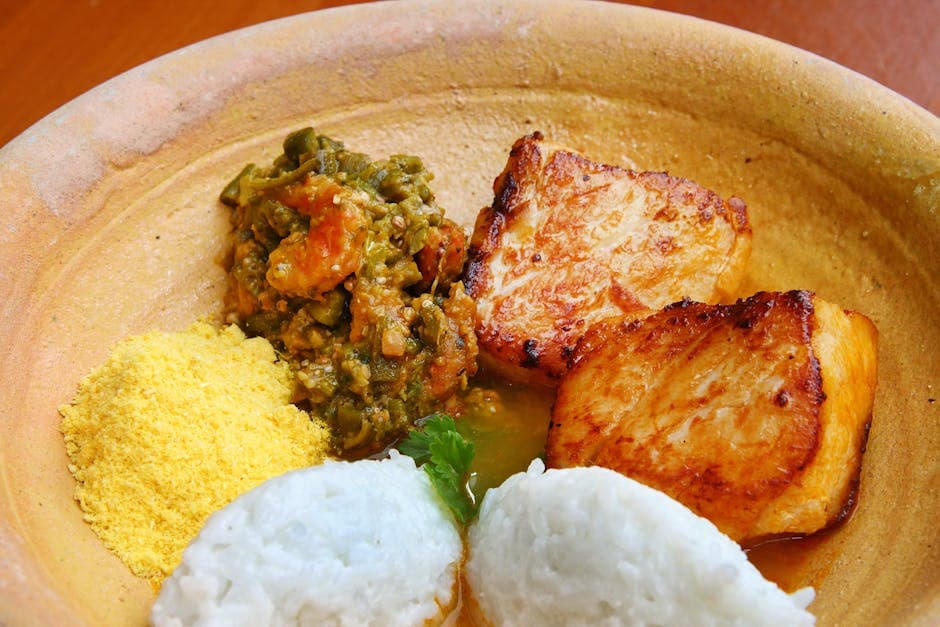
Silky Eritrean stew of ground chickpea flour, berbere, and clarified butter — vegan-adaptable comfort food.
Shiro Wat is the everyday hero of Eritrean and northern Ethiopian kitchens — a quick, soul-warming stew made by whisking shiro, a fine chickpea-and-spice flour, into simmering water with onion, garlic, berbere, and tomato. The result is the texture of polenta and the flavor of a slow-cooked dal: nutty, gently spicy, and deeply savory. In Eritrea shiro is the dish that bridges fasting and non-fasting days — the lenten Orthodox version is bound only with oil, while everyday shiro carries a generous spoonful of niter kibbeh, the clarified spiced butter that perfumes the whole pot. It is scooped with injera, the tangy sourdough flatbread, and shared from a single platter at family meals.
Serves 4
Heat 2 tbsp niter kibbeh in a heavy pot over medium-low. Add the onion and a pinch of salt and cook 12 minutes, stirring often, until very soft, sweet, and golden — never let it brown.
The dry, low cook of the onion is what gives Eritrean stews their signature smooth base; rushing it leaves the dish raw-tasting.
Add the garlic and cook 1 minute. Stir in berbere and tomato paste and cook 2 minutes, stirring constantly so the spices toast without burning.
Add the chopped tomato and 200 ml water. Simmer 5 minutes until the tomato breaks down into the sauce.
Pour the remaining 500 ml water into the pot and bring to a simmer. Slowly sprinkle in the shiro flour with one hand while whisking constantly with the other — go slowly to avoid lumps.
Lower heat to low. Cook 12–15 minutes, stirring every minute with a wooden spoon, until thickened to the consistency of loose porridge. Add a splash of water if it gets too stiff.
Stir in the remaining 1 tbsp niter kibbeh and add the slit green chili if using. Taste for salt and berbere — both can be adjusted upward. Rest 5 minutes off the heat.
Spoon onto injera or rice. Drizzle a little extra niter kibbeh over the top for the classic Eritrean finish, and serve with extra injera to scoop.
Find shiro flour at Ethiopian or Eritrean groceries — it already contains spices, so you don't grind chickpeas yourself. Brands like Brundo and Habesha Pride are reliable.
Berbere quality is everything: look for one with at least 12 spices and a deep red-brown color. Pale, mild berbere will give you a flat stew.
If your shiro turns gluey, add hot water a tablespoon at a time and whisk hard — the texture should pour slowly from a spoon, not hold a peak.
Tegabino shiro: the spicier Eritrean version — served bubbling in a clay dish straight from the heat.
Vegan shiro: replace niter kibbeh entirely with olive oil; the dish is naturally vegan-friendly and is a fasting staple for Orthodox Christians.
Add a poached egg in the last 2 minutes — common at Asmara breakfast spots.
Refrigerates 3 days; thickens to a paste when cold. Reheat with 50 ml water per portion, stirring well to bring back the smooth texture. Do not freeze — the chickpea flour separates.
Shiro is one of the oldest dishes of the Eritrean and Ethiopian highlands, predating most modern grains in the region. The ground-chickpea-with-spices preparation is mentioned in Ge'ez liturgical texts and was historically a critical fasting food, since Orthodox Christians abstain from animal products for over 180 days a year.
Shiro is made from ground chickpea (or sometimes broad bean) flour cooked into a smooth stew. Ful is whole fava beans stewed soft. They're often served side by side on Eritrean breakfasts, but they're entirely different textures.
Yes — toast 200 g of dried chickpeas, then grind to a fine flour with 2 tbsp berbere, 1 tsp ground cardamom, and 1/2 tsp ground ginger. It won't be exactly the same as commercial shiro but works well.
It can be — the heat comes from the berbere, which varies enormously by brand. Start with 1 tablespoon of berbere and adjust up. Eritrean shiro is generally milder than tegabino shiro, which is closer to fiery.
Per serving (290g) · 4 servings total
Ask our AI cooking assistant anything about this recipe — substitutions, techniques, scaling.
Chat with AI Chef →Join the conversation
Sign in to leave a comment and save your favourite recipes