
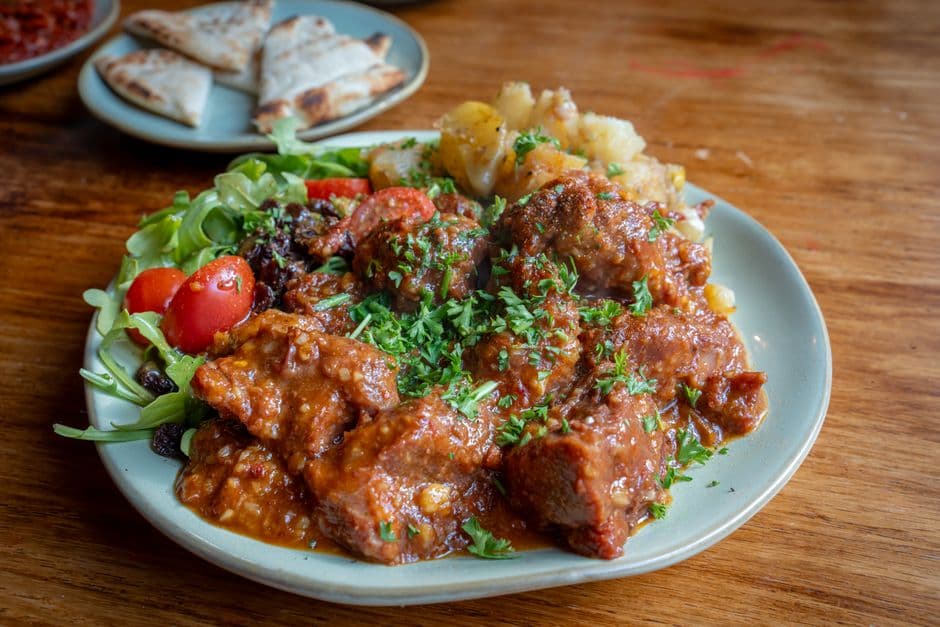
لحم البقر اليوناني ستيفادو (حساء لحم البقر بالقرفة والخل)
يخنة الأحد المفضلة لدى اليونان: لحم البقر المطهو ببطء مع البصل اللؤلؤي الكامل والنبيذ الأحمر والقرفة والبهارات وقليل من الخل.
حول هذه الوصفة
ستيفادو هو الحساء اليوناني الشتوي الرائع وأكثر أطباق اللحوم المطهوة ببطء في اليونان. لحم البقر (أو الأرنب، الأصلي) يُحمر ويُطهى ببطء في النبيذ الأحمر والطماطم وكمية سخية من البصل اللؤلؤي الصغير الكامل - الذي لا يذوب أبدًا ولكنه يبقى كاملاً وحلوًا، ويمتص الصلصة الداكنة العطرة. تأتي النكهة المميزة من ملف التوابل: عود قرفة، والعديد من توت البهارات، وبعض القرنفل، وأوراق الغار، ورش نهائي من خل النبيذ الأحمر الذي يمنح ستيفادو نكهة حيوية باهتة. إنه طبق الصوم الكبير (في إصدارات أخف من الأرانب والأخطبوط) وعيد الميلاد وعيد الفصح عندما يتم تحضيره من لحم البقر، ويقدم في أوعية عميقة مع الخبز المقرمش، وقطعة من جبنة الفيتا على الجانب، وكأس من النبيذ الأحمر القوي. عمق النكهة لا يأتي إلا من الزمن، فلا يوجد طريق مختصر.
المكونات
يخدم 6
- 1.2 كغلحم غنم أو ظرف مقطّع إلى قطع بحجم 4 سم
- 800 غبصل صغير الحجم أو كراث (حوالي 30-40 بصلة صغيرة) مقشر
- 60 ملزيت الزيتون البكر الممتاز
- 6 فصوصثوم كامل، مطحون قليلاً
- 3 ملعقة كبيرةمعجون الطماطم
- 1 علبةطماطم مقطعة جيدة (400 جرام)
- 300 ملالنبيذ الأحمر القوي (أجيورجيتيكو، كابيرنيت ساوفيجنون، أو سانجيوفيز)
- 60 ملخل النبيذ الاحمر الجيد
- 1 stickقرفة (5 سم)
- 6 berriesالبهارات كلها
- 4 كاملالقرنفل
- 3 أوراقخليج
- 2 أغصانإكليل الجبل الطازج
- 1.5 ملعقة صغيرةملح ناعم، بالإضافة إلى المزيد حسب الرغبة
- 1 ملعقة صغيرةفلفل أسود
- 1 ملعقة صغيرةالسكر (يساعد على كراميل البصل)
- 300 ملمرق اللحم البقري أو الماء
- 2 ملعقة كبيرةالبقدونس الطازج، المفروم، حتى النهاية
التعليمات
- 1
قشر البصل اللؤلؤي
أسقط حبات البصل اللؤلؤي في الماء المغلي لمدة دقيقة واحدة، ثم انقلها إلى الماء المثلج، حيث ستنزلق القشرة بسهولة. قم بقص أطراف الجذر إلى الحد الأدنى فقط حتى يظل البصل كاملاً أثناء الطهي الطويل.
- 2
بني اللحم البقري
يُجفف لحم البقر ويُتبل بالملح والفلفل. قم بتسخين 3 ملاعق كبيرة من زيت الزيتون في فرن هولندي ثقيل على نار عالية. قم بتحمير اللحم البقري على دفعتين، لمدة 4 دقائق لكل جانب لكل دفعة، حتى يصبح لونه داكنًا. إزالة والحجز.
- 3
عرق البصل
خفض الحرارة إلى متوسطة. أضف ملعقة كبيرة من زيت الزيتون والبصل المقشر. اطهيها لمدة 8-10 دقائق، ثم لفها برفق حتى تصبح ذهبية اللون على جوانب متعددة. رشي ملعقة صغيرة من السكر في آخر دقيقتين للحصول على كراميل إضافي.
- 4
أضف الثوم والطماطم
أضف فصوص الثوم ومعجون الطماطم. يطهى لمدة 3 دقائق حتى يغمق المعجون. صب النبيذ واتركه يغلي بقوة لمدة 4 دقائق لطهي الكحول.
- 5
بناء الشواء
تُضاف الطماطم المفرومة والخل ومرق اللحم البقري والقرفة والبهارات والقرنفل والخليج وإكليل الجبل والملح. عودة لحم البقر البني. جلب لينضج.
- 6
طهي بطيء
نغطيها بإحكام وننقلها إلى فرن على حرارة 150 درجة مئوية أو نضعها على الموقد على أقل حرارة ممكنة. قم بالطهي لمدة 2.5 ساعة دون إزعاج.
قاوم الرغبة في التقليب، حيث يجب أن يظل البصل كاملًا، ولا ينكسر. ادفع اللحم برفق إلى أسفل الصلصة فقط إذا ظهر.
- 7
تحقق وتقليل
بعد ساعتين ونصف، يجب أن يصبح اللحم البقري طريًا بالشوكة والبصل لامعًا وكاملًا. إذا كانت الصلصة رقيقة جدًا، فاكشف عنها واتركها على نار خفيفة لمدة 15 دقيقة أخرى؛ إذا كان سميكًا جدًا، أضف 100 مل من المرق.
- 8
الراحة والخدمة
تخلصي من عود القرفة وأوراق الغار. بقية مغطاة 15 دقيقة من الحرارة لتسوية. رشي البقدونس وقدميه في أوعية عميقة مع الخبز وجبنة الفيتا ونفس النبيذ الأحمر الذي قمت بطهيه به.
هل جرّبت هذه الوصفة؟
قيّمها وساعد الآخرين في العثور على الوصفات التي تنجح فعلاً.
سجّل الدخول بنقرة واحدة وسنحفظ التقييم الذي اخترته للتو.
كل ما تحتاجه لتخطيط أسبوعك — مجانًا
- تقويم الوجبات
- قائمة التسوق
- أفكار وصفات بالذكاء الاصطناعي
تابع ما تأكله
صوّر وجبتك لتسجيل السعرات والعناصر الغذائية، واستخدم مؤقتات الصيام وتتبع شرب الماء في تطبيق SnapCal المجاني.
نصائح للمحترفين
- →
يعتبر البصل اللؤلؤي أو الكراث الصغير الحقيقي ضروريين - فالبصل الكبير المقطّع إلى أرباع يذوب ويفسد طابع الطبق. إذا كان بإمكانك العثور على مقاس واحد فقط، فاختر مقاسًا أصغر.
- →
لا تتجاهل رش خل النبيذ الأحمر في النهاية - فهو ما يمنح ستيفادو حافته الحامضة الباهتة التي تميزه عن أي نوع آخر من أنواع الشواء.
- →
Stifado أفضل بشكل ملحوظ في اليوم الثاني. إذا كان ذلك ممكنًا، قم بإعداده في اليوم السابق وأعد تسخينه ببطء.
الاختلافات
- •
أرنب ستيفادو (kounelli stifado): الشكل الأصلي، باستخدام أرنب كامل مقسم إلى قطع. تقليل وقت الطهي إلى 90 دقيقة.
- •
الأخطبوط ستيفادو: المفضل في الصوم، مع الأخطبوط المنظف بدلاً من اللحم. ينضج الأخطبوط ذاتيًا في عصيره الخاص لمدة 90 دقيقة.
- •
ستيفادو لحم الخنزير: تُستبدل مكعبات كتف لحم الخنزير جيداً؛ شواء 2 ساعة.
تخزين
قم بتبريده لمدة تصل إلى 4 أيام؛ يسخن بلطف على الموقد. يتجمد ستيفادو بشكل جميل لمدة تصل إلى شهرين - يذوب الجليد طوال الليل ثم يسخن ببطء.
التاريخ والأصل
ينحدر Stifado من تأثير حقبة البندقية على الطبخ اليوناني، والاسم نفسه يأتي من الكلمة الإيطالية "stufato" (مطهية) التي تم جلبها إلى الجزر الأيونية وكريت خلال حكم البندقية (القرنين الثالث عشر والسابع عشر). إن شكل البصل الكامل والقرفة هو ما يجعلها يونانية بشكل واضح، وقد تم توثيق نسخة الأرنب في كتب الطبخ اليونانية في القرن التاسع عشر باعتبارها الشكل الأصلي.
الأسئلة المتداولة
لماذا يتفكك البصل الخاص بي؟
إما أنك استخدمت بصلًا كبيرًا جدًا، أو قمت بالتقليب كثيرًا أثناء الطهي. استخدمي بصلًا صغيرًا حقًا أو كراثًا صغيرًا، وقاومي التحريك بعد بدء الطهي ببطء، واتركيه جانبًا.
هل يمكنني صنع ستيفادو بدون نبيذ؟
يمكنك استبدال مرق لحم البقر الإضافي بالإضافة إلى ملعقة كبيرة إضافية من الخل وملعقة صغيرة من دبس الرمان لتكرار بعض حموضة النبيذ وعمقه - لكن الطبق يفقد شيئًا أساسيًا.
هل من المفترض أن يكون ستيفادو حلوًا؟
حلوة خفيفة - القرفة والبصل المطبوخ ببطء ولمسة من السكر تخلق مظهرًا حلوًا ولذيذًا وهو ما يميز الطبق. قم بموازنته مع الخل في النهاية.
ما هو أفضل قطع لحم البقر؟
تعتبر قصبة لحم البقر (قطع أوسو بوكو) مثالية - فالنخاع يُثري الصلصة ويحافظ النسيج الضام على رطوبة اللحم على نار هادئة لفترة طويلة. تشاك هو التالي الأفضل.
حقائق التغذية
لكل وجبة (420g) · 6 حصص إجمالية
ملخص الوقت
هل لديك أسئلة؟
اسأل مساعد الطبخ الذي يعمل بالذكاء الاصطناعي لدينا أي شيء عن هذه الوصفة - البدائل والتقنيات والقياس.
الدردشة مع AI Chef →ظهرت في الأدلة
هذه الوصفة واردة في الأدلة المنسقة التالية:
المزيد من وصفات يوناني
قد يعجبك أيضًا
أطباق مشابهة من مطابخ أخرى حول العالم.
تصفّح حسب المكوّن
وصفات أخرى مبنية على المكوّنات الأساسية نفسها.
أدوات مطبخ مجانية
حاسبات ومحوّلات تكمّل هذه الصفحة — دون الحاجة إلى تسجيل.
حوّلها إلى خطة
جدولها، تسوّق لها، وتابع ما لديك بالفعل.
اقرأ بعد ذلك
مقالات أطول تتعمّق في الأفكار وراء هذا الطبق.
مجتمع
انضم إلى المحادثة
قم بتسجيل الدخول لترك تعليق وحفظ وصفاتك المفضلة