japanesedinner🔥 Trending
Japanese Curry Recipe (カレーライス) — Easy Weeknight Curry
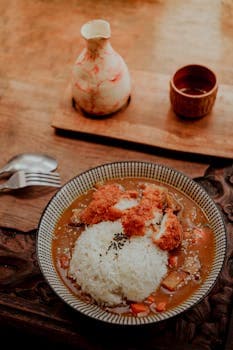
Mild, sweet Japanese curry with tender chicken, potatoes and carrots in a rich, slightly sweet curry sauce served over steamed rice. This easy Japanese curry recipe uses curry roux blocks for an authentic weeknight dinner in 45 minutes.
Prep
15 min
Cook
40 min
Servings
4
Difficulty
Easy
★★★★★
4.8(7,680 ratings)#japanese curry#kare raisu#japanese#easy curry#weeknight dinner#mild curry#rice dish
About This Recipe
Japanese curry (kare raisu) is one of Japan's most popular comfort foods — it's milder, sweeter and thicker than Indian or Thai curries, and deeply satisfying. The texture comes from curry roux (a blend of fat, flour and spices available in blocks), which creates a glossy, velvety sauce. It's simpler to make than any other curry style and almost universally loved.
Ingredients
Serves 4
- 500 gchicken thighs(boneless, skinless, cut into 3cm chunks)
- 2medium potatoes(peeled, cut into 3cm chunks)
- 2carrots(cut into roll-cut pieces)
- 1large onion(sliced into wedges)
- 100 gJapanese curry roux(S&B or House brand, medium-hot)
- 700 mlwater or chicken stock
- 1 tbspvegetable oil
- 400 gJapanese short-grain rice(steamed, to serve)
Instructions
- 1
Brown the chicken
Heat oil in a large saucepan over medium-high heat. Brown chicken pieces on all sides — 3–4 minutes. Don't stir too much — let colour develop.
- 2
Add vegetables and water
Add onion, carrot and potato. Pour in water or stock and bring to a boil. Skim any foam. Reduce to a simmer and cook 15 minutes until vegetables are nearly tender.
- 3
Add curry roux
Turn off the heat. Break the curry roux blocks into the pot and stir until completely dissolved. Simmer over low heat for 10 minutes, stirring frequently, until thick and glossy.
Always turn off the heat before adding roux to prevent lumps.
- 4
Serve
Serve hot curry alongside steamed Japanese rice. Pickled ginger (beni shoga) and fukujinzuke (pickled vegetables) are classic accompaniments.
Pro Tips
- →
Japanese curry roux is available in Asian supermarkets and online — S&B Golden Curry and House Vermont Curry are the most common brands.
- →
Cut the carrots in a roll-cut (katsuramuki) — rolling and cutting diagonally — for more surface area and attractive presentation.
- →
The curry thickens as it cools. Add a splash of water when reheating.
Variations
- •
Katsu curry: serve over a breaded, fried chicken or pork cutlet (tonkatsu) — Japan's most popular curry variant.
- •
Vegetarian: use tofu and mixed vegetables with vegetable stock.
Storage
Refrigerate for up to 4 days — Japanese curry tastes better the next day. Freeze for up to 1 month. The sauce thickens in the fridge; stir in a little water when reheating.
History & Origin
Japanese curry arrived via the British Navy (who had adopted it from India) in the Meiji era (1868–1912). It was adapted to Japanese palates — milder, sweeter, thicker — and became a national comfort food. Today it's considered one of Japan's national dishes and is served in specialist curry restaurants (kare-ya) across the country.
Frequently Asked Questions
What makes Japanese curry different from Indian curry?
Japanese curry is milder, sweeter, thicker (more like a stew) and uses a roux base rather than whole spices. It has a distinctive umami depth from soy sauce and apple in the roux.
Can I make Japanese curry without roux blocks?
Yes — make a roux from butter, flour, curry powder, garam masala and grated apple. But the blocks are more convenient and authentic.
What is the best curry roux brand?
S&B Golden Curry and House Vermont Curry are the most popular. Vermont Curry is slightly sweeter. Both come in mild, medium and hot.
Can Japanese curry be frozen?
Yes — freeze without the potato (potatoes become grainy when frozen). Or mash any potato in before freezing.
Nutrition Facts
Per serving (400g) · 4 servings total
Calories580kcal
Protein32g
Carbohydrates72g
Fat16g
Fiber5g
Protein32g
Carbs72g
Fat16g
Time Summary
Prep time15 min
Cook time40 min
Total time55 min
Have Questions?
Ask our AI cooking assistant anything about this recipe — substitutions, techniques, scaling.
Chat with AI Chef →More Japanese Recipes
Community
Join the conversation
Sign in to leave a comment and save your favourite recipes