
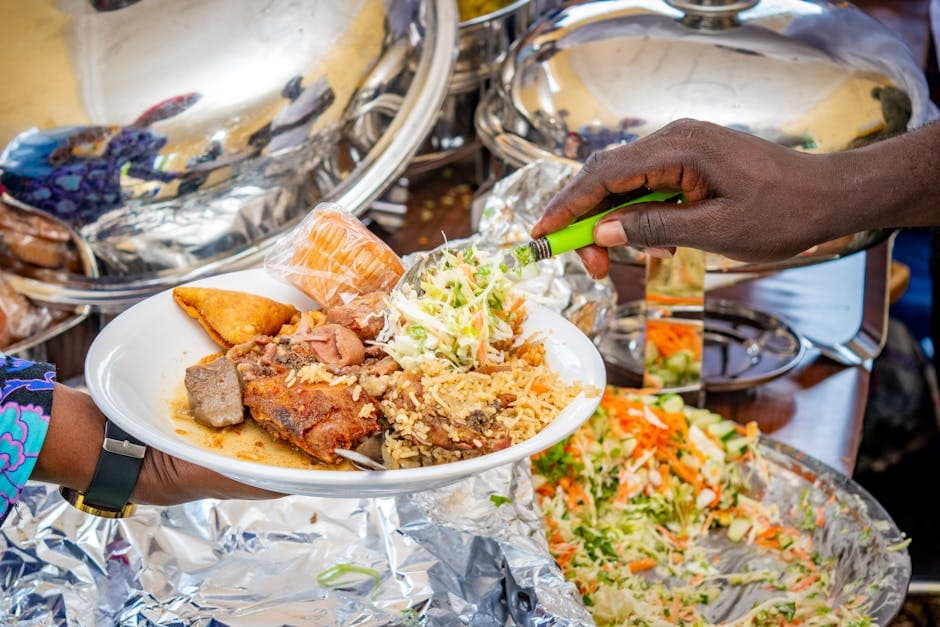
الحزب النيجيري جولوف رايس
أرز نيجيري مدخن في وعاء واحد مطبوخ في يخنة الفلفل والطماطم مع الغار والزعتر وقشرة الوعاء السفلية الثمينة.
حول هذه الوصفة
أرز الجولوف هو الطبق الأكثر إثارة للجدل في غرب أفريقيا - تجري غانا ونيجيريا نقاشًا مستمرًا عبر القارات حول أيهما هو الأعلى - وجولوف الطرف النيجيري هو النسخة الأكثر تصويرًا والأكثر دخانًا والأعمق باللون الأحمر. يتم طهي الأرز المسلوق طويل الحبة في صلصة سميكة من الفلفل الأحمر الحلو، والطماطم، والبصل، وقطعة من معجون الفلفل الأحمر، وكلها تتفتح في زيت النخيل أو الزيت النباتي مع الغار والزعتر والكاري ومكعب المرق. يتم إغلاق الوعاء وطهيه على نار خفيفة حتى تتكون الطبقة السفلية من "قشرة الحفلة" المدخنة والمحترقة قليلاً - الجزء الأكثر رواجًا في الطبق، حيث يتقاتل متعهدو الطعام في حفلات الزفاف. يتم تقديم الجولوف كبرج بجانب الدجاج المشوي والموز المقلي ومغرفة من سلطة الكرنب، وهو محور كل احتفال نيجيري.
المكونات
يخدم 6
- 4حبة من الفلفل الأحمر الحلو، منزوعة البذور، ومقطعة
- 2الطماطم الناضجة
- 1 can (400 g)طماطم برقوق كاملة مقشرة
- 1 كبيربصل أصفر، مفروم فرماً خشناً
- 2سكوتش بونيه الفلفل الحار (أو 1 معتدل)
- 150 ملزيت النخيل الأحمر (أو 100 مل زيت نباتي + 1 ملعقة صغيرة بابريكا)
- 1 كبيربصل، مفروم ناعماً (للقلي)
- 4 فصوصالثوم المفروم
- 1 إبهامالزنجبيل المبشور
- 3 ملعقة كبيرةمعجون الطماطم
- 2 ملعقة كبيرةمعجون فلفل أحمر نيجيري أو 1 ملعقة كبيرة جراد البحر المطحون (اختياري)
- 1 ملعقة كبيرةمسحوق الكاري
- 1 ملعقة صغيرةزعتر مجفف
- 2أوراق الغار
- 2ماجي أو مكعبات مرق
- 1.5 ملعقة صغيرةالملح (أو حسب الذوق)
- 600 غأرز طويل الحبة مسلوق، مغسول بالماء البارد حتى يصبح صافيًا
- 600 ملمرق الدجاج (أو الماء)
- 1 small handfulحلقات بونيه سكوتش طازجة للتقديم (اختياري)
- لتقديم الموز المقلي والدجاج المشوي أو سلطة الكرنب
التعليمات
- 1
امزجي قاعدة الفلفل
امزج الفلفل الأحمر الحلو والطماطم الطازجة والطماطم المعلبة والبصل المفروم تقريبًا والسكوتش بونيه في هريس ناعم وسميك (بدون ماء). يُسكب المزيج في قدر ويُترك على نار خفيفة لمدة 25 دقيقة مع التحريك حتى يقل حجمه إلى النصف ويصبح سميكًا بشكل واضح - وهذا التركيز هو أساس الجولوف.
- 2
ازهر البهارات
في وعاء ثقيل (مع غطاء محكم)، قم بتسخين زيت النخيل على نار متوسطة إلى عالية حتى يلمع - يجب أن يصبح زيت النخيل داكنًا قليلاً ولكن لا يدخن. يُضاف البصل المفروم ويُطهى لمدة 6 دقائق حتى يصبح طريًا وشفافًا. أضف الثوم والزنجبيل. طبخ 1 دقيقة.
- 3
يقلى معجون الطماطم
أضف معجون الطماطم ومعجون الفلفل النيجيري (في حالة استخدامه). تقلى لمدة 4 دقائق حتى يصبح المعجون أغمق ويتلألأ الزيت باللون الأحمر حول الحواف. أضف مسحوق الكاري والزعتر وأوراق الغار. يقلب لمدة 30 ثانية.
- 4
أضف صلصة الفلفل المخففة
صب قاعدة الفلفل المخفضة في الوعاء. يُحرَّك المزيج جيدًا ثم يُطهى على نار خفيفة لمدة 8 دقائق. تنهار في مكعبات المرق والملح. المذاق - يجب أن تكون القاعدة لذيذة للغاية، وحارة قليلاً، وعطرية.
- 5
أضف الأرز
ضجة في الأرز المشطف. غطي كل حبة بالصلصة الحمراء. يُطهى لمدة 3 دقائق مع التحريك باستمرار لإغلاق الأرز.
- 6
إضافة المخزون وختم
اسكبي كمية كافية من المرق الساخن لتغطية الأرز بالكاد (حوالي 600 مل - أكثر من اللازم وسيصبح الأرز طريًا). جلب إلى نار هادئة. قم بتغطيته بإحكام بورق الألمنيوم المضغوط على الأرز، ثم قم بغطاء الوعاء في الأعلى - وهو ختم حقيقي.
- 7
طهي على حرارة منخفضة
خفض الحرارة إلى أدنى مستوى ممكن. طهي لمدة 25 دقيقة دون رفع الغطاء. يجب أن يكون الوعاء مغلقًا وبالكاد يمكن سماعه.
- 8
قم ببناء القشرة المدخنة في وعاء الحفلة
ارفعي الحرارة إلى درجة متوسطة إلى عالية لمدة 90 ثانية في النهاية واستمعي إلى أزيز خافت. يؤدي هذا إلى إنشاء الطبقة السفلية المحروقة المدخنة الثمينة. اسحب الحرارة على الفور.
- 9
الراحة والزغب
الراحة مغطاة 10 دقائق. كشف وزغب بلطف مع شوكة. اغرف بعض القشرة السفلية المدخنة في وعاء التقديم.
- 10
خدمة بأسلوب الحفلة
كومة عالية على طبق واسع. يقدم مع الموز المقلي والدجاج المشوي أو المقلي وسلطة الكرنب. أعلى مع حلقات من قلنسوة سكوتش جديدة لأي شخص شجاع.
هل جرّبت هذه الوصفة؟
قيّمها وساعد الآخرين في العثور على الوصفات التي تنجح فعلاً.
سجّل الدخول بنقرة واحدة وسنحفظ التقييم الذي اخترته للتو.
كل ما تحتاجه لتخطيط أسبوعك — مجانًا
- تقويم الوجبات
- قائمة التسوق
- أفكار وصفات بالذكاء الاصطناعي
تابع ما تأكله
صوّر وجبتك لتسجيل السعرات والعناصر الغذائية، واستخدم مؤقتات الصيام وتتبع شرب الماء في تطبيق SnapCal المجاني.
نصائح للمحترفين
- →
قم بتقليل قاعدة الفلفل والطماطم بقوة قبل إضافتها إلى الوعاء - القاعدة المائية تعني الجولوف المائي.
- →
استخدم الأرز طويل الحبة المسلوق (النوع الذي يبقى منفصلاً)؛ الحبة القصيرة أو البسمتي تفسد القوام.
- →
آخر 90 ثانية من الحرارة المرتفعة هي ما يخلق قاعًا مدخنًا لوعاء الحفلة - استمع للأزيز وأوقف الحرارة على الفور.
الاختلافات
- •
الجولوف الغاني: عادةً مع البسمتي، وأحيانًا مع الشيتو (صلصة الفلفل الحار الغاني) والروبيان - وهو أمر مثير للجدل في لاغوس.
- •
جولوف مدخن: أضف ورقة موز أو نصف ملعقة صغيرة من الدخان السائل للحصول على نكهة دخانية أثقل.
- •
الجولوف النباتي: استخدمي مرق الخضار وأضيفي الخضار المحمصة (الجزر والبازلاء والذرة الحلوة) في النهاية.
تخزين
قم بتبريده لمدة تصل إلى 4 أيام؛ يتجمد شهرين. يُعاد تسخينه في مقلاة مغطاة مع القليل من الماء - لا تستخدم الميكروويف أبدًا (يجف الأرز ويختفي سحر القشرة السفلية).
التاريخ والأصل
نشأ أرز جولوف في منطقة سينيغامبيا مع شعب الولوف (الاسم يأتي من "الولوف"). انتشر الطبق في جميع أنحاء غرب أفريقيا مع التجار. تم تطوير النوع النيجيري من الطماطم والفلفل الحار في القرن العشرين وأصبح محور تقديم الطعام في حفلات لاغوس. تستمر حروب جولوف بين نيجيريا وغانا والسنغال.
الأسئلة المتداولة
هل زيت النخيل ضروري؟
يستخدم الجولوف التقليدي زيت النخيل (على وجه التحديد زيت النخيل الأحمر النيجيري) للون والنكهة. الزيت النباتي + ملعقة صغيرة من البابريكا هو أقرب بديل عملي.
لماذا جولوف طري؟
الكثير من السوائل، أو الأرز الخطأ. استخدمي الأرز طويل الحبة المسلوق (على طريقة العم بن أو كارولينا) ومخزونًا كافيًا لتغطية الأرز بالكاد.
حقائق التغذية
لكل وجبة (380g) · 6 حصص إجمالية
ملخص الوقت
هل لديك أسئلة؟
اسأل مساعد الطبخ الذي يعمل بالذكاء الاصطناعي لدينا أي شيء عن هذه الوصفة - البدائل والتقنيات والقياس.
الدردشة مع AI Chef →ظهرت في الأدلة
هذه الوصفة واردة في الأدلة المنسقة التالية:
المزيد من وصفات نيجيري
قد يعجبك أيضًا
أطباق مشابهة من مطابخ أخرى حول العالم.
تصفّح حسب المكوّن
وصفات أخرى مبنية على المكوّنات الأساسية نفسها.
أدوات مطبخ مجانية
حاسبات ومحوّلات تكمّل هذه الصفحة — دون الحاجة إلى تسجيل.
حوّلها إلى خطة
جدولها، تسوّق لها، وتابع ما لديك بالفعل.
اقرأ بعد ذلك
مقالات أطول تتعمّق في الأفكار وراء هذا الطبق.
مجتمع
انضم إلى المحادثة
قم بتسجيل الدخول لترك تعليق وحفظ وصفاتك المفضلة