
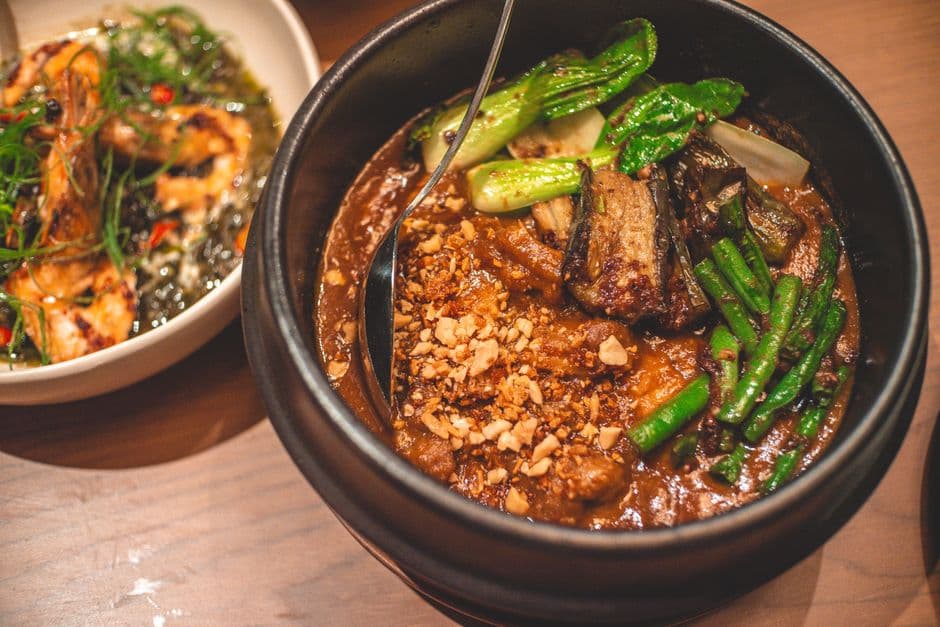
كاري كاري (حساء الفول السوداني الفلبيني ذو ذيل الثور)
يخنة العيد الكبير في الفلبين - ذيل الثور المطهو ببطء وكرشة في الفول السوداني الذهبي السميك وصلصة الأرز المحمص، يقدم مع بوك تشوي والباذنجان والفاصوليا الطويلة وجانب من معجون الروبيان اللاذع.
حول هذه الوصفة
يعد Kare-kare أحد أطباق العيد الرائعة في الفلبين، وهو يخنة غنية وذهبية للغاية وتظهر على كل طاولة فلبينية مهمة بدءًا من المعمودية وحتى نوش بوينا. القاعدة عبارة عن ذيل الثور يُطهى على نار خفيفة لمدة ساعات حتى يسقط اللحم من العظم ويتحول المرق إلى حريري بالكولاجين، ثم يتم تكثيفه بالفول السوداني المحمص المطحون ودقيق الأرز المحمص في صلصة بلون ذهبي باهت. غالبًا ما ينضم خد الكرشة وخد الثور إلى ذيل الثور. تتم إضافة الخضروات - الفاصوليا الصينية الطويلة، والباذنجان الآسيوي، وقلب الموز، والبوك تشوي - في النهاية ويتم طهيها بالكاد، لذا فهي تحافظ على نضارتها وسطوعها مقابل الحساء الثقيل. المرافقة المميزة هي باجونج ألامانج، وهو معجون جمبري مالح غير تقليدي مقلي بالثوم وأحيانًا لمسة من السكر والفلفل الحار، يقدم في وعاء صغير على الجانب. يأخذ كل عشاء ملعقة ويضعها على اللحم - يعتبر الباغونج ضروريًا، لأن كاري كاري نفسه لطيف عمدًا، ومصمم ليكون بمثابة قماش للملح والأومامي في معجون الروبيان. يتم تقديمه فوق الأرز المطهو على البخار، وهو عبارة عن مزيج من مرق الفول السوداني الناضج ولحم البقر الذائب والباغونج اللاذع الذي لا يُنسى. إنه مشروع مصنوع في المنزل في عطلة نهاية الأسبوع - ولكن المكافأة تغذي اثني عشر.
المكونات
يخدم 8
- 1.5 كغذيل الثور، مقطّع إلى دوائر بحجم 5 سم
- 500 غأمعاء لحم البقر، منظفة (اختياري ولكن تقليدي)
- 3 لالماء، بالإضافة إلى المزيد حسب الحاجة
- 1بصل مقطّع إلى أرباع
- 1 رأسثوم مقطع إلى نصفين أفقياً، بالإضافة إلى 6 فصوص مفرومة للزينة
- 2 ملعقة كبيرةبذور الأناتو (achuete) – للحصول على اللون الذهبي
- 60 ملزيت محايد
- 200 غزبدة الفول السوداني الطبيعية غير المحلاة (أو 250 جرام من الفول السوداني المحمص المطحون إلى عجينة)
- 3 ملعقة كبيرةدقيق الأرز المحمص (نخب الأرز الخام الجاف ثم نطحنه)
- 3باذنجان آسيوي، مقطّع إلى قطع بحجم 4 سم
- 200 غفاصوليا صينية طويلة (أو فاصوليا خضراء)، مقطعة إلى قطع بطول 5 سم
- 1 small headبوك تشوي أو بيتشاي، منفصلين
- 1 صغيرقلب موز، مقطع إلى شرائح (اختياري، تقليدي)
- صلصة السمك حسب الرغبة
- للتقديم: باجونج ألامانج (معجون الروبيان المقلي)، أرز الياسمين المطهو على البخار، كالامانسي أو شرائح الليمون
التعليمات
- 1
قم بغلي الكرشة مسبقًا
في حالة استخدام الكرشة، ضعها في وعاء من الماء البارد واتركها حتى تغلي ثم صفيها واشطفها. كرر ذلك مرة أخرى، فهذا يزيل أي روائح كريهة. ضع جانبا.
تخطي هذه الخطوة وسوف يكون طعم الحساء الخاص بك الفناء. إنها القاعدة الواحدة.
- 2
بلانش ذيل الثور
ضع ذيل الثور في وعاء كبير به ماء بارد لتغطيته. يُغلى المزيج ويُطهى على نار خفيفة لمدة 5 دقائق، ثم يُصفى ويُشطف اللحم - وهذا يزيل الرغوة التي من شأنها أن تُغطي الصلصة النهائية.
- 3
يُطهى اللحم على نار خفيفة
أعد ذيل الثور (والكرشة) إلى الوعاء المنظف. أضف 3 لتر من الماء العذب والبصل المقطع إلى أرباع ورأس الثوم المقطع إلى النصف. يُطهى على نار خفيفة ويُغطى جزئيًا ويُطهى لمدة 2.5 إلى 3 ساعات حتى يُسحب لحم ذيل الثور بسهولة من العظم. قم بإزالة الرغوة بانتظام خلال الثلاثين دقيقة الأولى.
- 4
استخراج لون أناتو
بينما ينضج اللحم، قم بتسخين الزيت مع بذور الأناتو في مقلاة صغيرة على نار خفيفة لمدة 5 دقائق حتى يتحول الزيت إلى اللون البرتقالي والأحمر العميق. يصفى ويتخلص من البذور. زيت الأناتو هذا هو ما يمنح كاري كاري لونه الذهبي المميز.
- 5
فصل اللحوم والمرق
عندما يصبح ذيل الثور طريًا، ارفعي اللحم وكرشته باستخدام ملعقة مثقوبة. قطع الكرشة إلى شرائح صغيرة الحجم. صفي المرق من خلال منخل ناعم، وتخلصي من المواد العطرية. يجب أن يكون لديك حوالي 2 لتر من المرق الجيلاتيني الشفاف، وإذا كان أكثر، خففه عن طريق الغليان على نار هادئة؛ إذا كان أقل، قم بإضافة الماء.
- 6
اصنعي الصلصة
في قدر واسع وثقيل، سخني زيت الأناتو على نار متوسطة واقلي الثوم المفروم لمدة دقيقة واحدة. أضيفي زبدة الفول السوداني ودقيق الأرز المحمص، ثم اسكبي المرق ببطء، مع الخفق المستمر لمنع تكون الكتل. يُترك على نار خفيفة ويُطهى لمدة 10 دقائق حتى تتكاثف الصلصة وتتحول إلى مرق قابل للسكب.
- 7
أعيدي اللحم وأضيفي الخضار
انزلق ذيل الثور وأعده إلى الصلصة. ينضج لمدة 10 دقائق لإعادة التسخين. أضف الباذنجان، والفاصوليا الطويلة، وقلب الموز (إذا كنت تستخدمه) واطهيها لمدة 5 دقائق - يجب أن يكون الباذنجان طريًا، والفاصوليا لا تزال خضراء زاهية. أخيرًا، أضيفي ملف بوك تشوي واطهيه لمدة 90 ثانية حتى يذبل.
- 8
يتبل بالحد الأدنى ويقدم
أضف القليل من صلصة السمك - يجب أن يكون طعم كاري كاري ناضجًا وجوزيًا، وغير مملح عمدًا لأن باجونج يقوم بعمل التتبيل على الطاولة. مغرفة في وعاء كبير. يُقدم الطبق مع الأرز المطهو على البخار، ووعاء صغير من باجونج ألامانج المقلي وشرائح الليمون.
هل جرّبت هذه الوصفة؟
قيّمها وساعد الآخرين في العثور على الوصفات التي تنجح فعلاً.
سجّل الدخول بنقرة واحدة وسنحفظ التقييم الذي اخترته للتو.
كل ما تحتاجه لتخطيط أسبوعك — مجانًا
- تقويم الوجبات
- قائمة التسوق
- أفكار وصفات بالذكاء الاصطناعي
تابع ما تأكله
صوّر وجبتك لتسجيل السعرات والعناصر الغذائية، واستخدم مؤقتات الصيام وتتبع شرب الماء في تطبيق SnapCal المجاني.
نصائح للمحترفين
- →
استخدمي قدر الضغط لتقطيع ذيل الثور إلى نار هادئة لمدة 45 دقيقة إذا لم يكن لديك وقت كاف - فالقوام متطابق تقريبًا.
- →
زبدة الفول السوداني الطبيعية (فقط الفول السوداني والملح) تعطي أفضل نكهة. تعمل العلامات التجارية سكيبي أو التجارية ولكن السكر / الزيت المضاف يخفف الصلصة.
- →
قم بتحميص دقيق الأرز عن طريق تحميص حبيبات الأرز الخام الجافة في مقلاة حتى تصبح ذهبية اللون ثم طحنها - لا طعم لها مثل دقيق الأرز الخام ويستحق 8 دقائق إضافية.
- →
اجعل يومًا مقدمًا - يصبح الحساء أفضل في اليوم التالي بعد تزاوج النكهات بين عشية وضحاها.
الاختلافات
- •
Kare-kareng manok - نسخة الدجاج، أسرع بكثير (إجمالي 45 دقيقة) ولكنها تفتقر إلى العمق الجيلاتيني.
- •
Kare-kareng pusit — الحبار kare-kare، المشهور في لوزون الساحلية؛ طهي الحبار لمدة دقيقتين فقط في النهاية.
- •
كاري كاري نباتي - استبدل التوفو المقلي والفطر واستخدم مرق الخضار والميسو بدلاً من صلصة السمك.
- •
أسلوب كابامبانجان - يستخدم الأرز المحمص المطحون والفول السوداني على قدم المساواة للحصول على صلصة أكثر رملية وأكثر ريفية.
تخزين
قم بتبريده لمدة تصل إلى 4 أيام - تتحسن النكهة. قم بتجميد اللحوم والصلصة لمدة تصل إلى 3 أشهر؛ أضف الخضار الطازجة عند إعادة التسخين. يُعاد تسخينه بلطف على الموقد مع قليل من الماء لتفكيك الصلصة.
التاريخ والأصل
من المحتمل أن ينحدر Kare-kare من التأثير الهندي والماليزي على المطبخ الفلبيني عبر طهاة Moro وKapampangan، ومن المحتمل أن يكون الاسم مشتقًا من "kari" (الكاري). تدعي منطقة كابامبانجان في وسط لوزون أن هذا الطبق خاص بها ويُنظر إليه على نطاق واسع على أنه ينتج أفضل الإصدارات. إن استخدام الباغونج كتوابل هو استخدام فلبيني بحت ويعود تاريخه إلى تقاليد الحفاظ على الأسماك قبل الاستعمار.
الأسئلة المتداولة
هل يمكنني تخطي الكرشة؟
نعم - يتخطاه العديد من الطهاة المنزليين الفلبينيين المعاصرين. استخدم 2 كجم من ذيل الثور أو أضف لحم البقر إلى الحساء للحصول على حساء أكثر ثراءً.
أين أجد بذور الأناتو؟
تقوم متاجر البقالة اللاتينية أو الفلبينية بتخزينها (وتسمى أيضًا "achiote" أو "achuete"). استبدلي ملعقة صغيرة من البابريكا باللون، على الرغم من اختلاف النكهة قليلاً.
هل الباجونج ضروري؟
نعم. بدون باجونج، يكون مذاق كاري كاري مسطحًا وغير متبل. يتم حفظ جرة من باجونج ألامانج المقلي في الثلاجة لمدة أسابيع وتستحق العثور عليها.
لماذا صلصة بلدي محببة؟
من المحتمل أنك لم تحمص دقيق الأرز، أو لم تخفقه بقوة كافية عند إضافة المرق. مرريها عبر منخل أو امزجيها بالخلاط لمدة 10 ثوانٍ حتى تصبح ناعمة.
حقائق التغذية
لكل وجبة (480g) · 8 حصص إجمالية
ملخص الوقت
هل لديك أسئلة؟
اسأل مساعد الطبخ الذي يعمل بالذكاء الاصطناعي لدينا أي شيء عن هذه الوصفة - البدائل والتقنيات والقياس.
الدردشة مع AI Chef →ظهرت في الأدلة
هذه الوصفة واردة في الأدلة المنسقة التالية:
المزيد من وصفات فلبيني
قد يعجبك أيضًا
أطباق مشابهة من مطابخ أخرى حول العالم.
تصفّح حسب المكوّن
وصفات أخرى مبنية على المكوّنات الأساسية نفسها.
أدوات مطبخ مجانية
حاسبات ومحوّلات تكمّل هذه الصفحة — دون الحاجة إلى تسجيل.
حوّلها إلى خطة
جدولها، تسوّق لها، وتابع ما لديك بالفعل.
اقرأ بعد ذلك
مقالات أطول تتعمّق في الأفكار وراء هذا الطبق.
مجتمع
انضم إلى المحادثة
قم بتسجيل الدخول لترك تعليق وحفظ وصفاتك المفضلة