Fried green plantains mashed with garlic, pork cracklings, and olive oil — Puerto Rico's national mountain of flavor.
Mofongo is Puerto Rico's most iconic dish: green plantains fried until just tender, then mashed in a wooden pilón mortar with mountains of garlic, crisp chicharrón (pork cracklings), and olive oil until they form a dense, savory dome. Traditionally served as a centerpiece with a moat of garlicky tomato broth and topped with shrimp, chicken, or stewed beef, mofongo is hearty, primal cooking that traces its lineage to West African fufu via the colonial Caribbean. The textures are everything: crunchy edges of plantain, soft starchy interior, gritty bites of cracklings, all bound by oil that smells overwhelmingly of garlic.
Serves 4
Cut ends off each plantain. Score the peel lengthwise in 4 places. Pry off the green peel — soak in warm salted water for 5 minutes if it sticks.
Slice plantains into 3 cm rounds. Heat 3 cm neutral oil to 165°C. Fry rounds 5 minutes until tender and pale gold, not brown.
Low-and-slow first fry — high heat seals them and they won't mash properly.
While plantains fry, crush garlic with salt in a mortar (or pilón) into a coarse paste. Stir in olive oil.
Drain plantain rounds. While still hot, add half to the mortar with half the garlic paste and chicharrón. Mash and fold vigorously until you have a coarse, sticky mass. Repeat with the rest.
Pack mofongo firmly into small bowls (a cup-sized ramekin works), then invert onto plates to form domes. Keep warm.
Heat 1 tbsp olive oil in a pan. Add minced garlic and bloom 30 seconds. Stir in tomato paste and paprika; cook 1 minute. Add stock; simmer 3 minutes.
Add shrimp; cook 2–3 minutes until just pink. Off heat, swirl in butter, lime juice, and cilantro.
Spoon shrimp and sauce around (not over) each mofongo dome. The plantain absorbs the broth from the moat.
Plantains must be hard, dark green, and unyielding — yellowing means they're too ripe for mofongo and will go sweet.
If you don't own a pilón, use a sturdy metal bowl and the end of a rolling pin — never a food processor (it turns mofongo into gum).
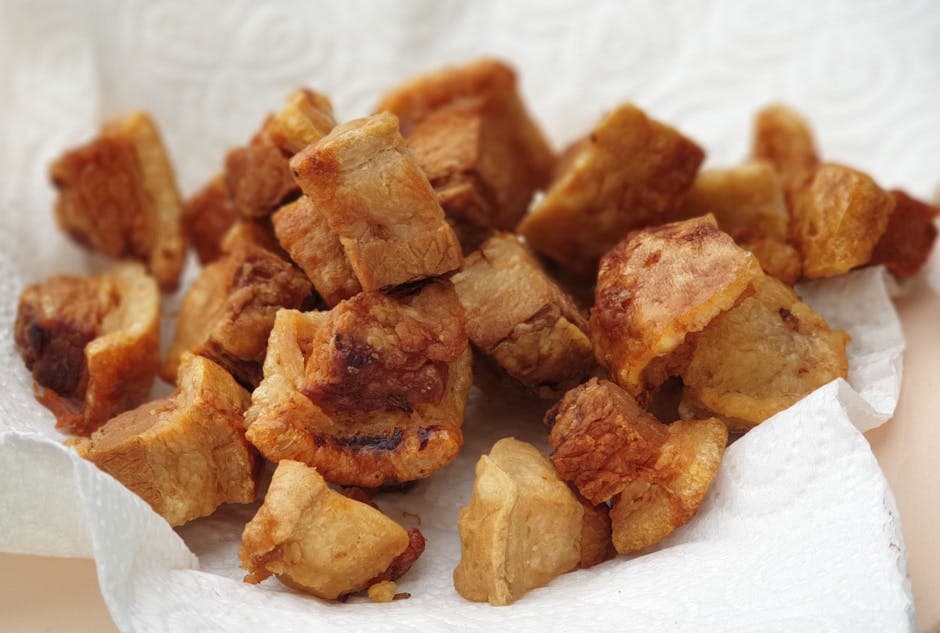
Crush chicharrón coarsely, not to a powder — you want crunchy nuggets throughout.
Trifongo: mix green plantains, ripe plantains, and yuca for a sweeter, layered version.
Vegetarian: skip chicharrón and double the garlic; use crispy chickpeas for crunch.
Top with garlicky chicken or stewed beef instead of shrimp.
Mofongo is best eaten immediately. Leftovers refrigerate 1 day; refresh by steaming covered with a damp paper towel for 90 seconds.
Mofongo evolved from West African fufu, brought to the Caribbean by enslaved Africans in the 16th century, adapted in Puerto Rico using green plantains in place of yams. It became codified as a Puerto Rican signature dish in the early 20th century.
No — yellow plantains are too sweet and soft. Mofongo requires hard, dark green plantains, which are starchy like potatoes. If your plantains have yellow patches, they're too ripe.
You almost certainly used a food processor or mashed too vigorously into a paste. Mofongo should be coarse and sticky-tender, with visible plantain pieces — mash by hand in short pulses.
The broth (caldo) is poured around — not over — the mofongo. The plantain dome slowly soaks up flavor while keeping its structure. Drowning it from the top turns it to mush.
Yes — plantains, garlic, oil, and pork rinds are all naturally gluten-free. Just verify your chicharrón brand if you're celiac, as some commercial versions add flour.
Per serving (340g) · 4 servings total
Ask our AI cooking assistant anything about this recipe — substitutions, techniques, scaling.
Chat with AI Chef →Join the conversation
Sign in to leave a comment and save your favourite recipes