
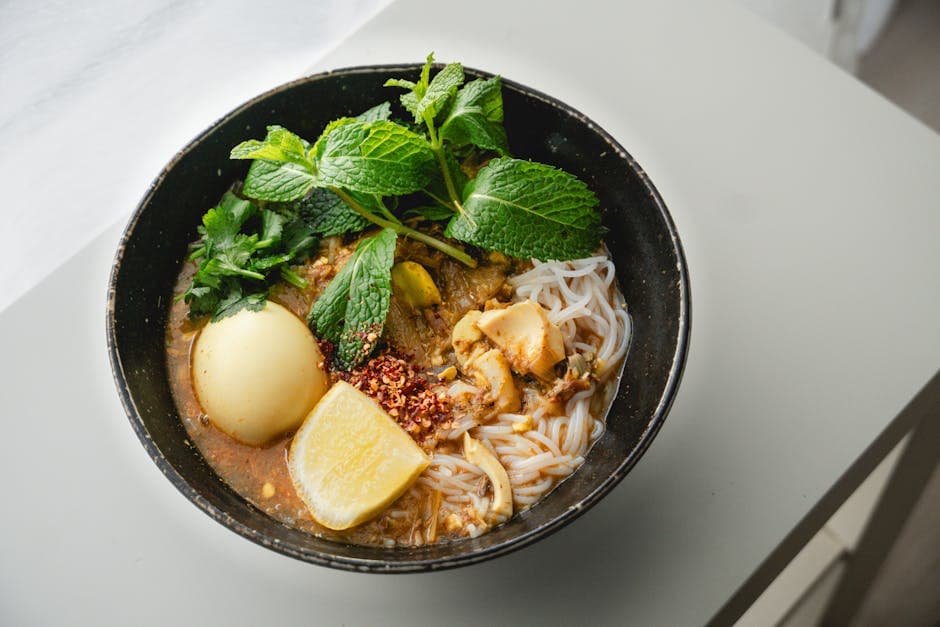
موهينجا (حساء نودلز السمك الوطني في ميانمار)
حساء الإفطار المفضل في ميانمار - مرق سمك السلور الحريري المغطى بدقيق الحمص المحمص، وساق الموز، وعشب الليمون، فوق شعيرية الأرز.
حول هذه الوصفة
موهينغا هو الطبق الوطني في ميانمار ووجبة الإفطار الأكثر تناولا في البلاد. يتكون مرق سمك السلور - المسلوق والمقشر والمقلب مرة أخرى - من عشبة الليمون والزنجبيل والثوم وصلصة السمك ودقيق الحمص المحمص، مما يمنح الحساء قوامه الحريري المميز. يوفر جذع الموز والقلب الرقيق الملمس؛ الكركم صبغ المرق باللون الأصفر الشاحب. يُغرف الحساء فوق شعيرية الأرز الرقيقة ويُغطى بمجموعة من الزينة: فطائر البازلاء المقلية المقرمشة والبيض المسلوق والكزبرة الطازجة والليمون ورقائق الفلفل الحار المجففة ورذاذ من صلصة السمك. وتقدمه الأكشاك في شوارع يانغون من الفجر حتى الساعة 10 صباحا، حيث تتناوله العائلات وموظفو المكاتب في أوعية طينية قبل أن يبدأ الحر.
المكونات
يخدم 6
- 800 غشرائح سمك السلور الطازجة (أو أي سمكة بيضاء صلبة)
- 2 لالماء
- 4 سوقعشبة الليمون، كدمات ومربوطة
- 1 إبهامزنجبيل طازج، مقطع إلى شرائح
- 1 كبيربصل مفروم خشناً
- 6 فصوصالثوم
- 60 غدقيق الحمص (بيسان)
- 60 غدقيق الأرز
- 4 ملعقة كبيرةزيت نباتي
- 2 ملعقة صغيرةالكركم المطحون
- 2 ملعقة صغيرةمسحوق الكاري البورمي (أو هندي معتدل)
- 3 ملعقة كبيرةصلصة السمك
- 1 ملعقة كبيرةمعجون الجمبري (نجابي) - اختياري
- 1 tender heartساق موز أو 2 كوب ملفوف مقطع إلى شرائح رفيعة
- 500 غشعيرية أرز رفيعة، منقوعة ومطبوخة في كل علبة
- 6بيض مسلوق، مقطع إلى النصف
- 1 حزمةكزبرة طازجة مفرومة
- 3ليمون مقطّع إلى شرائح
- 1 ملعقة كبيرةرقائق الفلفل الحار المجففة لتتصدر
- فطائر البازلاء المقرمشة (pe gyaw) أو الثوم المقلي في الأعلى
التعليمات
- 1
نخب الدقيق
تسخين مقلاة جافة على نار متوسطة منخفضة. نخب دقيق الحمص ودقيق الأرز بشكل منفصل، مع التحريك باستمرار، حتى يصبح لونهما ذهبيًا شاحبًا وجوزيًا - لمدة 5 دقائق لكل منهما. ضع جانبا. هذه الخطوة ضرورية للجسم والنكهة.
- 2
اصنع مخزونًا
في وعاء كبير، اخلطي الماء وعشب الليمون والزنجبيل ونصف البصلة و3 فصوص من الثوم. جلب لينضج. أضف السمك. يُسلق بلطف لمدة 8 دقائق حتى ينضج.
- 3
المخزون الاحتياطي والأسماك المقشرة
ارفع السمك للخارج بعناية. صفي المرق في وعاء نظيف. قطعي السمك إلى قطع صغيرة، مع إزالة أي عظام. تخلص من العطريات المستهلكة.
- 4
اصنع معجون التوابل
اطحني أو امزجي ما تبقى من البصل والثوم والكركم ومسحوق الكاري ومعجون الروبيان مع القليل من المرق للحصول على عجينة ناعمة.
- 5
يقلى المعجون
سخني الزيت في مقلاة واسعة على نار متوسطة. أضف العجينة. يُطهى لمدة 6 دقائق مع التحريك حتى يصبح لونه داكنًا وينفصل الزيت.
- 6
بناء المرق
أضف المعجون المقلي إلى المرق المصفى. جلب لينضج. أضف صلصة السمك وساق الموز (أو الملفوف). ينضج 10 دقائق.
- 7
رشاقته
اخفقي دقيق الحمص المحمص ودقيق الأرز مع 250 مل من الماء البارد حتى يصبح المزيج ناعمًا. يُضاف المرق إلى المرق المغلي، مع التحريك المستمر. يُطهى لمدة 8 دقائق حتى يصبح الحساء حريريًا وسميكًا قليلاً.
إن تدفق الملاط إلى المرق الساخن دون وجود كتل هو الأسلوب الرئيسي - اخفقه باستمرار.
- 8
أضف السمك
ضجة في السمك المقشر بلطف. ينضج لمدة دقيقتين حتى يسخن. الذوق - ضبط صلصة السمك. يجب أن يكون الحساء حريريًا ولذيذًا ولاذعًا إلى حد ما.
- 9
تجميع
ضعي عشًا من شعيرية الأرز المطبوخة في كل وعاء. اغرف الموهينجا الساخنة بسخاء فوق النودلز. ضعي نصف بيضة مسلوقة، والكزبرة المفرومة، ورقائق الفلفل الحار، والفطائر المقرمشة. يقدم مع إسفين الليمون وصلصة السمك الإضافية.
هل جرّبت هذه الوصفة؟
قيّمها وساعد الآخرين في العثور على الوصفات التي تنجح فعلاً.
سجّل الدخول بنقرة واحدة وسنحفظ التقييم الذي اخترته للتو.
كل ما تحتاجه لتخطيط أسبوعك — مجانًا
- تقويم الوجبات
- قائمة التسوق
- أفكار وصفات بالذكاء الاصطناعي
اطبخ دون الحاجة للمس الشاشة
احصل على خطط وجبات بالذكاء الاصطناعي ووضع طهي خطوة بخطوة ووصفاتك المحفوظة في تطبيق Bento المجاني.
نصائح للمحترفين
- →
نخب دقيق الحمص بعمق ولكن لا تحرقه - فهو يحمل العمود الفقري للطبق.
- →
يعتبر جذع الموز تقليديًا ولكن من الصعب العثور عليه خارج محلات البقالة الآسيوية. يعتبر الملفوف المقطع جيدًا هو أفضل بديل.
- →
أضف الملاط ببطء أثناء الخفق، حيث يؤدي سكبه إلى ظهور كتل غير قابلة للاسترداد.
- →
فطائر البازلاء الصفراء المقرمشة (pe gyaw) هي الطبقة العلوية الكلاسيكية؛ إذا لم تتمكن من تحضيرها، فإن الثوم المقلي المقرمش يعطي طعمًا مشابهًا.
الاختلافات
- •
يضيف أسلوب يانغون دوامة من زيت الفلفل الحار على الطاولة.
- •
أسلوب ماندالاي أكثر سمكًا قليلاً مع المزيد من دقيق الحمص.
- •
يستبدل الموهينغا النباتي مرق الفطر ويستخدم دقيق الحمص المحمص الإضافي للجسم.
تخزين
قم بتبريد المرق والمعكرونة بشكل منفصل لمدة تصل إلى 3 أيام. أعد تسخين المرق بلطف - يصبح سميكًا طوال الليل، لذا قم بفكه بالماء الساخن. تجميع طازج.
التاريخ والأصل
تم توثيق موهينغا في كتب الطبخ البورمية منذ أوائل القرن العشرين، ولها جذور في تحضيرات سمك السلور والمعكرونة القديمة في وسط ميانمار. أصبح رسميًا الطبق الوطني غير الرسمي في ميانمار الحديثة ويتم تقديمه يوميًا في أكشاك الشوارع وفي المهرجانات الكبرى من ثينجيان إلى ثيدينجيوت.
الأسئلة المتداولة
هل يمكنني صنع الموهينجا بدون سمك؟
تستخدم النسخة النباتية مرق الفطر والخضروات مع دقيق الحمص المحمص الإضافي. إنه طبق مختلف ولكنه لذيذ. قدمت الأديرة البوذية البورمية موهينغا بدون لحم لأجيال.
ما هو سمك الصحيح؟
يجب أن تغطي الموهينجا الملعقة بشكل خفيف - حريري، وليس لزجًا. إذا كان سميكًا جدًا، خففيه بالماء الساخن؛ رفيع جدًا، أضيفي ملعقة كبيرة أخرى من طحين الحمص المحمص واتركيه على نار هادئة.
ما الذي يمكنني استخدامه بدلاً من سمك السلور؟
يمكن استخدام أي سمكة بيضاء صلبة - بولوك، أو باسا، أو إسقمري، أو حتى السردين المعلب (غالبًا ما يستخدم الطهاة البورميون في المنزل الأسماك المعلبة للراحة). تجنب الأسماك الحساسة جدًا مثل سمك النعل الذي يتفكك.
حقائق التغذية
لكل وجبة (580g) · 6 حصص إجمالية
ملخص الوقت
هل لديك أسئلة؟
اسأل مساعد الطبخ الذي يعمل بالذكاء الاصطناعي لدينا أي شيء عن هذه الوصفة - البدائل والتقنيات والقياس.
الدردشة مع AI Chef →ظهرت في الأدلة
هذه الوصفة واردة في الأدلة المنسقة التالية:
المزيد من وصفات Myanmar
قد يعجبك أيضًا
أطباق مشابهة من مطابخ أخرى حول العالم.
أدوات مطبخ مجانية
حاسبات ومحوّلات تكمّل هذه الصفحة — دون الحاجة إلى تسجيل.
حوّلها إلى خطة
جدولها، تسوّق لها، وتابع ما لديك بالفعل.
اقرأ بعد ذلك
مقالات أطول تتعمّق في الأفكار وراء هذا الطبق.
مجتمع
انضم إلى المحادثة
قم بتسجيل الدخول لترك تعليق وحفظ وصفاتك المفضلة