
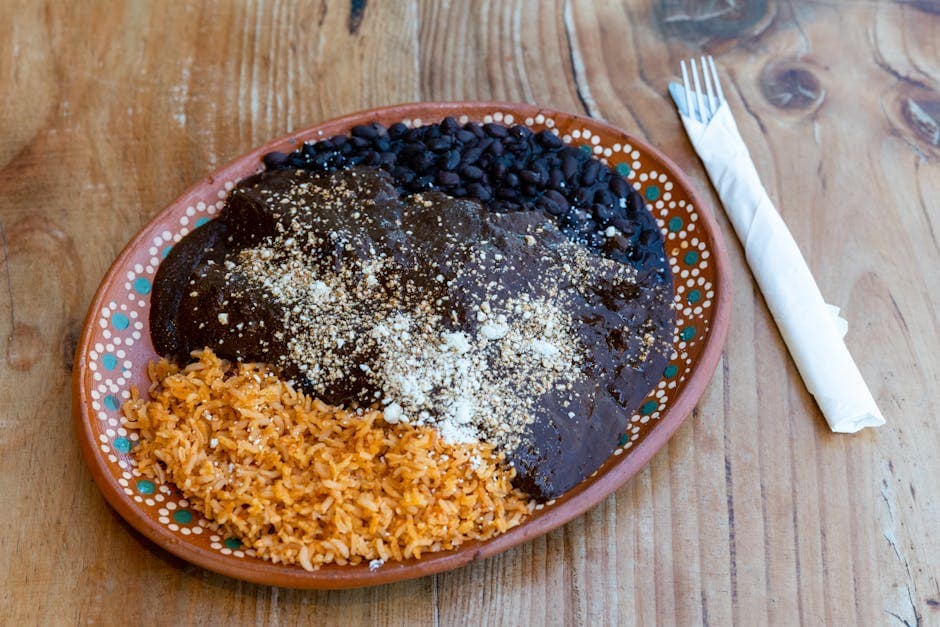
Mole Negro Oaxaqueño (خلد أواكساكان الأسود مع تركيا)
صلصة أواكساكا الأسطورية - صلصة عميقة ومعقدة من الفلفل الحار المتفحم والشوكولاتة والمكسرات والبذور والتوابل، تُطهى على نار خفيفة لساعات وتُسكب فوق الديك الرومي.
حول هذه الوصفة
يعتبر Mole Negro Oaxaqueño الأكثر احترامًا من بين الشامات السبعة في أواكساكا - وهي صلصة ذات تعقيد أسطوري وعمق تستخدم أكثر من ثلاثين مكونًا وتتطلب جزءًا أفضل من اليوم للتحضير. يأتي لونه من الفلفل الحار الزنجي، وهو نوع تراثي منقرض تقريبًا خارج أواكساكا، محمصًا حتى يقترب من الاحتراق؛ ثرائها من عجينة اللوز والفول السوداني والسمسم وبذور اليقطين المطحونة مع الزبيب والخوخ وعصا من الكانيلا. حلاوتها من الموز الناضج وقطعة من شوكولاتة أواكساكان (وهي محببة وأقل حلاوة من الشوكولاتة الأوروبية)؛ وحرارة خلفيتها من مزيج من الفلفل الحار المولاتو والباسيلا والأنشو. يتم بناء الشامة في طبقات: يتم تحميص كل مكون أو قليه بشكل منفصل لتطوير شخصيته، ثم يتم طحنه (تقليديًا في ميتات، اليوم في خلاط)، ويتم دمجه في عجينة سميكة، ويقلى ببطء في شحم الخنزير أو الزيت حتى يصبح داكنًا أكثر ويومض السطح، وأخيرًا يتم تخفيفه بمرق الديك الرومي الغني للحصول على صلصة مخملية قابلة للسكب. يتم تقديمه فوق الديك الرومي في حفلات الزفاف والجنازات والمهرجانات في جميع أنحاء أواكساكا، وغالبًا ما يكون بمثابة القطعة المركزية في وجبة الاحتفال التي يستغرق تحضيرها عدة أيام. كل عائلة في أواكساكان لديها وصفتها الخاصة، التي تخضع لحراسة شديدة، ومختلفة قليلاً. هذه الوصفة عبارة عن نسخة مخلصة لمشروع عطلة نهاية الأسبوع تحترم الهندسة المعمارية دون الحاجة إلى مصدر كل المكونات الإقليمية الأخيرة.
المكونات
يخدم 8
- 1 كاملأرباع فخذ الديك الرومي (حوالي 2 كجم إجمالاً) أو دجاجة كاملة مقطعة إلى قطع ومسلوقة للمرق واللحوم
- 6فلفل مولاتو مجفف، بالإضافة إلى 6 حبات باسيلا و4 حبات أنشو فلفل حار، منزوعة البذور ومنزوعة البذور
- 4الفلفل الحار الزنجي إذا كان بإمكانك العثور عليه (استبدل الباسيلا الإضافية)
- 1 small handfulالزبيب، بالإضافة إلى 4 حبات من البرقوق
- 60 غلوز خام، 60 جرام فول سوداني خام، 60 جرام بذور اليقطين، 40 جرام بذور السمسم
- 1 صغيرموز ناضج، مقطع إلى شرائح (أو موزة صغيرة للتحلية)
- 1 صغيربصل أبيض، بالإضافة إلى 6 فصوص ثوم وتورتيلا ذرة عمرها يوم واحد
- 2طماطم ناضجة و2 طماطم متفحمة على النار
- 1 stickالقرفة المكسيكية (كانيلا)، بالإضافة إلى 4 فصوص، 6 حبات فلفل أسود، 1 ملعقة صغيرة أوريجانو مجفف، 1 ملعقة صغيرة بذور كمون
- 60 غشوكولاتة أواكساكان (أو 50 جرام شوكولاتة داكنة + 1 ملعقة صغيرة قرفة + 1 ملعقة صغيرة لوز مطحون)، بالإضافة إلى 4 ملاعق كبيرة شحم الخنزير أو زيت للقلي
التعليمات
- 1
اصنع مرق الديك الرومي واللحوم
ضعي أفخاذ الديك الرومي في وعاء كبير به ماء بارد ليغطيها، ونصف بصلة، و2 فص ثوم، وقليل من الملح. يُترك على نار خفيفة ويُطهى لمدة 90 دقيقة حتى ينضج اللحم. يصفى ويحتفظ بـ 1.5 لتر من المرق. إبقاء اللحم دافئا.
- 2
نخب وبذور الفلفل الحار
تسخين كومال جاف أو مقلاة ثقيلة على نار متوسطة. نحمص الفلفل الحار على دفعات، مع الضغط عليه باستخدام ملعقة مسطحة، لمدة 30 ثانية لكل جانب حتى يتقرح، وتفوح رائحته العطرية، ويتحول إلى اللون الأسود تقريبًا عند الحواف. انقعي الفلفل الحار المحمص في 500 مل من مرق الديك الرومي الساخن لمدة 30 دقيقة حتى يصبح طريًا.
يعد حرق الفلفل الحار قليلاً أمرًا صحيحًا بالنسبة للخلد الزنجي - حيث يعد الفحم المدخن جزءًا من توقيع النكهة. لكن لا تحولهم إلى رماد. اسحبها من المقلاة عندما تكون رائحتها قوية ولكن لا يزال بإمكانك التعرف عليها على أنها فلفل حار.
- 3
نخب المكسرات والبذور والتوابل
على نفس الكومال الجاف، نخب اللوز والفول السوداني وبذور اليقطين وبذور السمسم بشكل منفصل حتى تصبح رائحتها ذات لون فاتح - لمدة 2-4 دقائق لكل نوع. نخب القرفة والقرنفل وحبوب الفلفل والأوريجانو والكمون لفترة وجيزة حتى تفوح رائحتهم. ضع كل شيء جانباً.
- 4
تقلى المدلى بها الداعمة
سخني ملعقتين كبيرتين من السمن في مقلاة صغيرة. تقلى شرائح الموز حتى تصبح ذهبية اللون على كلا الجانبين. يزيل. تقلى التورتيلا حتى تصبح مقرمشة وتكاد تحترق. يزيل. قم بتشويح الطماطم والطماطم والبصل المتبقي مباشرة على اللهب حتى يصبح لونه أسود من الخارج.
- 5
امزجي قاعدة الخلد
العمل على 2-3 دفعات في خلاط قوي، يُمزج الفلفل الحار المنقوع مع سائل النقع والمكسرات والبذور المحمصة والتوابل المحمصة والموز المقلي والتورتيلا المقلية والخضروات المتفحمة والزبيب والخوخ. أضف المرق الساخن حسب الحاجة وامزجه حتى يصبح ناعمًا تمامًا - لمدة 5 دقائق على الأقل لكل دفعة. تمر عبر منخل ناعم، مع الضغط بقوة باستخدام ملعقة.
- 6
يقلى المعجون
سخني الدهن المتبقي في وعاء ثقيل على نار متوسطة. اسكب معجون الخلد المصفى، وسوف يتناثر بقوة، لذا قم بتغطيته جزئيًا. يُطهى لمدة تتراوح بين 25 و30 دقيقة، مع التحريك بشكل متكرر وكشط القاع، حتى يصبح المعجون داكنًا ويتحول إلى خشب الماهوجني الأسود تقريبًا ويبدأ الزيت في الانفصال على السطح. هذه الخطوة تحول الشامة.
- 7
ننتهي بالشوكولاتة ونقدمها
أضيفي الشوكولاتة و750 مل أخرى من مرق الديك الرومي الدافئ، واخفقي جيدًا. يُترك على نار خفيفة لمدة 30 إلى 40 دقيقة، مع التحريك كثيرًا، حتى يصل الشامة إلى قوام سميك قابل للسكب يغطي الملعقة بشكل غني. تذوق واضبط - أضف الملح، وقليل من السكر إذا لزم الأمر لتحقيق التوازن، ورش المزيد من المرق إذا كان سميكًا جدًا. أدخل قطع الديك الرومي الدافئة في آخر 10 دقائق لتتزجيج. يُقدم الطبق في أوعية ضحلة مع وجود الشامة الداكنة حول اللحم، مع رش بذور السمسم في الأعلى، ورقائق الذرة الدافئة على الجانب، وكومة من الأرز الأبيض العادي.
هل جرّبت هذه الوصفة؟
قيّمها وساعد الآخرين في العثور على الوصفات التي تنجح فعلاً.
سجّل الدخول بنقرة واحدة وسنحفظ التقييم الذي اخترته للتو.
كل ما تحتاجه لتخطيط أسبوعك — مجانًا
- تقويم الوجبات
- قائمة التسوق
- أفكار وصفات بالذكاء الاصطناعي
تابع ما تأكله
صوّر وجبتك لتسجيل السعرات والعناصر الغذائية، واستخدم مؤقتات الصيام وتتبع شرب الماء في تطبيق SnapCal المجاني.
نصائح للمحترفين
- →
Mole Negro ليس طبقًا ليليًا - امنحه يومًا كاملاً، ويفضل عطلة نهاية أسبوع كاملة. قم بإعداد المكونات مسبقًا: المرق يوم الجمعة، والتحميص صباح يوم السبت، والقلي النهائي والانتهاء بعد ظهر يوم السبت.
- →
شوكولاتة أواكساكان (العلامات التجارية Mayordomo أو Guelaguetza) أكثر محببة وأقل حلاوة من الشوكولاتة الأوروبية، مع القرفة واللوز. البديل المعطى (الشوكولاتة الداكنة بالإضافة إلى القرفة واللوز المطحون) مقبول.
- →
قم بتمرير المعجون الممزوج من خلال منخل حتى لو بدا أن الخلاط الخاص بك قد قام بتنعيمه. الشامة ذات جودة المطاعم حريرية. يحتوي الشامة المنزلية الريفية على حبيبات طفيفة جيدة ولكنها مميزة.
- →
تتحسن الشامة بشكل كبير في اليوم التالي، حيث تتزاوج النكهات وقسوة الفلفل الحار الطازج. يصر العديد من طهاة أواكساكان على أنه يجب أن يستريح لمدة 24 ساعة قبل التقديم.
الاختلافات
- •
الخلد الزنجي مع لحم الخنزير - استخدم كتف لحم الخنزير المطهو ببطء بدلاً من الديك الرومي، وهو كلاسيكي بنفس القدر.
- •
مولي نيغرو نباتي - قدّم الصلصة فوق الشايوت المحمص والبطاطا الحلوة والفطر، مع الفاصوليا المقلية على الجانب.
- •
زنجي الخلد السريع - بديل معجون الخلد أواكساكان (دون بيدرو أو مايوردومو، متاح عبر الإنترنت وفي محلات البقالة المكسيكية)؛ رقيقة مع المرق ويترك على نار خفيفة حتى ينعش. اختصار مقبول، وليس الشيء الحقيقي.
- •
إنمولادا الخلد - قم بلف خبز التورتيلا المغطى بالخلد حول الدجاج المبشور للحصول على طبق خزفي مخبوز؛ يستخدم ما تبقى من الخلد ببراعة.
تخزين
يتحسن الخلد على مدى 3-4 أيام مبردًا في حاوية محكمة الإغلاق ويتجمد بشكل ممتاز لمدة تصل إلى 6 أشهر - يقوم العديد من الطهاة المنزليين في أواكساكان بإعداد دفعة ضخمة سنويًا وتجميدها في أجزاء. يُعاد تسخينه بلطف مع القليل من المرق أو الماء مع التحريك باستمرار. يبقى المعجون بمفرده (بدون مرق) لفترة أطول ويمكن تخفيفه حسب الطلب.
التاريخ والأصل
يمتلك الخلد جذور ما قبل الإسبان في شامات بلاط الأزتيك والميكستيك، لكن الخلد الزنجي أواكساكوينيو كما نعرفه تبلور في العصر الاستعماري عندما انضمت مكونات العالم القديم (اللوز والسمسم والسكر والقرفة) إلى المكونات الأصلية (الفلفل الحار والكاكاو والطماطم والذرة). تم تدوين تقليد الشامات السبعة في أواكساكا في القرن التاسع عشر وأوائل القرن العشرين. يعتبر معظم سكان أواكساكا أن الخلد الزنجي هو الأكثر تعقيدًا والأكثر شهرة من بين السبعة.
الأسئلة المتداولة
هل هناك حقا الشوكولاته في ذلك؟
نعم، كمية صغيرة توفر العمق ولمحة من المرارة بدلاً من الحلاوة. الخلد ليس صلصة الشوكولاتة. الشوكولاتة هي عنصر واحد من بين ثلاثين عنصرًا وهي متوازنة وليست مهيمنة.
هل يمكنني حقاً صنع هذا في المنزل؟
نعم مع التزام وصبر يوم كامل على مراحل التحميص والقلي. والنتيجة قريبة حقًا مما تأكله في أواكساكا. للحصول على مسار أسرع، يعد معجون الخلد أواكساكان المخفف بالمرق الجيد اختصارًا محترمًا.
كم هو حار؟
دافئ إلى حد ما ولكن ليس حارًا بشدة - الفلفل الحار المستخدم عبارة عن فلفل حار بنكهة (مولاتو، باسيلا، أنشو) بدلاً من الفلفل الحار الحراري. يهيمن الثراء والحلاوة والتعقيد. الحرارة هي ملاحظة خلفية.
لماذا الديك الرومي بدلا من الدجاج؟
الديك الرومي هو طائر احتفالي تقليدي في أواكساكان وله نكهة غنية تتناسب مع عمق الشامة. يعتبر الدجاج بديلاً مقبولاً تمامًا وهو ما يستخدمه معظم الطهاة المنزليين اليوم؛ كتف لحم الخنزير هو كلاسيكي آخر.
حقائق التغذية
لكل وجبة (420g) · 8 حصص إجمالية
ملخص الوقت
هل لديك أسئلة؟
اسأل مساعد الطبخ الذي يعمل بالذكاء الاصطناعي لدينا أي شيء عن هذه الوصفة - البدائل والتقنيات والقياس.
الدردشة مع AI Chef →ظهرت في الأدلة
هذه الوصفة واردة في الأدلة المنسقة التالية:
المزيد من وصفات مكسيكي
قد يعجبك أيضًا
أطباق مشابهة من مطابخ أخرى حول العالم.
تصفّح حسب المكوّن
وصفات أخرى مبنية على المكوّنات الأساسية نفسها.
أدوات مطبخ مجانية
حاسبات ومحوّلات تكمّل هذه الصفحة — دون الحاجة إلى تسجيل.
حوّلها إلى خطة
جدولها، تسوّق لها، وتابع ما لديك بالفعل.
اقرأ بعد ذلك
مقالات أطول تتعمّق في الأفكار وراء هذا الطبق.
مجتمع
انضم إلى المحادثة
قم بتسجيل الدخول لترك تعليق وحفظ وصفاتك المفضلة