americandessert🔥 Trending
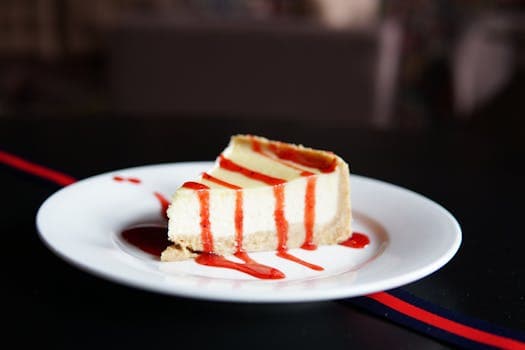
New York Cheesecake – Dense, Creamy Classic with Graham Cracker Crust
Rich, dense baked cheesecake with a buttery graham cracker crust — the definitive American dessert.
Prep
30 min
Cook
90 min
Servings
12
Difficulty
Medium
★★★★★
4.9(38,200 ratings)#american#dessert#cheesecake#baked#make-ahead
About This Recipe
New York cheesecake is the gold standard of cheesecakes — tall, dense, unbelievably creamy, with a buttery graham cracker base and a surface that is smooth and barely set, almost custard-like in texture. The New York style is distinguished by its high proportion of cream cheese, the addition of sour cream, and the technique of baking at high heat initially then at very low heat to achieve a set interior without the top cracking. The secret to the perfect texture is water-bath baking (bain-marie): placing the cheesecake pan inside a larger pan of hot water creates a humid oven environment that cooks the egg proteins gently and evenly. Without it, the exterior overcooks before the centre sets, leading to a rubbery texture and the dreaded cracks. The high then low temperature method achieves a golden top with a perfectly set, creamy interior. New York cheesecake must be made the day before serving — it needs a minimum of 8 hours (overnight) in the fridge to fully set and develop its characteristic dense, cold creaminess. It is served plain or with a simple berry compote, never with the elaborate fruit toppings of commercial versions.
Ingredients
Serves 12
- 200 ggraham crackers or digestive biscuits
- 100 gunsalted butter(melted)
- 900 gfull-fat cream cheese(room temperature)
- 250 gcaster sugar
- 200 gsour cream
- 4eggs(room temperature)
- 2 tspvanilla extract
- 2 tbspplain flour
Instructions
- 1
Make the base
Crush crackers to fine crumbs. Mix with melted butter. Press firmly into the base of a 23cm springform pan lined with baking parchment. Bake at 180°C for 10 minutes. Cool.
- 2
Make the filling
Beat cream cheese until smooth. Add sugar, beat 2 minutes. Add sour cream, vanilla and flour, mix. Add eggs one at a time, mixing on low speed just until combined.
Do not overmix after adding eggs — this incorporates air that causes cracking.
- 3
Water bath setup
Wrap the outside of the springform pan tightly in two layers of foil. Place in a large roasting pan. Pour boiling water into the roasting pan to come halfway up the cheesecake pan.
- 4
Bake
Bake at 160°C for 50–60 minutes. The edges should be set; the centre should still have a slight wobble — it will continue to set as it cools.
When in doubt, underbake slightly. Overbaked cheesecake loses its creamy texture.
- 5
Cool gradually
Turn oven off, crack door open, leave cheesecake inside for 1 hour. Then cool to room temperature. Refrigerate overnight.
Pro Tips
- →
All ingredients must be at room temperature — cold cream cheese creates lumps.
- →
Never skip the water bath — it is what prevents cracking and ensures creamy texture.
- →
Overnight chilling is mandatory — 4 hours is not enough for a New York cheesecake.
Variations
- •
Add a swirl of raspberry compote through the batter before baking.
- •
Top with a sour cream layer mixed with sugar and vanilla for a polished finish.
Storage
Keeps 5 days in the fridge. Freeze whole or sliced for up to 2 months.
History & Origin
The modern New York cheesecake was popularised in the early 20th century, with Jewish delicatessens and bakeries on the Lower East Side of Manhattan competing for the title of best cheesecake. Arnold Reuben (of Reuben sandwich fame) and Lindy's restaurant are both credited with developing the New York style. The key innovation was using a large amount of cream cheese (developed by James Kraft in 1912) rather than the farmer's cheese used in earlier versions.
Frequently Asked Questions
Why did my cheesecake crack on top?
Cracking is caused by: too much air in the batter (overmixing after eggs), baking without a water bath, overbaking, or cooling too quickly. The solutions: mix eggs in on low speed just until combined, always use a water bath, remove when the centre still has a wobble, and cool gradually in the oven with the door ajar.
Nutrition Facts
Per serving (350g) · 12 servings total
Calories480kcal
Protein9g
Carbohydrates38g
Fat34g
Fiber0g
Protein9g
Carbs38g
Fat34g
Time Summary
Prep time30 min
Cook time90 min
Total time120 min
Have Questions?
Ask our AI cooking assistant anything about this recipe — substitutions, techniques, scaling.
Chat with AI Chef →More American Recipes
Community
Join the conversation
Sign in to leave a comment and save your favourite recipes