
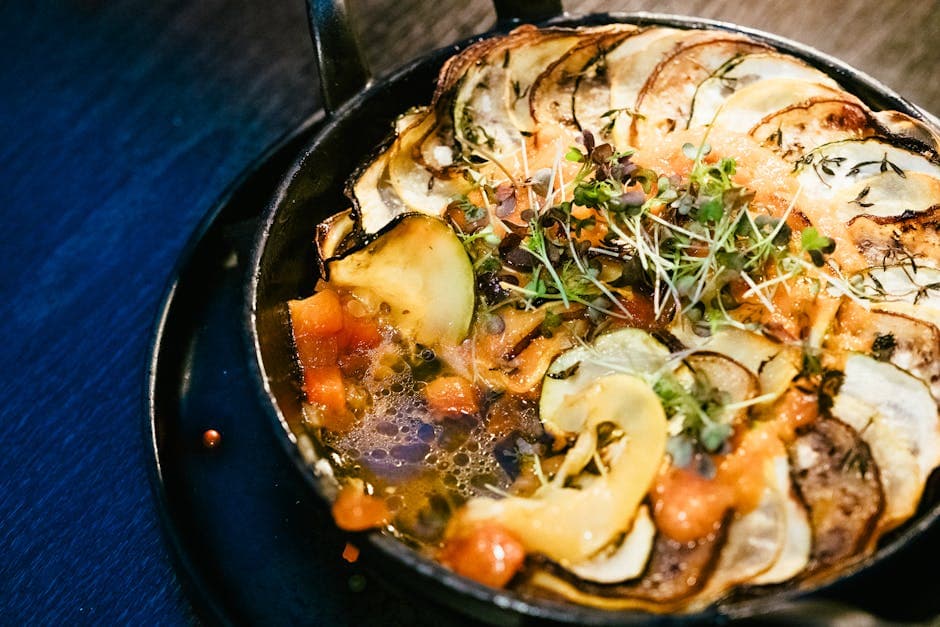
راتاتوي بروفنسال (حساء الخضار الصيفي المطبوخ ببطء)
الحساء البروفنسي الكلاسيكي المكون من خضروات الصيف - الباذنجان والكوسة والفلفل والطماطم المطبوخة بشكل منفصل ثم مطوية مع الثوم والريحان وزيت الزيتون.
حول هذه الوصفة
راتاتوي هو الطبق الصيفي الرائع في بروفانس - وهو يخنة مطبوخة ببطء وغنية بزيت الزيتون من الباذنجان والكوسا والفلفل الحلو والبصل والطماطم، معطرة بالثوم والزعتر الطازج والريحان الممزق. الاسم الكامل للطبق، راتاتوي نيسواز، يربطه بنيس وكوت دازور، حيث يتم إعداده تقليديًا في منتصف الصيف عندما تفيض أسواق بروفنسال المحلية بالخضروات الناضجة بالشمس. هذه التقنية هي نقطة الخلاف بين الطهاة الفرنسيين: النسخة الريفية "المجمعة" تتخلص من كل شيء في وعاء واحد وتطبخه؛ النسخة البروفنسية المناسبة (والنسخة التي اشتهرت بها جوليا تشايلد في أمريكا في الستينيات) تطبخ كل خضروات على حدة، وتحمرها حتى تصبح كراميلًا ومتطورة، ثم تضعها في طبقات وتطويها معًا مع صلصة الطماطم في الدقائق الأخيرة حتى تتزوج النكهات دون أن تتحول الخضار إلى هريسة. والنتيجة هي الحساء حيث يمكنك تذوق كل الخضار بشكل واضح - عمق الباذنجان المدخن، والكوسا الحلوة الناعمة، والفلفل المر قليلاً، والطماطم المشرقة - وكلها مرتبطة بزيت الزيتون المعطر بالثوم. يتم تناوله ساخنًا بجانب لحم الضأن المشوي أو السمك المشوي، أو دافئًا مع بيضة مسلوقة فوقه، أو باردًا في اليوم التالي على شريحة من الخبز المقرمش، أو في درجة حرارة الغرفة كجزء من طبق المقبلات، يعتبر الراتاتوي واحدًا من تلك الأطباق التي يكون مذاقها أفضل حقًا كلما طال أمدها، وأحد التعبيرات الرائعة لطهي الخضروات في البحر الأبيض المتوسط. (إن "كونفيت بيالدي" المكدس بأناقة في فيلم ديزني الشهير هو من اختراع توماس كيلر؛ أما النسخة المنزلية البروفنسالية الحقيقية فهي ريفية ومكتنزة.)
المكونات
يخدم 6
- 2 متوسطحبة باذنجان مقطعة إلى مكعبات بحجم 2.5 سم
- 3 متوسطكوسة، مقطعة إلى أنصاف أقمار بحجم 2 سم
- 2حبة من الفلفل الأحمر الحلو، مقشرة ومقطعة إلى قطع بحجم 2 سم
- 1حبة من الفلفل الأصفر الحلو، مقشرة ومقطعة إلى قطع بحجم 2 سم
- 2 كبيربصل أصفر، مقطع إلى شرائح رفيعة
- 800 غطماطم ناضجة (أو 1 علبة سان مارزانو)، مقشرة ومقطعة
- 6 فصوصثوم، مقطع إلى شرائح رفيعة
- 8 ملعقة كبيرةزيت زيتون بكر ممتاز، مقسم
- 4 أغصانزعتر طازج
- 2أوراق الغار
- 1 حزمة صغيرةأوراق الريحان الطازجة، الممزقة (احتفظ ببعضها للتقديم)
- 1 ملعقة كبيرةالملح (بالإضافة إلى المزيد حسب الذوق)
- فلفل أسود مطحون طازجًا
التعليمات
- 1
ملح الباذنجان
ضعي مكعبات الباذنجان مع ملعقة كبيرة ملح في مصفاة واتركيها لمدة 30 دقيقة - يؤدي ذلك إلى سحب السائل المر والرطوبة الزائدة، وبالتالي يتحول لون الباذنجان إلى اللون البني بدلاً من أن يتصاعد منه البخار. شطف لفترة وجيزة واتركها حتى تجف باستخدام المناشف الورقية. خطوة التجفيف لا تقل أهمية عن التمليح.
- 2
حمري الباذنجان
سخني 3 ملاعق كبيرة زيت زيتون في مقلاة ثقيلة واسعة على نار متوسطة إلى عالية. اقلي الباذنجان على دفعتين لمدة 6-8 دقائق لكل دفعة، مع التقليب حتى يصبح كراميلًا عميقًا من جميع الجوانب ويصبح طريًا من المنتصف. نقل إلى لوحة. لا تزدحم المقلاة - فالتكديس يؤدي إلى تبخر الباذنجان ويفسد قوامه.
- 3
بني الكوسة
أضف 2 ملعقة كبيرة أخرى من زيت الزيتون إلى نفس المقلاة. اقلي الكوسة لمدة 4-5 دقائق، وقلبها حتى تصبح ذهبية اللون على الجوانب المقطوعة ولا تزال ثابتة في المنتصف. لا تفرط في طهي الكوسة، حيث تتحول الكوسة إلى هريسة بسرعة. نقل إلى طبق مع الباذنجان.
- 4
اطبخ الفلفل
أضف 2 ملعقة كبيرة زيت زيتون. يُقلى الفلفل الحلو لمدة 6 دقائق حتى يصبح طريًا ومتفحمًا قليلاً عند الحواف. تتكثف حلاوتها الطبيعية أثناء طهيها. نقل إلى اللوحة.
- 5
بناء قاعدة الطماطم
في نفس المقلاة (أو فرن هولندي واسع)، سخني ملعقتين كبيرتين من زيت الزيتون. يُضاف البصل المقطع مع قليل من الملح ويُطهى لمدة 10 دقائق على نار متوسطة إلى منخفضة حتى يصبح طريًا وحلوًا وذهبيًا. أضف الثوم واطهيه لمدة 60 ثانية - لا تحمره.
- 6
أضف الطماطم والأعشاب
أضيفي الطماطم المفرومة والزعتر وأوراق الغار. يُترك على نار خفيفة ويُطهى لمدة 15 دقيقة على نار متوسطة مع التحريك من حين لآخر حتى تتحلل الطماطم تمامًا وتشكل صلصة سميكة تشبه المربى. سحق أي قطع كبيرة مع الجزء الخلفي من الملعقة.
- 7
الجمع والطي
أضيفي جميع الخضار ذات اللون البني (الباذنجان، الكوسة، الفلفل) إلى الوعاء. اطويها برفق لتغطيها بصلصة الطماطم - لا تحركيها بقوة وإلا ستتفكك الخضروات. خففي الحرارة إلى درجة منخفضة، ثم غطيها بشكل غير محكم واطهيها لمدة 15 دقيقة حتى تمتزج النكهات.
- 8
الراحة والموسم والانتهاء بالريحان
اسحب الحرارة. تخلصي من أوراق الغار وسيقان الزعتر. أضيفي نصف كمية الريحان الممزق واتركي الراتاتوي يرتاح لمدة 10 دقائق عن النار - عندها تمتزج النكهات معًا. تذوق وضبط الملح والفلفل. يُرش زيت الزيتون الإضافي، ويُنثر الريحان المتبقي، ويُقدم دافئًا في درجة حرارة الغرفة أو مبردًا في اليوم التالي.
هل جرّبت هذه الوصفة؟
قيّمها وساعد الآخرين في العثور على الوصفات التي تنجح فعلاً.
سجّل الدخول بنقرة واحدة وسنحفظ التقييم الذي اخترته للتو.
كل ما تحتاجه لتخطيط أسبوعك — مجانًا
- تقويم الوجبات
- قائمة التسوق
- أفكار وصفات بالذكاء الاصطناعي
تابع ما تأكله
صوّر وجبتك لتسجيل السعرات والعناصر الغذائية، واستخدم مؤقتات الصيام وتتبع شرب الماء في تطبيق SnapCal المجاني.
نصائح للمحترفين
- →
إن طهي كل خضروات على حدة هو الأسلوب بأكمله، فهو يحافظ على نكهاتها وقوامها الفردي. الإصدار ذو الوعاء الواحد أسرع ولكن طعمه مشوش.
- →
استخدم يدًا سخية مع زيت الزيتون - من المفترض أن تكون راتاتوي غنية وناعمة. يحمل الزيت النكهات وهو النسيج الضام للطبق.
- →
ملح الباذنجان! تخطي هذا يعطي الباذنجان الدهني المر الذي يشرب زيتًا لا نهاية له ويتحول إلى هريسة.
- →
طعم راتاتوي أفضل حقًا في اليوم التالي. تقدم للأمام؛ يقدم في درجة حرارة الغرفة في اليوم الثاني مع الخبز المقرمش.
الاختلافات
- •
كونفيت بايالدي (توماس كيلر / راتاتوي لبيكسار): خضروات مقطعة إلى شرائح رفيعة، ومرتبة بشكل حلزوني أنيق فوق صلصة الطماطم والفلفل، ثم تُخبز ببطء. مذهل بصريًا، ويستغرق 90 دقيقة أطول.
- •
راتاتوي البيض البروفنسي: ضعي راتاتوي ساخنًا في قوالب القالب، ثم اكسري بيضة فوقها، واخبزيها في الفرن على حرارة 200 درجة مئوية لمدة 8 دقائق حتى ينضج اللون الأبيض - بطل الفطور والغداء.
- •
معكرونة راتاتوي: أضيفي الريجاتوني وانتهي بالبارميزان - هرطقة بالنسبة للأصوليين ولكنها ممتازة.
- •
أضف ملعقة كبيرة من نبات الكبر أو عدد قليل من الأنشوجة إلى قاعدة الطماطم للحصول على نسخة أكثر نفاذة وطعم نيسوا.
تخزين
يتم تبريده بشكل جميل لمدة 5 أيام - يتحسن بشكل حقيقي في اليوم الثاني والثالث. يتجمد لمدة 3 أشهر؛ ذوبان الجليد بين عشية وضحاها في الثلاجة. يُعاد تسخينه بلطف أو يُقدم في درجة حرارة الغرفة. يمكن تقديمه بارداً كسلطة مع الخبز المقرمش وجبن الماعز.
التاريخ والأصل
ظهر راتاتوي من مطابخ الفلاحين في أواخر القرن الثامن عشر في نيس وريف بروفانس كوسيلة للاستفادة من وفرة الخضروات الصيفية. قد تكون الكلمة مشتقة من "راتاتولها" الأوكيتانية - وهو يخنة خشنة - وقد تم تدوين الطبق لأول مرة مطبوعًا بواسطة مؤلف كتاب الطبخ البروفنسي ألبين بافاريل في سبعينيات القرن التاسع عشر. اكتسبت شهرة عالمية من خلال كتاب "إتقان فن الطبخ الفرنسي" لجوليا تشايلد (1961).
الأسئلة المتداولة
هل يمكنني طهي كل شيء في وعاء واحد؟
يمكنك القيام بذلك، والعديد من الطهاة المنزليين الفرنسيين يفعلون ذلك - ولكن النتيجة تكون أكثر ليونة، والنكهات أكثر مزجًا، والخضروات أقل وضوحًا. تستغرق طريقة التحمير المنفصلة 30 دقيقة أطول ولكنها تستحق العناء.
هل يجب علي تقشير الطماطم؟
إذا كنت تستخدم الطماطم الطازجة، نعم، فسوف يلتف الجلد إلى شرائح غير سارة. سجل، قم بالتبييض لمدة 30 ثانية، ثم قم بحمام جليدي، وسينزلق الجلد. طماطم سان مارزانو المعلبة مقشرة بالفعل وممتازة.
هل يمكنني استخدام الأعشاب المجففة؟
الزعتر والريحان الطازج مهمان حقًا بالنسبة للراتاتوي - الزعتر المجفف مقبول، والريحان المجفف ليس كذلك (طعمه مثل نشارة الخشب). استخدم الأعشاب الطازجة من الوعاء إذا لزم الأمر.
هل راتاتوي خالي من الغلوتين ونباتي؟
نعم – بطبيعة الحال كلاهما. لا حاجة للتعديلات.
حقائق التغذية
لكل وجبة (380g) · 6 حصص إجمالية
ملخص الوقت
هل لديك أسئلة؟
اسأل مساعد الطبخ الذي يعمل بالذكاء الاصطناعي لدينا أي شيء عن هذه الوصفة - البدائل والتقنيات والقياس.
الدردشة مع AI Chef →ظهرت في الأدلة
هذه الوصفة واردة في الأدلة المنسقة التالية:
المزيد من وصفات فرنسي
قد يعجبك أيضًا
أطباق مشابهة من مطابخ أخرى حول العالم.
تصفّح حسب المكوّن
وصفات أخرى مبنية على المكوّنات الأساسية نفسها.
أدوات مطبخ مجانية
حاسبات ومحوّلات تكمّل هذه الصفحة — دون الحاجة إلى تسجيل.
حوّلها إلى خطة
جدولها، تسوّق لها، وتابع ما لديك بالفعل.
اقرأ بعد ذلك
مقالات أطول تتعمّق في الأفكار وراء هذا الطبق.
مجتمع
انضم إلى المحادثة
قم بتسجيل الدخول لترك تعليق وحفظ وصفاتك المفضلة