
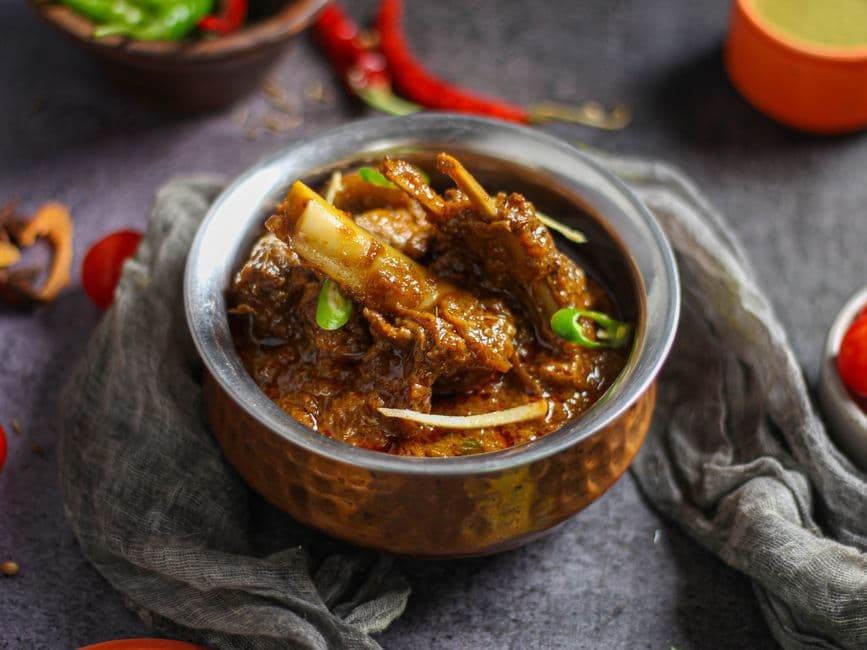
روغان جوش (كاري لحم الضأن الكشميري المطهو ببطء)
لحم خروف كشميري مميز بالكاري - لحم ضأن مطهو ببطء في مرق أحمر عميق معطر من الزبادي والفلفل الكشميري والشمر والزنجبيل ومسحوق الزنجبيل المجفف.
حول هذه الوصفة
روغان جوش، الذي يُترجم اسمه تقريبًا من الفارسية على أنه "أحمر مطبوخ بالزيت"، هو أشهر أطباق الكاري الكشميري وزوان - وهي الولائم متعددة الأطباق من المطبخ الكشميري الإسلامي الذي ينحدر من التقاليد الفارسية والمغولية التي تم جلبها إلى وادي كشمير في القرن الخامس عشر. على عكس الكاري المملوء بالفلفل الحار في شمال الهند، يستمد روغان جوش لونه القرمزي العميق بالكامل تقريبًا من الفلفل الأحمر الكشميري المجفف (ذو الألوان الكثيفة ولكن المعتدل في الحرارة) وجذر الألكانيت المجفف بالشمس (جوت راتان) الذي يستخدمه تقليديًا الوازا، الطهاة الوراثيون في كشمير. يختلف ملف النكهة عن أي كاري هندي آخر: يهيمن عليه مسحوق الشمر والزنجبيل المجفف (سونث) بدلاً من جارام ماسالا الطازج، مع عدم وجود بصل أو طماطم في نسخة كشميري بانديت الصارمة، ومقيد بزبادي الحليب كامل الدسم الذي يتم تلطيفه ببطء في الصلصة حتى لا تنقسم. يتم تحمير لحم الضأن بالعظم - تقليديًا قطع الكتف والرقبة والضلع - في زيت الخردل قبل طهيه ببطء وبطء في هذه الصلصة العطرية لمدة ساعتين إلى ثلاث ساعات حتى يسقط اللحم عن العظم وتتحول الصلصة إلى مرق لامع مملوء بالزيت. يتم تناول روغان جوش مع الأرز البسمتي العادي أو الروتي الكشميري الرقيق، وهو نوع من الطبق الذي يحول المتشككين في المطبخ الهندي على الفور - فهو غني دون أن يكون ثقيلًا، وعطريًا دون أن يكون حارًا، ويحدد تمامًا مطبخ إحدى أجمل مناطق الهند.
المكونات
يخدم 6
- 1.2 كغكتف أو رقبة خروف بالعظم، مقطعة إلى قطع بحجم 5 سم
- 300 غزبادي عادي كامل الدسم، مخفوق ناعمًا
- 4 ملعقة كبيرةزيت الخردل (أو السمن)
- 2 ملعقة كبيرةمسحوق الفلفل الكشميري (معتدل، أحمر مكثف)
- 2 ملعقة كبيرةمسحوق بذور الشمر
- 1 ملعقة كبيرةمسحوق الزنجبيل الجاف (الابن)
- 1 ملعقة صغيرةالحلتيت (هينج)
- 4حبات الهيل الأخضر
- 2حبات الهيل الأسود
- 4فصوص كاملة
- 1 stickالقرفة
- 2أوراق الغار
- 1صولجان النصل (أو ½ ملعقة صغيرة مطحونة)
- 0.5 ملعقة صغيرةجوزة الطيب الأرض
- 500 ملالماء الدافئ أو مخزون خفيف
- ملح حسب الرغبة، بالإضافة إلى أرز بسمتي للتقديم
التعليمات
- 1
تسخين زيت الخردل إلى نقطة الدخان
سخني زيت الخردل في فرن هولندي ثقيل على نار عالية حتى يدخن قليلاً وتنضج الرائحة الخام النفاذة - حوالي دقيقتين. هذه الخطوة ضرورية للتخلص من زيت الخردل؛ قم بتبريده قليلاً قبل الخطوة التالية. في حالة استخدام السمن، لا حاجة للتدخين.
- 2
ازهر البهارات كلها
خفض الحرارة إلى متوسطة. يُضاف الهيل الأخضر والأسود والقرنفل والقرفة وأوراق الغار والصولجان. تقلى لمدة 60 ثانية، مع تحريك المقلاة، حتى تفوح رائحة البهارات بشكل عميق وتنتفخ حبات الهيل قليلاً. هذه هي القاعدة العطرية للطبق.
- 3
بني الخروف بقوة
أضف قطع لحم الضأن في طبقة واحدة (اعمل على دفعات إذا لزم الأمر). احرقها على نار متوسطة إلى عالية لمدة 8-10 دقائق إجمالاً، مع التقليب حتى تحصل كل قطعة على كراميل بني غامق. هذا هو المكان الذي يحصل فيه الطبق على نكهة مميزة - لا تزدحم الوعاء ولا تحرك اللحم في وقت مبكر جدًا.
- 4
أضف البهارات الجافة
خفض الحرارة إلى متوسطة منخفضة. رش مسحوق الفلفل الكشميري، ومسحوق الشمر، ومسحوق الزنجبيل الجاف، والحلتيتيدا مباشرة على لحم الضأن. حركيه لمدة 60 ثانية، حيث يجب أن تغطي المساحيق الجافة كل قطعة ويحول الزيت إلى اللون الأحمر الداكن. لا تدعهم يحترقون.
- 5
قم بتلطيف الزبادي
اخفقي الزبادي ناعمًا في وعاء منفصل مع 100 مل من الماء الدافئ و2 ملعقة صغيرة ملح. أضفه إلى الوعاء ملعقة كبيرة في كل مرة، مع التحريك باستمرار بين الإضافات - وهذا يمنع الانقسام. بمجرد إضافة كل الزبادي، يجب أن تصبح الصلصة حمراء داكنة موحدة وسميكة قليلاً.
- 6
طهي بطيء لمدة 90-120 دقيقة
أضف 400 مل من الماء الدافئ المتبقي، واتركه حتى يغلي على نار خفيفة، ثم غطيه بشكل غير محكم وقلل الحرارة إلى أدنى درجة حيث لا يكاد السطح ينطفئ. يُطهى لمدة 90 دقيقة للكتف، وما يصل إلى ساعتين للرقبة، مع التحريك كل 25 دقيقة. ينضج اللحم عندما تنزلق الشوكة دون مقاومة وتبدأ في الانفصال عن العظم.
- 7
تقليل والانتهاء
اكشف الغطاء وقم بزيادة الحرارة إلى متوسطة خلال الـ 15 دقيقة الأخيرة لتقليل الصلصة - يجب أن يغطي لحم الضأن في مرق أحمر لامع مع زيت مرئي عند الحواف ("روجان" أو لمعان مطبوخ بالزيت يعطي الطبق اسمه). يرش جوزة الطيب ورشة أخيرة من مسحوق الشمر، وتذوق الملح.
- 8
راحة 15 دقيقة وتقديمها
أطفئ النار، ثم غطيها واتركها ترتاح لمدة 15 دقيقة - مثل كل أنواع الطهي الرائعة، تستقر النكهة بشكل كبير. يُقدم الطبق فوق أرز بسمتي عادي مطهو على البخار مع شريحة من الليمون، ويفضل استخدام الشيرمال الكشميري أو خبز النان لتصفية الصلصة.
هل جرّبت هذه الوصفة؟
قيّمها وساعد الآخرين في العثور على الوصفات التي تنجح فعلاً.
سجّل الدخول بنقرة واحدة وسنحفظ التقييم الذي اخترته للتو.
كل ما تحتاجه لتخطيط أسبوعك — مجانًا
- تقويم الوجبات
- قائمة التسوق
- أفكار وصفات بالذكاء الاصطناعي
تابع ما تأكله
صوّر وجبتك لتسجيل السعرات والعناصر الغذائية، واستخدم مؤقتات الصيام وتتبع شرب الماء في تطبيق SnapCal المجاني.
نصائح للمحترفين
- →
الفلفل الكشميري مخصص للون وليس للحرارة - استخدم ملعقتين كبيرتين كاملتين وستحصل على اللون الأحمر العميق المميز دون حرق فم أي شخص. سيؤدي استبدال الفلفل الحار أو مسحوق الفلفل الحار إلى جعل الطبق ساخنًا بشكل مؤلم ولونًا خاطئًا تمامًا.
- →
اخفقي الزبادي مع ملعقة كبيرة من نشا الذرة لضمان عدم انقسامه أثناء الطهي — وهي بوليصة تأمين صغيرة. يُضاف الزبادي بعيدًا عن النار المباشرة ويُحرَّك باستمرار عند التقديم.
- →
لحم الضأن بالعظم ضروري، فالنخاع والنسيج الضام هما ما يجعل المرق غنيًا وفاخرًا. المكعبات الخالية من العظم تعطي صلصة رقيقة.
- →
زيت الخردل تقليدي ويعطي لدغة خفيفة. إذا لم تتمكن من العثور عليه أو لم تستمتع بالطعم اللاذع، فاستخدم السمن - فالطبق لا يزال ممتازًا. لا تستخدم الزيت النباتي أبدًا؛ لا يضيف شيئا.
الاختلافات
- •
أسلوب الكشميري بانديت: حذف البصل والثوم والطماطم بالكامل (يعتبر مطبخ بانديت هذه غير مناسبة للأطباق الاحتفالية)؛ أضف ملعقة صغيرة من الحلتيت لتعويض نكهة الآليوم.
- •
الهجين البنجابي الكشميري: أضف حبتين من البصل الكبير المفروم جيدًا والمحمر جيدًا قبل لحم الضأن، بالإضافة إلى حبتين من الطماطم - وهو أمر شائع في إصدارات المطاعم خارج كشمير ولكنه ليس أصليًا تمامًا.
- •
الماعز روغان جوش: استبدال عظم كتف الماعز - أكبر سنًا وأكثر صلابة قليلاً من لحم الضأن، ويحتاج إلى 30 دقيقة إضافية. شائع في كشمير مسلم وزوان.
- •
النسخة النباتية (فطر روغان جوش على الطريقة الكشميري): استبدل 1 كجم من فطر الكريميني أو فطر المحار؛ قلل وقت الطهي إلى 25 دقيقة بعد خطوة الزبادي.
تخزين
يتم تبريده بشكل جميل لمدة 4 أيام - النكهة أفضل حقًا في اليوم الثاني. يتم تجميده لمدة 3 أشهر في حاويات محكمة الإغلاق؛ قم بتذويبه طوال الليل في الثلاجة ثم قم بتسخينه بلطف على الموقد مع القليل من الماء. إعادة التسخين في الميكروويف يمكن أن يؤدي إلى كسر صلصة الزبادي؛ استخدم حرارة الموقد اللطيفة.
التاريخ والأصل
نشأ روغان جوش في المطابخ المتأثرة بالفارسية في إيران في العصور الوسطى ووصل إلى كشمير مع أباطرة المغول في أواخر القرنين الخامس عشر والسادس عشر، ليصبح محورًا في أعياد وزوان المتقنة لحفلات الزفاف الإسلامية الكشميرية. يأتي اللون الأحمر العميق المميز تقليديًا من ذرة الراتان (جذر الكانيت)؛ تعتمد الإصدارات الحديثة في الغالب على الفلفل الأحمر الكشميري.
الأسئلة المتداولة
هل يمكنني استخدام الزبادي اليوناني؟
نعم - الزبادي اليوناني كامل الدسم يعمل بشكل جيد، بل إنه أقل عرضة للانقسام من العادي. قم بفكها بملعقة كبيرة من الماء أولاً حتى تصبح قابلة للسكب.
لماذا الألغام المر؟
من المؤكد أنك لم تقم بتسخين زيت الخردل إلى نقطة الدخان قبل استخدامه. طعم زيت الخردل الخام قاسٍ ومرير؛ تدخينها لفترة وجيزة هي الطريقة التقليدية لتليينها.
هل يمكنني عمل هذا بدون البهارات الكاملة؟
يمكنك استبدال ملعقة كبيرة من مزيج جارام ماسالا الكشميري، لكن التوابل الكاملة هي التي تعطي الطبق طابعه العطري. القرنفل والهيل الأسود مميزان بشكل خاص.
هل روجان جوش حار؟
روغان جوش الكشميري الأصيل خفيف إلى حد ما - الفلفل الحار للون والدفء يأتي من التوابل مثل الشمر والزنجبيل. غالبًا ما تضيف إصدارات المطاعم خارج الهند الفلفل الحار لإضفاء الدفء على الأذواق الغربية؛ هذه ليست تقليدية.
حقائق التغذية
لكل وجبة (380g) · 6 حصص إجمالية
ملخص الوقت
هل لديك أسئلة؟
اسأل مساعد الطبخ الذي يعمل بالذكاء الاصطناعي لدينا أي شيء عن هذه الوصفة - البدائل والتقنيات والقياس.
الدردشة مع AI Chef →ظهرت في الأدلة
هذه الوصفة واردة في الأدلة المنسقة التالية:
المزيد من وصفات هندي
قد يعجبك أيضًا
أطباق مشابهة من مطابخ أخرى حول العالم.
تصفّح حسب المكوّن
وصفات أخرى مبنية على المكوّنات الأساسية نفسها.
أدوات مطبخ مجانية
حاسبات ومحوّلات تكمّل هذه الصفحة — دون الحاجة إلى تسجيل.
حوّلها إلى خطة
جدولها، تسوّق لها، وتابع ما لديك بالفعل.
اقرأ بعد ذلك
مقالات أطول تتعمّق في الأفكار وراء هذا الطبق.
مجتمع
انضم إلى المحادثة
قم بتسجيل الدخول لترك تعليق وحفظ وصفاتك المفضلة