
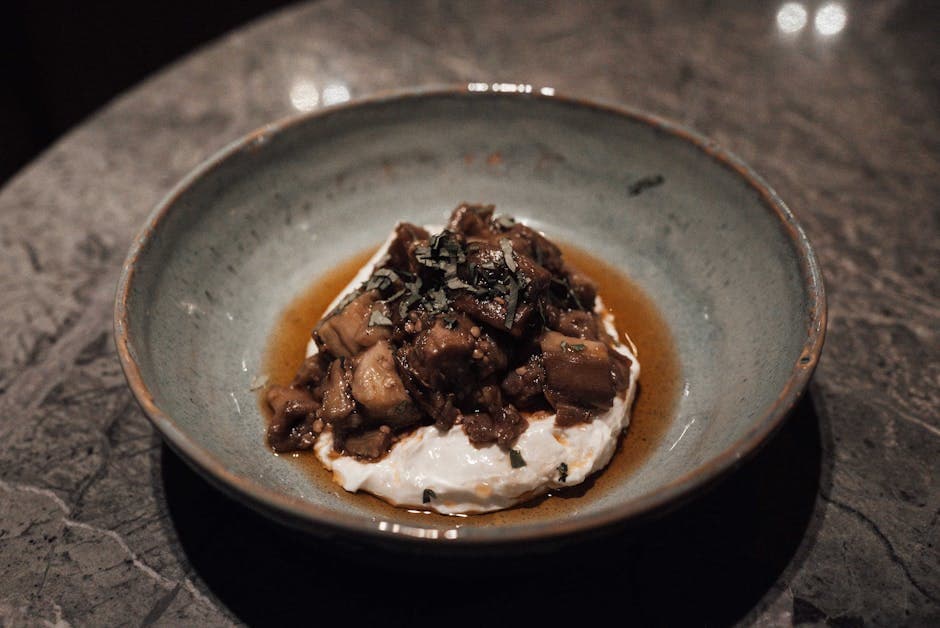
Caponata (Sizilianische süßsaure Aubergine)
Siziliens ikonisches Gemüse Agrodolce — langsam gekochte Aubergine, Sellerie, Oliven und Kapern mit einem hellen süßsauren Abschluss aus Essig und Zucker, warm oder bei Zimmertemperatur serviert.
Über dieses Rezept
Caponata ist Siziliens Geschenk an den vegetarischen Tisch der Welt – ein langsam gegartes, tief herzhaftes, süß-saures Relish aus Auberginen, Sellerie, süßen Zwiebeln, salzigen grünen Oliven und Kapern, abgerundet mit einem großzügigen Schuss Rotweinessig und einem Teelöffel Zucker, der die ganze Pfanne in die unverwechselbare Agrodolce-Balance hebt, die die sizilianische Küche ausmacht. Die Technik spiegelt die Geschichte der Insel am Schnittpunkt des arabischen, normannischen und spanischen Mittelmeers wider: Das Agrodolce – ein sizilianisches Erbe der arabisch-andalusischen Küche – verwandelt etwas, das ein einfacher Gemüseeintopf sein könnte, in etwas fast Bonbonfarbenes, ausgeglichen durch die Salzigkeit der Oliven und Kapern und die leichte Bitterkeit richtig gebratener Auberginen. Das Gericht wird traditionell am Vortag zubereitet und am zweiten Tag bei Zimmertemperatur serviert, wenn sich die Aromen festgesetzt und zu einem glänzenden, juwelenartigen Durcheinander vermählt haben, das auf einem Teller den Geschmack des gesamten sizilianischen Sommers widerspiegelt. Es wird als Antipasti gegessen, als Beilage zu gegrilltem Fisch, auf knusprigem Brot verteilt oder – in Italien umstritten, aber im Ausland weithin akzeptiert – durch Nudeln gemischt. Jede sizilianische Familie hat ihre eigene Version: Zur Catania Caponata werden geröstete Pinienkerne und Rosinen hinzugefügt; Palermo Caponata enthält mehr Tomaten und kann an Festtagen auch Oktopus enthalten. Trapani caponata verwendet Fenchel. Die folgende Version ist die klassische Palermitana, die am weitesten gereiste und am einfachsten zu beschaffende.
Zutaten
Dient 6
- 1.2 kggroße Auberginen (etwa 3 mittelgroße), in 2,5 cm große Würfel geschnitten
- 2 ELSalz (zum Salzen der Aubergine)
- 5 ELnatives Olivenöl extra, plus mehr zum Braten
- 1 großegelbe Zwiebel, fein gehackt
- 4 StängelSellerie (helle innere Stängel bevorzugt), in 1 cm große Würfel geschnitten
- 400 gkonservierte San-Marzano-Tomaten, von Hand zerkleinert
- 100 gentsteinte grüne sizilianische Oliven (Castelvetrano oder Nocellara), halbiert
- 3 ELsalzgepackte Kapern, 10 Minuten eingeweicht und gespült
- 60 mlRotweinessig
- 2 ELZucker
- 30 gPinienkerne, leicht geröstet
- 30 ggoldene Rosinen, 10 Minuten in warmem Wasser eingeweicht
- 1 kleines Bundfrische Basilikumblätter, zerrissen
- frisch gemahlener schwarzer Pfeffer nach Geschmack
Anleitung
- 1
Aubergine salzen und ablaufen lassen
Werfen Sie die Auberginenwürfel großzügig mit 2 EL Salz in ein Sieb über dem Spülbecken. 30 Minuten ablaufen lassen — dunkle Flüssigkeitstropfen werden freigesetzt. Dieser Schritt reduziert Bitterkeit und Überschussfeuchtigkeit, was bedeutet, dass die Aubergine knusprig braten wird, anstatt Öl wie ein Schwamm aufzusaugen. Kurz abspülen und mit Papiertüchern sehr trocken tupfen.
- 2
Aubergine in Chargen braten
1 cm Olivenöl in einer tiefen Pfanne auf 180°C erhitzen (Thermometer verwenden — Temperatur ist hier wichtig). Die Aubergine in 3 Chargen braten, 4–5 Minuten pro Charge, bis jeder Würfel tiefgolden braun und an den Kanten knusprig ist. Auf Papiertücher heben zum Ablaufen. Das Braten in Chargen hält die Öltemperatur stabil; Überfüllung macht Aubergine matschig.
- 3
Zwiebeln und Sellerie einweichen
In einem separaten großen, schweren Topf die 5 EL Olivenöl auf mittlerer Stufe erhitzen. Fügen Sie die Zwiebel mit einer Prise Salz hinzu und kochen Sie sie 8 Minuten lang, bis sie an den Rändern durchscheinend und goldbraun ist. Fügen Sie dann den Sellerie hinzu und kochen Sie weitere 6 Minuten lang, bis er weich, aber immer noch leicht bissig ist. Der Sellerie ist unerlässlich – er verleiht der Caponata ihre unverwechselbare Knusprigkeit und klare Kräuternote.
- 4
Tomaten hinzufügen und reduzieren
Die zerkleinerten Tomaten dazugeben und 10 Minuten bei mittlerer Hitze unter häufigem Rühren kochen, bis die Sauce eingedickt ist, ihre rohe, leuchtend rote Farbe verloren und sich in ein tiefes Ziegelrot verwandelt hat. Das Wasser ist verkocht und der Geschmack hat sich konzentriert.
- 5
Machen Sie das Agrodolce
In einer kleinen Schüssel Essig und Zucker verrühren, bis sich der Zucker aufgelöst hat. In die Tomatenmischung gießen und 60 Sekunden lang kräftig sprudeln lassen – das süß-saure Aroma wird erst scharf und dann mild. Dies ist der entscheidende Schritt der Caponata; Ohne es gibt es Ratatouille.
- 6
Oliven, Kapern, Rosinen hinzufügen
Halbierte Oliven, abgetropfte Kapern, abgetropfte Rosinen und geröstete Pinienkerne unterrühren. 2 Minuten kochen lassen – gerade lange genug, um sie durchzuwärmen, ohne dass die Textur der Oliven verloren geht.
- 7
Die Aubergine unterheben
Die gebratenen Auberginen vorsichtig unter die Sauce heben. Kochen Sie die Aubergine die letzten 5 Minuten bei schwacher Hitze und rühren Sie vorsichtig um – Sie möchten, dass die Aubergine umhüllt ist, aber dennoch ihre Form und knusprige Konsistenz behält. Schmecken; Je nach Geschmack mit mehr Essig, Zucker, Salz oder Pfeffer verfeinern.
- 8
Ruhen und bei Zimmertemperatur servieren
Vom Herd nehmen und auf Zimmertemperatur abkühlen lassen oder über Nacht in den Kühlschrank stellen und am nächsten Tag servieren – Caponata ist wirklich besser, wenn die Aromen Zeit hatten, sich zu vermischen. Kurz vor dem Servieren gezupftes frisches Basilikum darüber streuen und mit einem frischen Spritzer gutem Olivenöl abschließen. Mit knusprigem Brot, gegrilltem Fisch oder als Antipasti servieren.
Haben Sie das gekocht?
Bewerte es und hilf anderen, die Rezepte zu finden, die wirklich funktionieren.
Einmal anmelden, und wir speichern die Bewertung, die Sie gerade gewählt haben.
Alles, was Sie für Ihre Wochenplanung brauchen — kostenlos
- Essensplaner
- Einkaufsliste
- KI-Rezeptideen
Behalten Sie im Blick, was Sie essen
Fotografieren Sie Ihre Mahlzeit, um Kalorien und Makros zu erfassen, nutzen Sie Fasten-Timer und tracken Sie Ihr Wasser – in der kostenlosen SnapCal-App.
Profi-Tipps
- →
Überspringen Sie nicht den Salzungsschritt — es ist der Unterschied zwischen knusprigem, würzigem Gemüse und öliger Matsch. Die 30 Minuten Ablaufen sind wirklich notwendig.
- →
Verwenden Sie die besten sizilianischen Oliven, die Sie finden können – Castelvetrano, falls verfügbar; Ihr buttriger, milder Geschmack ist es, der Caponata zum Singen bringt. Bitter gepökelte schwarze Oliven dominieren das Gericht.
- →
Das Agrodolce-Verhältnis richtet sich nach Ihrem Geschmack – beginnen Sie mit dem Rezept und passen Sie es an. In sizilianischen Familien wird heftig darüber gestritten, wie scharf der Essig sein sollte.
- →
Caponata schmeckt am zweiten oder dritten Tag wirklich besser. Machen Sie weiter; Niemals direkt vom Herd servieren. Zimmertemperatur mit Brot ist die richtige Einstellung.
Variationen
- •
Catania-Stil: einen Esslöffel Kakaopulver im Agrodolce-Stadium hinzufügen — klingt seltsam, schmeckt sizilianisch. Fügt bemerkenswerte Tiefe hinzu.
- •
Zu Meeresfrüchten: In Ostsizilien werden zum Schluss noch in Scheiben geschnittene Tintenfische oder Sardellen untergehoben. Octopus caponata ist ein Festtagsgericht.
- •
Paprika-Caponata: Ersetzen Sie die Hälfte der Aubergine durch 2 geschnittene rote Paprika – üblich in Trapani.
- •
Vegan: schon vegan! Keine Anpassungen erforderlich.
Lagerung
Hält 5 Tage im Kühlschrank und verbessert sich täglich. Friert 3 Monate in luftdichten Behältern; über Nacht im Kühlschrank auftauen. Vor dem Servieren auf Zimmertemperatur bringen — Caponata wird selten heiß gegessen.
Geschichte und Herkunft
Der Name Caponata kommt vom sizilianischen Wort Capone (oder 'Lampuga'), eine Fischart, die einst die Sauce in Hofversionen des 18. Jahrhunderts begleitete; die ausschließlich pflanzliche Hausmannskost-Version wurde allmählich dominierend. Die Agrodolce-Technik selbst ist eine arabisch-andalusische Erbschaft aus Siziliens mittelalterlicher arabischer Periode (827–1091), immer noch erkennbar in Gerichten von Cordoba bis Catania.
Häufig gestellte Fragen
Kann ich die Aubergine backen anstatt zu braten?
Ja — werfen Sie die gesalzenen, abgelaufenen, getrockneten Auberginenwürfel mit 4 EL Olivenöl und rösten Sie bei 220°C für 25 Minuten, einmal umdrehen, bis tiefbraun. Die Textur ist etwas anders (weniger knusprig, seidiger), aber ausgezeichnet und viel weniger ölig.
Was ist, wenn ich keine sizilianischen Oliven finde?
Jede große, milde grüne Olive funktioniert — Lucques, Cerignola oder sogar qualitativ hochwertige Manzanilla. Vermeiden Sie bitter schwarze Oliven; sie dominieren das Gericht.
Kann ich Balsamico-Essig verwenden?
Nein — Balsamico ist zu süß und zu dunkel; es macht Caponata matschig schmecken. Rotweinessig ist korrekt. Weißweinessig ist akzeptabel; Apfelweinessig in Not.
Soll ich die Aubergine schälen?
Nicht — die Haut hält die Würfel beim Kochen zusammen und fügt Farbe und Textur hinzu. Eine junge, feste Aubergine hat völlig essbare Haut.
Nährwertangaben
Pro Portion (280g) · 6 Portionen insgesamt
Zeitzusammenfassung
Haben Sie Fragen?
Fragen Sie unseren KI-Kochassistenten zu diesem Rezept – Ersetzungen, Techniken, Skalierung.
Chatten Sie mit AI Chef →In Reiseführern vorgestellt
Dieses Rezept ist in den folgenden kuratierten Leitfäden enthalten:
Weitere Italienische Rezepte
Das könnte Ihnen auch gefallen
Ähnliche Gerichte aus anderen Küchen der Welt.
Nach Zutat stöbern
Weitere Rezepte rund um dieselben Hauptzutaten.
Kostenlose Küchen-Tools
Rechner und Umrechner, die zu dieser Seite passen — ohne Anmeldung.
Daraus einen Plan machen
Einplanen, einkaufen und im Blick behalten, was schon da ist.
Weiterlesen
Ausführliche Artikel zu den Ideen hinter diesem Gericht.
Flexitarismus: Ein vollständig evidenzbasiertes Argument für die praktischste Ernährungsumstellung der Welt
9 Min.
Authentische italienische Pasta: Ein umfassender regionaler Leitfaden zu Formen, Saucen und klassischen Techniken
13 Min.
Griechische Küche: Ein vollständiger Leitfaden zu Mezze, Moussaka und der mediterranen Küche
13 Min.
Gemeinschaft
Beteiligen Sie sich an der Unterhaltung
Melden Sie sich an, um einen Kommentar zu hinterlassen und Ihre Lieblingsrezepte zu speichern