
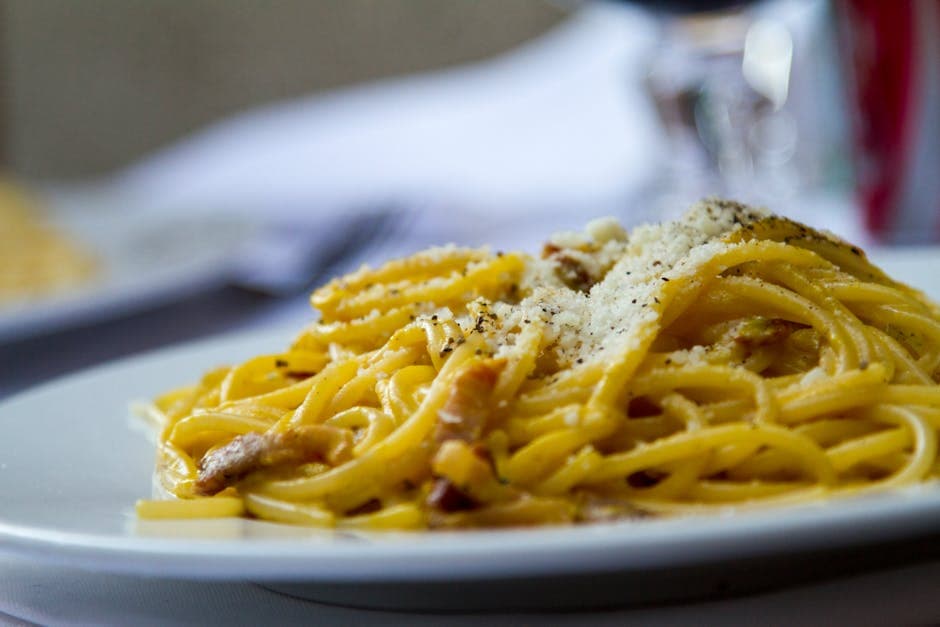
Carbonara Romana Classica
Roms charakteristische Pasta - Guanciale, Eier, Pecorino Romano, schwarzer Pfeffer. Keine Sahne. Jemals.
Über dieses Rezept
Carbonara ist Roms berühmteste Pasta — und am meisten argumentiert. Das Rezept in seiner klassischen Form hat vier Zutaten: Guanciale (geheiltes Schweinekinn), Eier, Pecorino Romano und schwarzer Pfeffer. Keine Sahne. Kein Knoblauch. Keine Zwiebel. Kein Speck. Kein Parmesan. Die Technik ist rein über Emulsion: das heiße gerenderete Guanciale-Fett kombiniert mit verquirlten Eiern und geriebenem Käse in der Restwärme der gerade abgetropften Pasta um eine seidige goldene Sauce zu schaffen, die jeden Strang bedeckt. Bekommen Sie die Temperatur falsch und Sie haben Spiegeleier. Bekommen Sie es richtig und es ist eines der außergewöhnlichsten Gerichte in der italienischen Küche. Ursprung wird diskutiert: wahrscheinlich 1944 in Rom, wenn amerikanische Soldaten mit Überfluss-Speck und Pulver-Eiern ankamen; Römer passten mit ihrem lokalen Guanciale und Pecorino an. Das Gericht wurde Römer-Kanon von den 1960ern.
Zutaten
Dient 4
- 400 gSpaghetti oder Rigatoni
- 200 gGuanciale (nicht Pancetta, nicht Speck), in 1 cm Batonnen geschnitten
- 4 großeEigelb
- 1 ganzEi
- 80 gPecorino Romano, fein gerieben, plus mehr zum Servieren
- 1.5 TLfrisch gemahlener schwarzer Pfeffer, plus mehr zum Servieren
- grobes Salz für das Pasta-Wasser
Anleitung
- 1
Pasta kochen
Einen weiten Topf mit Wasser zum rollen Kochen bringen. Salz leicht - Pecorino Romano ist schon salzig. Pasta fallen und 1 Minute weniger als das Paket kochen ist al Dente Zeiten.
- 2
Guanciale rendern
Während die Pasta kocht, platzieren Sie Guanciale in eine breite kalte Pfanne (kein Öl - Guanciale rendert sein eigenes Fett). Über mittlere Hitze eingestellt. 6-8 Minuten kochen, umrühren, bis das Fett gerenderete ist und das Guanciale goldbraun und leicht knusprig - aber die Würfel sollten immer noch zart sein, nicht Jerky-hart. Das gerenderete Fett in der Pfanne reservieren.
- 3
Das Ei-Käse-Sauce verquirlen
In einer breiten Schüssel, verquirlen Sie zusammen Eigelb, das ganze Ei, geriebenes Pecorino und schwarzer Pfeffer in eine glatte, dicke Paste. Dies ist Ihre Sauce — ungekocht.
- 4
Die Eier temperieren (Key-Schritt)
Langsam 2-3 Esslöffel des heißen Guanciale-Fetts (NICHT das Guanciale selbst) in die Ei-Mischung träufeln, ständig verquirlen. Dies hebt die Ei-Temperatur sanft auf ohne zu verwrühren.
- 5
Ablauf und erfassen Wasser
Drainiert die Pasta, 250 ml des stärkehaltigen Pasta-Kochwasser reservieren. TUN SIE NICHT abspülen - die Stärke ist kritisch.
- 6
Kombinieren von der Hitze aus
Abgelaufene Pasta zur Pfanne hinzufügen mit dem gerendereten Guanciale und sein Fett. 30 Sekunden kräftig werfen AUS DER HITZE - die Hitze von der Pfanne und Pasta ist genug.
- 7
Die Ei-Sauce hinzufügen
Die temperierte Ei-Käse-Mischung über die Pasta gießen. Kräftig und kontinuierlich 60 Sekunden werfen, aus der Hitze. Spritzen des reservierten Pasta-Wasser wie benötigt hinzufügen - normalerweise 60-80 ml - bis die Sauce seidig, glänzend und jeden Strang bedeckt wird. Wenn es zu dick aussieht, mehr Wasser; zu dünn, werfen ein wenig mehr in die warme Pfanne.
- 8
Sofort plattieren
In warme Schüsseln wirbeln. Mit Extra-Pecorino und eine großzügige Drehung schwarzer Pfeffer duschen. Essen die Moment es trifft den Tisch - Carbonara wartet für niemand.
Haben Sie das gekocht?
Bewerte es und hilf anderen, die Rezepte zu finden, die wirklich funktionieren.
Einmal anmelden, und wir speichern die Bewertung, die Sie gerade gewählt haben.
Alles, was Sie für Ihre Wochenplanung brauchen — kostenlos
- Essensplaner
- Einkaufsliste
- KI-Rezeptideen
Behalten Sie im Blick, was Sie essen
Fotografieren Sie Ihre Mahlzeit, um Kalorien und Makros zu erfassen, nutzen Sie Fasten-Timer und tracken Sie Ihr Wasser – in der kostenlosen SnapCal-App.
Profi-Tipps
- →
Guanciale, nicht Pancetta. Nicht Speck. Das geheilte Schweinekinn ist wesentlich - sein Fett ist die Seele.
- →
Temperieren Sie die Eier mit heißem Fett zuerst - dies ist der einzelne Schritt, der Carbonara von Spiegeleiern trennt.
- →
Werfen Sie kräftig aus der Hitze - die Carry-over-Hitze von Pasta + Pfanne kocht die Eier zu cremig ohne zu verwrühren.
Variationen
- •
Authentisch Römisch 'Gricia': überspringen Sie die Eier. Nur Guanciale + Pecorino + Pfeffer. Die Proto-Carbonara.
- •
Cacio e Pepe: überspringen Sie das Guanciale und Eier. Nur Pecorino + Pfeffer + Pasta-Wasser. Drei Zutaten, monumental Gericht.
- •
Carbonara Vegetariana: ersetzen Sie Guanciale mit 1 EL Olivenöl + ein paar Sun-getrocknete Tomaten für Umami. Nicht authentisch, aber machbar.
Lagerung
Sofort essen. Gekühlte Reste wärmen schlecht - die Eier verwrühren. Wenn Sie müssen, warm in einer Pfanne mit einem Spritzer Sahne (Ketzerei, aber es funktioniert).
Geschichte und Herkunft
Carbonara entstand in Rom um 1944. Die glaubwürdigste Theorie: Amerikanische GIs nach der Befreiung Roms hatten Speck und Pulver-Eier von ihren Rationen; Römer passten mit lokalen Guanciale und Pecorino an. Das erste Rezept in Druck erschien 1950. Von den 1960ern war Carbonara als klassisch Römisch betrachtet; heute sein Methode wird fiercely von römischen Pasta-Herstellern verteidigt.
Häufig gestellte Fragen
Kann ich Pancetta oder Speck verwenden?
Pancetta ist in einem Prise akzeptabel (anders aber OK). Speck ist nicht - das Rauchen ändert die Geschmack ganz. Amerikanischer Speck-Carbonara ist ein verschiedenes Gericht.
Warum verwrührte sich meine Eier?
Die Pfanne war zu heiß wenn die Ei-Mischung hineinging. Immer aus der Hitze werfen; die Restwärme ist genug.
Was ist mit Sahne?
Nein. Es gibt keine Sahne in klassischem Carbonara. Die 'Creaminess' kommt von der Ei-Käse-Fett-Emulsion. Sahne hinzufügen ist ein Französisch-Amerikanisch-Anpassung, dass Römer als Ketzerei betrachten.
Nährwertangaben
Pro Portion (320g) · 4 Portionen insgesamt
Zeitzusammenfassung
Haben Sie Fragen?
Fragen Sie unseren KI-Kochassistenten zu diesem Rezept – Ersetzungen, Techniken, Skalierung.
Chatten Sie mit AI Chef →In Reiseführern vorgestellt
Dieses Rezept ist in den folgenden kuratierten Leitfäden enthalten:
collections
20 Date-Night-Dinner-Rezepte: Romantische Mahlzeiten zu Hause
how to
So bereiten Sie Nudeln von Grund auf zu: Eine vollständige Anleitung
comparisons
Italienische vs. griechische Küche: Ähnlichkeiten, Unterschiede und Rezepte
comparisons
Französische vs. italienische Küche: Philosophie, Technik und Rezepte
Weitere Italienische Rezepte
Das könnte Ihnen auch gefallen
Ähnliche Gerichte aus anderen Küchen der Welt.
Nach Zutat stöbern
Weitere Rezepte rund um dieselben Hauptzutaten.
Kostenlose Küchen-Tools
Rechner und Umrechner, die zu dieser Seite passen — ohne Anmeldung.
Daraus einen Plan machen
Einplanen, einkaufen und im Blick behalten, was schon da ist.
Weiterlesen
Ausführliche Artikel zu den Ideen hinter diesem Gericht.
Authentische italienische Pasta: Ein umfassender regionaler Leitfaden zu Formen, Saucen und klassischen Techniken
13 Min.
So bereiten Sie selbstgemachte Pasta von Grund auf zu – Kompletter Leitfaden für Anfänger
11 Min.
Wechseljahrsdiät: Eine umfassende Ernährung zur Linderung der Symptome und zum langfristigen Schutz der Gesundheit
16 Min.
Gemeinschaft
Beteiligen Sie sich an der Unterhaltung
Melden Sie sich an, um einen Kommentar zu hinterlassen und Ihre Lieblingsrezepte zu speichern