
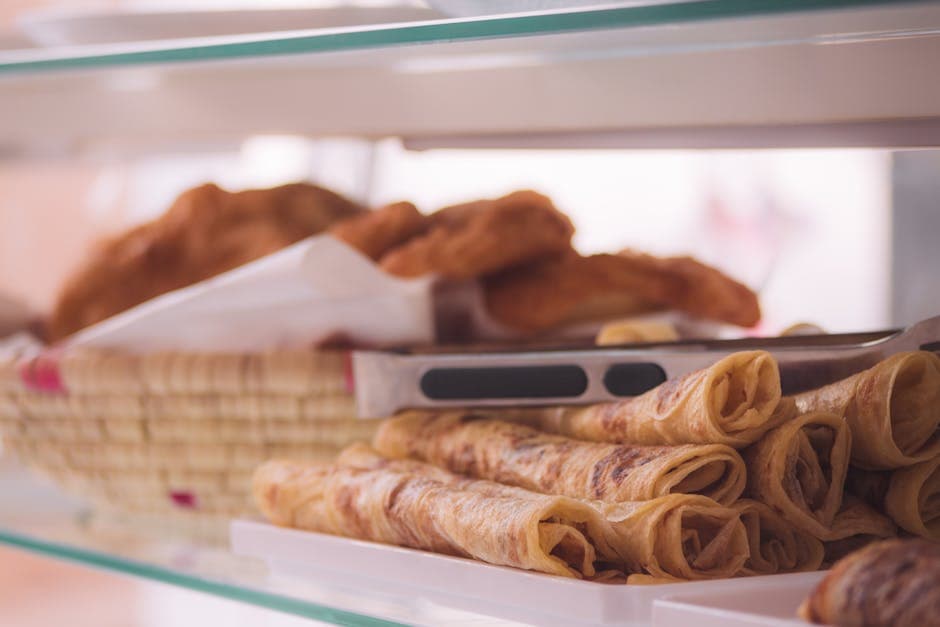
Feteer Meshaltet (Ägyptisches geschichtetes flockiges Gebäck)
Ägyptens pharaonisches geschichtetes Gebäck: hauchdünner Teig mit Ghee in hunderte flockigen Blättern gefaltet, gebacken golden und serviert mit Honig oder Käse.
Über dieses Rezept
Feteer Meshaltet ist eine der ältesten Pasteten der Welt — eine geschichtete Flatbread dokumentiert auf den Wänden pharaonischer Tomben vor über 4000 Jahren, wo es den Göttern bei den Tempeln von Karnak und Luxor als Opfer angeboten wurde. Die Technik überlebt fast unverändert im modernen Ägypten: ein weicher Teig wird ausgeruht, auf einer geölten Marmorplatte in ein Blatt so dünn gestreckt, dass Sie Zeitung durch lesen können, mit geschmolzenem Ghee gebürstet, zu einem quadratischen Paket gefaltet und wieder ausgerollt — manchmal 5 oder 6 Mal — um hunderte mikroskopische Schichten zu bauen. Im Holzofen (oder heißem Haus-Ofen) gebacken, wird es knusprig, tief golden und unglaublich flockig, mit hauchdünnen Blättern, die bei Berührung zerplatzen. Es wird süß serviert — übergossen mit Honig, Melasse (Asal Aswad) oder mit Puderzucker gesprinkelt — oder würzig, gefüllt mit Feta, Pastrami oder Wurst. In ländlichen Upper Ägypten ist es das Feiertags-Brot für Geburten, Hochzeiten und Ramadan.
Zutaten
Dient 6
- 500 gAllzweckmehl, plus etwas Mehl zum Bestäuben
- 1 TLfeines Salz
- 1 TLZucker
- 1 ELPflanzenöl
- 320 mlwarmes Wasser, ungefähr
- 250 gGhee (Samna Baladi), geschmolzen, aber abgekühlt
- 120 mlPflanzenöl, zum Dehnen
- 60 mlHonig oder Melassesirup zum Servieren
- 30 gPuderzucker, zum Bestäuben
- 120 mlwarme Milch + Clotted Cream (eshta), optional, zum Servieren
Anleitung
- 1
Den Teig vermischen und ruhen lassen
Mehl, Salz, Zucker, Pflanzenöl und warmes Wasser vermischen. 8 Minuten lang kneten, bis der Teig glatt und sehr weich ist – weicher als Brotteig. Abdecken und 60 Minuten bei Zimmertemperatur ruhen lassen. Der lange Rest ist nicht verhandelbar.
- 2
Divide and oil
Den Teig in 4 Kugeln teilen. Rollen Sie jedes Stück großzügig mit Pflanzenöl ein und lassen Sie es weitere 15 Minuten in einer kleinen Schüssel mit Öl liegen – das Öl beginnt, in die Oberfläche einzudringen und hilft beim Dehnen.
- 3
Ultradünn dehnbar
Gießen Sie das restliche Öl auf eine glatte Arbeitsfläche aus Marmor oder Stahl. Arbeiten Sie mit einer Kugel nach der anderen und drücken und dehnen Sie sie mit geölten Handflächen in alle Richtungen zu einem 60 cm großen Quadrat, das so dünn ist, dass Sie die Oberfläche hindurchsehen können. Kleine Löcher sind normal.
Wenn sich der Teig nicht dehnt, ist die Ruhezeit zu gering – geben Sie ihm weitere 20 Minuten. Dehnen Sie niemals mit einem Nudelholz; nur Hände.
- 4
Brush with ghee
Bestreichen Sie das gesamte gespannte Blatt großzügig mit geschmolzenem Ghee – jeden Quadratzentimeter. Seien Sie nicht geizig; Das ist es, was die Schichten bildet.
- 5
Zu einem Paket falten
Falten Sie die rechte Kante des Blatts zur Mitte und dann die linke Kante, damit sie überlappt. Falten Sie nun die Oberseite zur Mitte und die Unterseite nach oben – Sie erhalten ein kleines quadratisches Paket von etwa 15 cm Breite. Die Oberfläche mit Ghee bestreichen.
- 6
Repeat layering
Dehnen Sie das Päckchen erneut auf ein 40 cm großes Quadrat (es ist immer noch dünn, aber etwas dicker als zuvor), bestreichen Sie es mit Ghee und falten Sie es erneut zu einem Päckchen. Wiederholen Sie die Streck-Bürsten-Faltung noch einmal (insgesamt 3 Streckungen). Dadurch entstehen Hunderte von Schichten.
- 7
Final shape
Jedes Päckchen ein letztes Mal zu einem 25 cm großen, etwa 5 mm dicken Kreis spannen. Auf ein mit Backpapier ausgelegtes Backblech legen.
- 8
Bake hot
Bei 250 °C (oder so heiß wie Ihr Ofen) auf der unteren Schiene 15 Minuten lang backen, bis es tiefgolden ist und in Schichten sichtbar aufgebläht ist. Dann für weitere 5 Minuten auf den oberen Rost stellen, damit die Oberseite knusprig wird. Sofort mit Honig und einer Prise Puderzucker servieren – oder mit Milch und Sahne für das klassische „Feteer bil eshta“-Frühstück.
Haben Sie das gekocht?
Bewerte es und hilf anderen, die Rezepte zu finden, die wirklich funktionieren.
Einmal anmelden, und wir speichern die Bewertung, die Sie gerade gewählt haben.
Alles, was Sie für Ihre Wochenplanung brauchen — kostenlos
- Essensplaner
- Einkaufsliste
- KI-Rezeptideen
Behalten Sie im Blick, was Sie essen
Fotografieren Sie Ihre Mahlzeit, um Kalorien und Makros zu erfassen, nutzen Sie Fasten-Timer und tracken Sie Ihr Wasser – in der kostenlosen SnapCal-App.
Profi-Tipps
- →
Echtes Samna Baladi (ägyptisches Büffelmilch-Ghee) sorgt für den unverwechselbaren Geschmack – Supermarkt-Ghee eignet sich als Ersatz, hat aber keinen leichten Geschmack.
- →
Verkürzen Sie das Ruhen nicht – zu wenig ruhender Teig kann sich nicht durchscheinend dehnen und die Schichten werden dick und brotig statt hauchdünn sein.
- →
Backen Sie auf der heißesten Schiene – Feteer möchte, dass die Schichten durch intensive Unterhitze aufgehen. Wenn Ihr Ofen nur 220 °C erreicht, geben Sie ihm 5 zusätzliche Minuten.
Variationen
- •
Herzhaftes Fest: Legen Sie dünn geschnittenes Pastrami, zerkrümelten Feta oder Brühwurst in die letzte Falte, um eine Mahlzeitenvariante zu erhalten.
- •
Feteer bil eshta we'asal: Ägyptische Frühstücksart – zerrissene Stücke, garniert mit Clotted Cream und dunklem Honig.
- •
Mini-Feteer: Teilen Sie den Teig in 8 Kugeln statt in 4 für einzelne Portionen, was für Anfänger einfacher zu handhaben ist.
Lagerung
Am besten warm aus dem Ofen essen. Übrig gebliebenes Feteer bleibt eingepackt bei Zimmertemperatur einen Tag lang haltbar; 5 Minuten lang in einem auf 200 °C vorgeheizten Ofen erfrischen, um die Flockenbildung wiederherzustellen. Nicht im Kühlschrank aufbewahren – es wird ledrig.
Geschichte und Herkunft
Feteer Meshaltet ist auf den Wänden pharaonischer Gräber aus dem Alten Reich (ca. 2500 v. Chr.) abgebildet, wo es als Opfergabe für die Götter in den Tempeln von Karnak und Luxor zubereitet wurde. Die Technik, geölten Teig in viele Schichten zu falten, ist eine der ältesten dokumentierten Backmethoden in der Geschichte der Menschheit. Es bleibt das Festbrot des ländlichen Oberägyptens, wo es bei jeder Hochzeit, Geburt und jedem großen islamischen Feiertag serviert wird.
Häufig gestellte Fragen
Warum lässt sich mein Teig nicht dünn ausdehnen?
Fast immer zu wenig oder zu viel Mehl. Lassen Sie den Teig mindestens eine Stunde bei Zimmertemperatur stehen und verwenden Sie Öl – kein Mehl – auf Ihrer Arbeitsfläche. Mehl stoppt die Dehnung; Öl ermöglicht es.
Ist Feteer dasselbe wie Croissant oder Filo?
Nein – Croissants bestehen aus Butter und Hefe; Filo wird ohne Falten gestreckt und trocken gebacken. Feteer ist ein gefalteter, gestreckter, mit Ghee überzogener Teig – älter als beide und einzigartig.
Kann ich Feteer einfrieren?
Nach dem endgültigen Formen, aber vor dem Backen fest eingepackt einfrieren. Aus dem gefrorenen Zustand bei 250 °C backen, weitere 5 Minuten hinzufügen. Frieren Sie gekochtes Feteer nicht ein – es verliert seine gesamte flockige Struktur.
Nährwertangaben
Pro Portion (180g) · 6 Portionen insgesamt
Zeitzusammenfassung
Haben Sie Fragen?
Fragen Sie unseren KI-Kochassistenten zu diesem Rezept – Ersetzungen, Techniken, Skalierung.
Chatten Sie mit AI Chef →In Reiseführern vorgestellt
Dieses Rezept ist in den folgenden kuratierten Leitfäden enthalten:
Weitere Ägyptische Rezepte
Das könnte Ihnen auch gefallen
Ähnliche Gerichte aus anderen Küchen der Welt.
Kostenlose Küchen-Tools
Rechner und Umrechner, die zu dieser Seite passen — ohne Anmeldung.
Rezept-Umrechner
Halbieren oder verdoppeln Sie jede Menge in diesem Rezept – ganz ohne Kopfrechnen.
Maßeinheiten-Umrechner
Rechnen Sie Cups, Gramm, Unzen und Milliliter in beide Richtungen um.
Heißluftfritteusen-Umrechner
Rechnen Sie Backofenzeit und -temperatur in Einstellungen für die Heißluftfritteuse um.
Daraus einen Plan machen
Einplanen, einkaufen und im Blick behalten, was schon da ist.
Essensplaner-Kalender
Legen Sie dieses Rezept auf einen Tag und planen Sie die Woche darum herum.
Einkaufslisten-App
Machen Sie aus dieser Zutatenliste eine nach Regalen sortierte Einkaufsliste.
Kalorienanalyse per Foto
Fotografieren Sie den fertigen Teller und erhalten Sie eine Schätzung von Kalorien und Makros.
Weiterlesen
Ausführliche Artikel zu den Ideen hinter diesem Gericht.
Gemeinschaft
Beteiligen Sie sich an der Unterhaltung
Melden Sie sich an, um einen Kommentar zu hinterlassen und Ihre Lieblingsrezepte zu speichern