
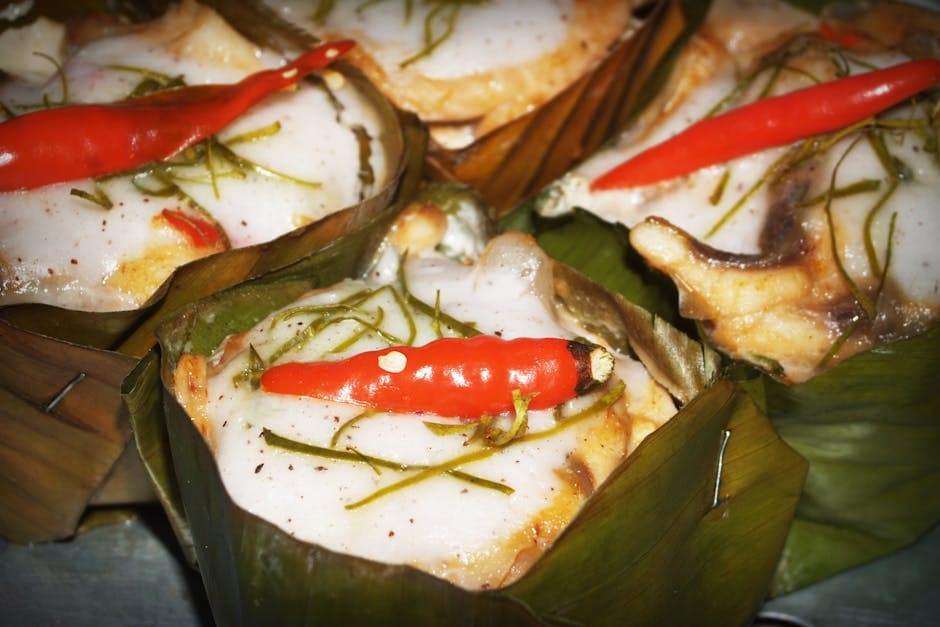
Fisch Amok (Kambodschanisches Kokosfisch-Curry)
Kambodschas Nationalgericht: seidiger Fischauflauf, in Bananenblaettern mit Kroeung-Zitronengraspaste und Kokosnusscreme gedaempft.
Über dieses Rezept
Fisch Amok (Amok Trei) ist Kambodschas Signature-Gericht und eines der delikatesten Currys Suedostasiens. Suesswasserfisch – traditionell Schlangenkopffisch oder Wels – wird in eine duftende Paste aus Zitronengras, Galgant, Kurkuma, Kaffirlimette und Knoblauch (das heilige Quintett als Kroeung bekannt) gefaltet, mit Kokosnusscreme und Palmzucker verfeinert und in aus Bananenblaettern gefertigten Schaelchen gedaempft, bis die Masse zu einem weichen, herzhaften Pudding gestockt. Die Textur ist die Magie: irgendwo zwischen Mousse und Curry, duftend statt feurig, mit zarten Noni- oder Wasserspinachblaettern am Boden. Amok ist Kambodschas Vorzeigesgericht – serviert beim Pchum-Ben-Fest, Hochzeitsbanketten und in jedem Restaurant fuer Besucher in Siem Reap und Phnom Penh.
Zutaten
Dient 4
- 600 gweisser festfleischiger Fisch (Schlangenkopf, Wels, Kabeljau oder Tilapia), gewuerfelt
- 4 StängelZitronengras, nur zarte weisse Teile, in Scheiben
- 4 ZehenKnoblauch
- 3Schalotten
- 1 DaumenGalgant (oder Ingwer als Ersatz)
- 1 Daumenfrische Kurkuma (oder 1 TL getrocknet)
- 6Kaffirlimettenblatter, Stiele entfernt
- 1 TLGarnelenpasten (Kapi)
- 2getrocknete rote Chilis, eingeweicht und entkernt (optional)
- 400 mldicke Kokosnusscreme
- 2 ELFischsauce
- 2 ELPalmzucker, gerieben
- 2Eier, verquirlt
- 1 ELReismehl
- 100 gNoni-Blaetter oder Wasserspinat oder Babyspinat
- 4 squaresBananenblaetter, ueber Flamme weichgemacht (oder Ramekins)
- 2rote Chilis, fein geschnitten zum Garnieren
- 2Kaffirlimettenblatter, fein geschnitten zum Garnieren
Anleitung
- 1
Kroeung herstellen
Zitronengras, Knoblauch, Schalotten, Galgant, Kurkuma, Kaffirlimettenblatter, Garnelenpaste und Chilis in einem Moerser stampfen (oder in einer Kuechenmaschine pulsen) zu einer feinen, duftenden gruenen Paste. Dies dauert 8–10 Minuten von Hand.
Echtes Kroeung wird gestampft, nicht gemixt – aber eine leistungsstarke Maschine mit einem EL Wasser kommt dem nahe.
- 2
Paste anroesten
3 EL Kokosnusscreme in einer Pfanne bei mittlerer Hitze erhitzen. Wenn das Oel sich absetzt und schimmert, Kroeung zugeben. 4 Minuten braten, bis intensiv aromatisch und die Farbe dunkler wird.
- 3
Basis aufbauen
Restliche Kokosnusscreme, Fischsauce und Palmzucker zugeben. 3 Minuten koechen. Abschmecken – es sollte salzig-suess-duftend sein. Auf Handwaerme abkuehlen lassen.
- 4
Vermengen
Eier und Reismehl in die abgekuehlte Masse einruehren. Fischstuecke vorsichtig unterfalten – sie sollten vollstaendig ueberzoogen, aber nicht zerbrochen sein.
- 5
Schaelchen vorbereiten
Bananenblattvierecke zu Schaelchen formen, indem zwei senkrechte Blaetter uebereinandergelegt und die Ecken mit Zahnstochern befestigt werden. (Oder kleine keramische Ramekins verwenden.)
- 6
Schichten und fuellen
Ein paar Noni-Blaetter oder Spinat auf den Boden jedes Schaelchens legen. Fischmasse bis zu drei Vierteln darueberschoepfen.
- 7
Daempfen
Schaelchen ueber siedendem Wasser 22–25 Minuten daempfen, bis die Masse gestockt ist – die Oberflaeche sollte fest sein, aber beim Druecken leicht nachgeben.
Nicht uebergaren – nach 25 Minuten wird der Pudding gummiartig.
- 8
Garnieren und servieren
Jeden Amok mit einem Loeffel frischer Kokosnusscreme betraeufeln. Mit geschnittener roter Chili und geschnittenen Kaffirlimettenblaettern belegen. Mit Jasminreis servieren.
Hast du das gekocht?
Bewerte es und hilf anderen, die Rezepte zu finden, die wirklich funktionieren.
Einmal anmelden, und wir speichern die Bewertung, die du gerade gewählt hast.
Alles, was du für deine Wochenplanung brauchst — kostenlos
- Essensplaner
- Einkaufsliste
- KI-Rezeptideen
Freihändig kochen
Hol dir KI-Essenspläne, einen Schritt-für-Schritt-Kochmodus und deine gespeicherten Rezepte in der kostenlosen Bento-App.
Profi-Tipps
- →
Authentischer Amok beruht auf Kroeung – keine Thai-Rote-Currypaste ersetzen, die schroffer und chilibetonter ist. Selbst herstellen oder eine kambodschanisch beschriftete Paste kaufen.
- →
Die dickste Kokosnusscreme verwenden (Aroy-D oder Chao Koh) – leichte Kokosmilch ergibt keinen richtigen Pudding.
- →
Wenn verfuegbar, sind Slok Ngor (Noni-Blaetter) das traditionelle Bett; die Blaetter sind leicht bitter und gleichen die reiche Kokosscreme aus.
Variationen
- •
Amok Sat (Haehnchen-Amok): entbeintes Haehnchenoberschenkelfleisch gewuerfelt verwenden; 5 Minuten laenger garen.
- •
Vegetarischer Amok: Tofu und Pilze; Sojasauce statt Fischsauce, Pilzpaste statt Garnelenpaste.
- •
Offener Topf-Amok: Eier und Reismehl weglassen; als dickeres Kokos-Fisch-Eintopf ueber Reis servieren.
Lagerung
Am besten frisch gegessen. Bis zu 2 Tage kuehl stellen; durch erneutes Daempfen 6 Minuten erwaermen – niemals in der Mikrowelle (der Pudding trennt sich).
Geschichte und Herkunft
Fisch Amok datiert auf die Angkor-Periode (9.–15. Jahrhundert) zurueck, als das Daempfen von Speisen in Bananenblaettern die vorherrschende Kochtechnik war. Die Kombination aus Garnelenpaste und Kokos spiegelt jahrhundertelangen Handel mit indischen, malaiischen und chinesischen Kochtradionen im Mekong-Becken wider.
Häufig gestellte Fragen
Was ist Kroeung?
Kroeung ist die grundlegende Khmer-Gewuerzpaste aus gestampftem Zitronengras, Galgant, Kurkuma, Kaffirlimettenblaettern, Knoblauch, Schalotten und Garnelenpaste. Es gibt rote, gelbe und gruene Varianten, die in der kambodschanischen Kueche verwendet werden.
Kann ich Amok ohne Bananenblaetter machen?
Ja – kleine keramische Ramekins oder Daempfschalen funktionieren hervorragend. Das Bananenblatt ist traditionell und verleiht einen subtil kraeutrigen Geschmack, ist aber nicht zwingend erforderlich.
Warum ist mein Amok waessrig statt gestockt?
Entweder wurde leichte Kokosmilch statt Creme verwendet, Ei/Reismehl-Bindemittel wurden nicht verwendet, oder es wurde zu wenig gegart. Das Stocken erfordert ein puddingartiges Fett-Eiweiss-Verhaeltnis und mindestens 20 Minuten sanftes Daempfen.
Ist Amok scharf?
Authentischer Khmer-Amok ist duftend, nicht feurig – die meisten Versionen verwenden ueberhaupt keine Chili. Der Charakter ist kraeuterig und blumig vom Kroeung, mit sueszen und salzigen Untertonen. Chili nach Geschmack hinzufuegen, aber nicht dominieren lassen.
Nährwertangaben
Pro Portion (240g) · 4 Portionen insgesamt
Zeitzusammenfassung
Haben Sie Fragen?
Fragen Sie unseren KI-Kochassistenten zu diesem Rezept – Ersetzungen, Techniken, Skalierung.
Chatten Sie mit AI Chef →In Reiseführern vorgestellt
Dieses Rezept ist in den folgenden kuratierten Leitfäden enthalten:
Weitere Cambodian Rezepte
Das könnte dir auch gefallen
Ähnliche Gerichte aus anderen Küchen der Welt.
Kostenlose Küchen-Tools
Rechner und Umrechner, die zu dieser Seite passen — ohne Anmeldung.
Daraus einen Plan machen
Einplanen, einkaufen und im Blick behalten, was schon da ist.
Weiterlesen
Ausführliche Artikel zu den Ideen hinter diesem Gericht.
Gemeinschaft
Beteiligen Sie sich an der Unterhaltung
Melden Sie sich an, um einen Kommentar zu hinterlassen und Ihre Lieblingsrezepte zu speichern