
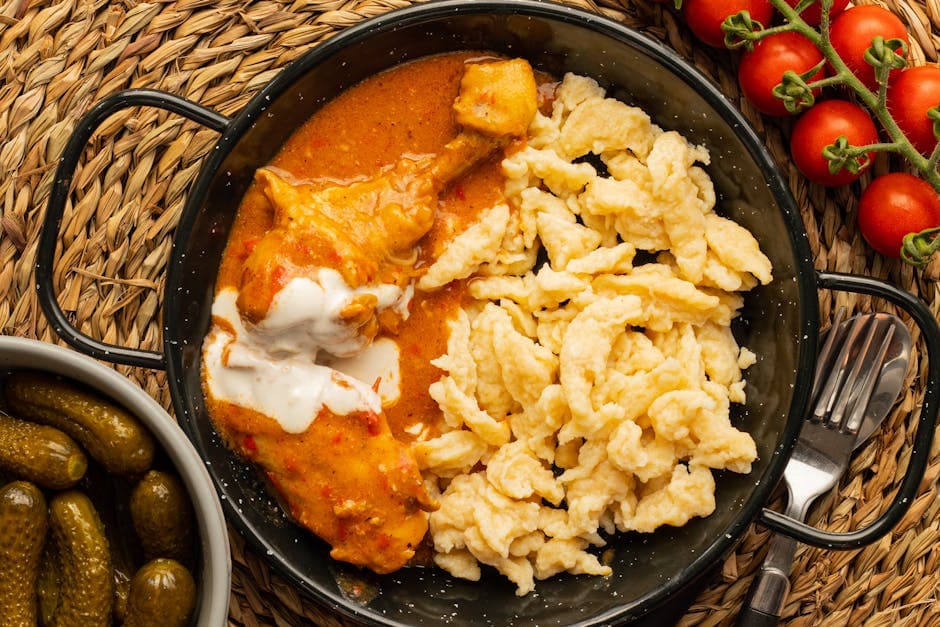
Ungarischer Gulyás
Ungarns Nationalgericht — Rindfleisch, süßes Paprikapulver, Zwiebeln und Kartoffeln in einer duftenden roten Suppe.
Über dieses Rezept
Echter Ungarischer Gulyás (oft Goulash geschrieben) ist eine Suppe, nicht der dicke braune Eintopf, der im Ausland verkauft wird. Rindfleisch-Würfel aus Unterschale oder Schmorbraten werden für Stunden mit Bergen von Zwiebel und einer aggressiven Menge frischem süßem Paprikapulver zusammen mit Kartoffeln, Kümmel, Knoblauch und Tomate geschmort, bis die Brühe tiefrot, duftend und sanft gewürzt ist. Es stammt von den Gulyás — ungarischen Viehhirten der großen Alföld-Ebene — die es über offenen Feuern in schweren Eisenkesseln kochten. Die Technik basiert auf einer Regel: nie das Paprikapulver kochen oder es wird bitter. Zwiebeln kochen zuerst, Paprikapulver geht ohne Hitze rein, dann wird Wasser hinzugefügt. Serviert tief, mit einem Stück Roggenbrot und einem Glas kaltem Egri Bikavér, es ist das ungarischste aller Gerichte.
Zutaten
Dient 6
- 900 gRinderunterschaft oder Schmorbraten, in 3 cm Würfel geschnitten
- 3 großegelbe Zwiebeln, fein gehackt
- 60 gSchweinefett (oder neutrales Öl)
- 5 ELsüßes ungarisches Paprikapulver (Édesnemes)
- 1 TLscharfes ungarisches Paprikapulver (oder 1 TL Cayennepfeffer)
- 5 ZehenKnoblauch, gehackt
- 1 TLKümmelkörner, leicht gequetscht
- 1.5 LWasser oder leichte Rinderbrühe
- 2 großeTomaten, gewürfelt (oder 200 g Dosen)
- 2 mittleregelbe Paprikaschoten (ungarische Waxbeeren, falls möglich), gewürfelt
- 1.5 TLfeines Salz
- 1 TLfrisch gemahlener schwarzer Pfeffer
- 2Lorbeerblätter
- 500 gmehligkochende Kartoffeln, geschält und in Würfel geschnitten
- 150 gcsipetke (zusammengekniffene Eierknödel) — siehe Rezept-Anmerkung
- 1 kleines Bundglatte Petersilie, gehackt (Garnish)
- Sauercreme zum Servieren (optional)
- Roggenbrot zum Servieren
Anleitung
- 1
Die Zwiebeln lange kochen
Fett in einem schweren Topf bei niedrig-mittlerer Hitze schmelzen. Gehackte Zwiebeln und eine Prise Salz hinzufügen. 20 Minuten rührend kochen, bis weich, tiefgolden und leicht marmeladig. Das ist die Grundlage; nicht hetzen.
- 2
Das Paprikapulver OHNE Hitze bloomen lassen
Den Topf von der Hitze nehmen. Beide Paprikapulver, Knoblauch und gequetschte Kümmel in die heißen Zwiebeln streuen. Kräftig rühren — das Paprikapulver sollte sanft sprudeln, aber nicht verbrennen. Die Mischung wird tiefziegel-rot.
- 3
Das Rindfleisch hinzufügen
Zurück auf die Hitze. Rindfleisch-Würfel hinzufügen und in den Paprika-Zwiebeln wälzen. 5 Minuten kochen, wodurch das Fleisch den Geschmack aufnimmt.
- 4
Die Brühe aufbauen
Tomaten, Paprikakapseln, Salz, Pfeffer, Lorbeerblätter und gerade genug Wasser/Brühe hinzufügen, um das Fleisch kaum zu bedecken (etwa 1 l).
- 5
Sanft köcheln
Lose zugedeckt bei niedriger Hitze 90 Minuten köcheln, dabei gelegentlich rühren und Wasser nach Bedarf hinzufügen. Das Rindfleisch sollte zart, aber nicht zerfallend sein.
- 6
Kartoffeln hinzufügen
Gewürfelte Kartoffeln und das verbleibende Wasser/Brühe hinzufügen, damit der Topf suppen-artig aussieht. 25 Minuten offen köcheln, bis die Kartoffeln zart sind.
- 7
Csipetke machen
Während die Kartoffeln kochen, zusammengekniffene Knödel machen: 100 g Mehl mit 1 Ei und einer Prise Salz zu steifem Teig mischen. 10 Minuten rasten. Erbsen-große Stücke abkniffen und in den köchelnden Gulyás für die letzten 8 Minuten fallen lassen.
- 8
Abschmecken und Ruhe
Salz anpassen. 10 Minuten ohne Hitze rasten — Paprika-Geschmäcke vertiefen sich mit kurzer Ruhepause.
- 9
Servieren
In tiefe Schüsseln löffeln. Mit Petersilie bestreuen. Mit Roggenbrot auf der Seite servieren und Sauercreme für die anbieten, die sie wollen (Puristen tun es nicht).
Haben Sie das gekocht?
Bewerte es und hilf anderen, die Rezepte zu finden, die wirklich funktionieren.
Einmal anmelden, und wir speichern die Bewertung, die Sie gerade gewählt haben.
Alles, was Sie für Ihre Wochenplanung brauchen — kostenlos
- Essensplaner
- Einkaufsliste
- KI-Rezeptideen
Behalten Sie im Blick, was Sie essen
Fotografieren Sie Ihre Mahlzeit, um Kalorien und Makros zu erfassen, nutzen Sie Fasten-Timer und tracken Sie Ihr Wasser – in der kostenlosen SnapCal-App.
Profi-Tipps
- →
Echtes ungarisches Paprikapulver (Édesnemes oder Csipős) verwenden — spanisches, bulgarisches oder Supermarkt-Paprikapulver verhält sich anders.
- →
Paprikapulver ohne Hitze bloomen lassen. Verbranntes Paprikapulver ist durchweg bitter.
- →
Die Zwiebeln korrekt kochen — 20 Minuten Minimum. Die Hälfte des Gerichts steckt in den Zwiebeln.
Variationen
- •
Pörkölt: dickere Eintopf-Version mit weniger Flüssigkeit, über Nokedli (ungarische Eiernudeln) serviert.
- •
Ein Glas trockener Rotwein mit der Brühe für eine reichere Winterversion hinzufügen.
- •
Vegetarisches Gulyás: Rind mit Königsauster-Pilzen und weißen Bohnen ersetzen.
Lagerung
Bis zu 4 Tage im Kühlschrank lagern; 3 Monate einfrierbar. Der Geschmack verbessert sich über Nacht. Sanft erneut aufwärmen; nie in der Mikrowelle (der Paprika-Ton verliert seine Schärfe).
Geschichte und Herkunft
Gulyás nimmt seinen Namen von den Viehhirten der Ungarischen Ebene, die es in Eisenkesseln (bogrács) über offenen Feuern kochten. Paprikapulver wurde erst im 18.–19. Jahrhundert zentral, nachdem durch die Osmanen eingeführte Paprika in Südungarn getrocknet und gemahlen wurde. Heute ist Gulyás auf UNESCOs Liste des europäischen immateriellen Erbes und bleibt Ungarns am meisten exportiertes Gericht.
Häufig gestellte Fragen
Ist Goulash ein Eintopf oder eine Suppe?
In Ungarn ist Gulyás fest eine Suppe. Der dicke braune 'Goulash-Eintopf' im Ausland ist näher am ungarischen Pörkölt.
Kann ich das in einem Slow Cooker machen?
Ja — Zwiebeln anbraten und Paprikapulver auf dem Herd bloomen (essentiell), dann alles in den Slow Cooker auf niedrig für 7 Stunden übertragen. Kartoffeln und Knödel für die letzte Stunde hinzufügen.
Nährwertangaben
Pro Portion (480g) · 6 Portionen insgesamt
Zeitzusammenfassung
Haben Sie Fragen?
Fragen Sie unseren KI-Kochassistenten zu diesem Rezept – Ersetzungen, Techniken, Skalierung.
Chatten Sie mit AI Chef →In Reiseführern vorgestellt
Dieses Rezept ist in den folgenden kuratierten Leitfäden enthalten:
Weitere Ungarische Rezepte
Das könnte Ihnen auch gefallen
Ähnliche Gerichte aus anderen Küchen der Welt.
Nach Zutat stöbern
Weitere Rezepte rund um dieselben Hauptzutaten.
Kostenlose Küchen-Tools
Rechner und Umrechner, die zu dieser Seite passen — ohne Anmeldung.
Daraus einen Plan machen
Einplanen, einkaufen und im Blick behalten, was schon da ist.
Weiterlesen
Ausführliche Artikel zu den Ideen hinter diesem Gericht.
Gemeinschaft
Beteiligen Sie sich an der Unterhaltung
Melden Sie sich an, um einen Kommentar zu hinterlassen und Ihre Lieblingsrezepte zu speichern