
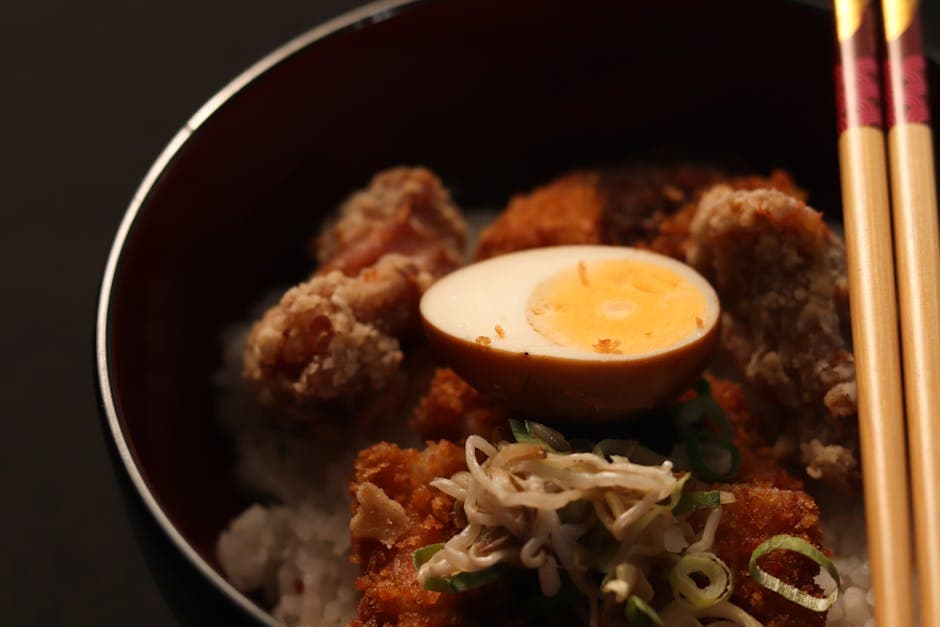
Dashimaki Tamago
Japanisches gerolltes Omelette in Dashi-Ei-Mischung — süß, würzig, seide in 8 dünnen Schichten.
Über dieses Rezept
Dashimaki Tamago ist das japanische gerollte Omelette der Kaiseki- und Sushi-Bar-Tradition — ein präzise geschichteter gelber Stein aus Eiern, die mit Dashi, Mirin und einem Hauch Sojasauce aufgeschlagen werden, gekocht in dünnen Schichten in einer quadratischen Tamagoyaki-Pfanne und auf sich selbst mit Stäbchen gerollt, bis man acht oder mehr Strata aus zartem Pudding hat. Jede neue Schicht wird unter die vorherige Rolle gegossen, leicht gesetzt, dann wieder zur Vorderseite der Pfanne gerollt. Das Innere ist gerade kaum gesetzt — feucht, rutschig, fast puddingartig — und die Oberfläche ist leicht bronziert. Ein großer Dashimaki Tamago ist eine Sushi-Chef-Auditionspiece; viele Trainees brauchen ein Jahr, um es zu perfektionieren, bevor sie Sushi machen dürfen.
Zutaten
Dient 2
- 4 großeEier (vorzugsweise Zimmertemperatur)
- 80 mlkalter Dashi (Kombu-Bonito-Brühe)
- 1 ELMirin
- 1 TLhelle Sojasoße (Usukuchi)
- 1 TLKristallzucker (optional, Kanto-Stil)
- 1/4 TLfeines Salz
- 2 ELneutrales Öl zum Einfetten
- 1 small handfulgeriebener Daikon, zum Servieren
- 1 dropextra Sojasoße zum Servieren
Anleitung
- 1
Die Eier schlagen
In einem Messglas schlagen Sie Eier sanft mit Stäbchen — nicht aufpeitsch; Sie wollen keinen Schaum. Rühren Sie Dashi, Mirin, Sojasoße, Zucker und Salz ein.
- 2
Sieben
Die Mischung durch ein feines Sieb in ein anderes Glas gießen. Dies fängt alle Chalazen auf und stellt sicher, dass die Schichten glatt bleiben.
- 3
Die Pfanne vorbereiten
Eine rechteckige Tamagoyaki-Pfanne (oder eine kleine Antihaft-Pfanne) bei mittlerer Hitze erhitzen. Ein Papierhandtuch zu einem kleinen Pad falten, leicht in Öl einweichen. Die ganze Pfanne mit dem öligen Pad wischen — halten Sie diesen Pad nahe des Herdes; Sie werden ihn zwischen jeder Schicht verwenden.
- 4
Erste Schicht
Gießen Sie eine dünne Schicht Ei in die Pfanne (etwa 60 ml). Zum Mantel kippen. Wenn Blasen erscheinen, picken Sie mit Stäbchen auf. Wenn die Oberfläche fast gesetzt, aber oben noch nass ist, rollen Sie mit Stäbchen oder einem breiten Spatel von der Fernkante zu sich selbst, ein kleines Protokoll an der Vorderseite der Pfanne bildend.
- 5
Neu einfetten und wiederholen
Schieben Sie das Protokoll nach hinten. Wischen Sie die Pfanne mit dem Öl-Pad erneut ab, einschließlich unter dem Protokoll. Gießen Sie eine weitere dünne Schicht Ei, so dass sie unter das vorhandene Protokoll läuft. Warten Sie, bis fast gesetzt, dann rollen Sie das Protokoll über die neue Schicht zu sich selbst. Wiederholen Sie 5-7 Mal, bis die Eimischung fertig ist.
- 6
Leicht bräunen
Nach Abschluss, jede Seite des Omelettes kurz gegen die Pfanne drücken, um leicht zu bräunen. Auf eine Bambussuhi-Matte kippen.
- 7
Formen
Die Matte um das Omelette wickeln und sanft zu einer ordentlichen rechteckigen Form quetschen. 2 Minuten ruhen.
- 8
Scheibe und servieren
In 2 cm dicke Stücke schneiden. Mit einem kleinen Haufen geriebener Daikon und einem einzelnen Tropfen Sojasoße plattieren. Warm oder Zimmertemperatur essen.
Haben Sie das gekocht?
Bewerte es und hilf anderen, die Rezepte zu finden, die wirklich funktionieren.
Einmal anmelden, und wir speichern die Bewertung, die Sie gerade gewählt haben.
Alles, was Sie für Ihre Wochenplanung brauchen — kostenlos
- Essensplaner
- Einkaufsliste
- KI-Rezeptideen
Behalten Sie im Blick, was Sie essen
Fotografieren Sie Ihre Mahlzeit, um Kalorien und Makros zu erfassen, nutzen Sie Fasten-Timer und tracken Sie Ihr Wasser – in der kostenlosen SnapCal-App.
Profi-Tipps
- →
Eine quadratische Tamagoyaki-Pfanne macht die Technik viel einfacher; eine kleine runde Antihaft-Pfanne kann funktionieren, aber das Rechteck ist nachgiebiger.
- →
Halten Sie die Pfanne bei mittlerer bis niedriger Temperatur. Zu heiß und Ihre Schichten bräunen und reißen; zu kühl und sie gleiten statt zu rollen.
- →
Mit einem Ei üben — das zweite Omelette ist immer besser als das erste.
Variationen
- •
Gehackte Frühlingszwiebel und Bonitoflocken zur Mischung hinzufügen für eine salzigere Bar-Stil-Tamago.
- •
Süße Kanto-Stil: Zucker bis 1 Esslöffel erhöhen und Sojasoße überspringen für eine dessertartige gerollte Omelette.
- •
Einen Streifen Unagi oder Shiso zwischen Schichten für eine Kaiseki-Spezialanlasse-Version hinzufügen.
Lagerung
Bis zu 2 Tage in Kunststoff eng einwickelt kühllagern. Am besten Zimmertemperatur; nicht in der Mikrowelle (die Textur ergreift auf). Hervorragend in Bento-Boxen am nächsten Tag.
Geschichte und Herkunft
Dashimaki Tamago entwickelt sich in Kyoto Kaiseki Küche in der Edo-Zeit, wenn Dashi (Kombu-Bonito-Brühe) weit verfügbar wurde. Der nördliche Kanto-Stil ist süßer; der westliche Kansai-Stil beruht nur auf Dashi für Geschmack. Sushi-Lehrlinge werden immer noch darauf als Graduierungs-Ritus getestet.
Häufig gestellte Fragen
Kann ich Dashi aus Instant-Pulver machen?
Ja — Instant-Dashi funktioniert für Heim-Tamago. Für das beste Ergebnis, einen Kombu-Streifen 30 Minuten in kaltem Wasser einweichen, dann knapp unter dem Kochen erhitzen, Kombu heben, eine kleine Handvoll Bonitoflocken fallen lassen, 2 Minuten steil, sieben.
Warum ist mein Tamago trocken?
Jede Schicht zu lange gekocht, bevor sie gerollt wurde. Roll, während die Oberseite noch feucht aussieht, nicht wenn vollständig gesetzt — Restwärme beendet es perfekt.
Nährwertangaben
Pro Portion (150g) · 2 Portionen insgesamt
Zeitzusammenfassung
Haben Sie Fragen?
Fragen Sie unseren KI-Kochassistenten zu diesem Rezept – Ersetzungen, Techniken, Skalierung.
Chatten Sie mit AI Chef →In Reiseführern vorgestellt
Dieses Rezept ist in den folgenden kuratierten Leitfäden enthalten:
Weitere Japanische Rezepte
Das könnte Ihnen auch gefallen
Ähnliche Gerichte aus anderen Küchen der Welt.
Nach Zutat stöbern
Weitere Rezepte rund um dieselben Hauptzutaten.
Kostenlose Küchen-Tools
Rechner und Umrechner, die zu dieser Seite passen — ohne Anmeldung.
Daraus einen Plan machen
Einplanen, einkaufen und im Blick behalten, was schon da ist.
Weiterlesen
Ausführliche Artikel zu den Ideen hinter diesem Gericht.
Gemeinschaft
Beteiligen Sie sich an der Unterhaltung
Melden Sie sich an, um einen Kommentar zu hinterlassen und Ihre Lieblingsrezepte zu speichern