
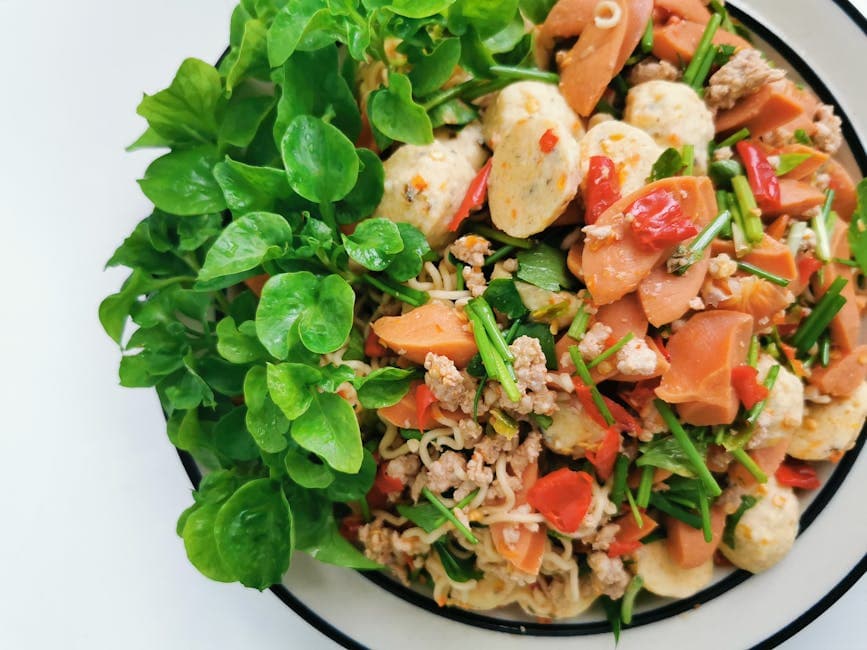
Larb Gai (Laotischer Hackfleischsalat mit Hühnchen)
Das Nationalgericht von Laos — gehacktes Hühnchen mit geröstetem Reispulver, Fischsauce, Limette, Chili, Minze und frischen Kräutern, serviert mit Klebreis.
Über dieses Rezept
Larb (Laap) ist das Nationalgericht von Laos und eines der süchtig machenden Gerichte Kontinentalasiens. Gehacktes Hühnchen wird kurz mit einem Schuss Brühe gegart, dann abseits der Hitze mit geröstetem Reispulver (Khao Khua), Fischsauce, Limettensaft, getrockneten Chiliflocken, in Scheiben geschnittenen Schalotten, Frühlingszwiebeln sowie einer Handvoll Minze und Korianderblättern vermengt. Der geröstete Reis verleiht dem Salat seinen charakteristischen nussigen Knusper und nimmt das Dressing auf, sodass das Fleisch locker bleibt statt suppig zu werden. Laap wird traditionell bei Zimmertemperatur zusammen mit kompakten Klebreisbällchen und einem Teller mit rohem Kohl, Langbohnen und Basilikumblättern serviert, die alle als Schöpfgefäß für das Fleisch dienen. In Vientiane und Luang Prabang ist es alltägliche Kost; im nordöstlichen Thailand (Isan) ist das nahezu identische Gericht ein enger Verwandter.
Zutaten
Dient 4
- 500 gHackfleisch vom Huhn (am besten Oberschenkelfilet für mehr Aroma)
- 3 ELroher Klebreis (oder Jasminreis)
- 3 ELFischsauce (thailändisch oder laotisch)
- 3 ELfrischer Limettensaft
- 1 TLZucker (optional, zum Ausbalancieren)
- 1–2 TLgetrocknete rote Chiliflocken nach Geschmack
- 4Schalotten, dünn geschnitten
- 4Frühlingszwiebeln, dünn geschnitten
- 1 StängelZitronengras, sehr zartes Inneres fein gehackt
- 1 small pieceGalgant, fein gehackt (optional)
- 1 großes Bundfrische Minzeblätter
- 1 großes Bundfrische Korianderblätter
- 1 kleines BundSägezahnkoriander, gehackt (optional)
- 100 mlHühnerbrühe oder Wasser
- Klebreis und rohes Gemüse (Kohl, Langbohnen, Gurke) zum Servieren
Anleitung
- 1
Reis rösten
Eine trockene Pfanne bei mittlerer bis niedriger Hitze erhitzen. Den rohen Reis hinzufügen und unter ständigem Schwenken rösten, bis er tief goldbraun und intensiv aromatisch duftet — etwa 6 Minuten. Leicht abkühlen lassen.
- 2
Zu Pulver mahlen
Den gerösteten Reis in einer Gewürzmühle pulsieren oder im Mörser zu einem groben, sandartigen Pulver zerstoßen. Das ist Khao Khua — die Seele des Larb.
- 3
Hühnchen garen
Einen Wok oder eine breite Pfanne bei mittlerer bis hoher Hitze erhitzen (kein Öl — das eigene Fett des Hühnchens reicht aus). Hühnerbrühe oder Wasser hinzufügen und schnell zum Köcheln bringen.
- 4
Fleisch pochieren und braten
Das Hackfleisch hinzufügen. Mit einem Holzlöffel zerkleinern — das Ziel sind kleine, getrennte Krümel, keine großen Klumpen. Etwa 5 Minuten garen, bis kein Rosa mehr zu sehen ist. Die Masse sollte feucht, aber nicht suppig sein.
- 5
In eine Schüssel geben
Das Hühnchen in eine große Rührschüssel kratzen. 3 Minuten abkühlen lassen — Dressing auf kochendes Hühnchen verliert seine Frische.
- 6
Den Salat anmachen
Fischsauce, Limettensaft, Zucker, Chiliflocken, Zitronengras und Galgant hinzufügen. Gründlich vermengen. Abschmecken — das Dressing sollte salzig, sauer, scharf und kaum süß sein, in dieser Reihenfolge.
- 7
Reispulver hinzufügen
2 gehäufte EL des gerösteten Reispulvers darüberstreuen. Erneut wenden. Der Reis saugt überschüssigen Saft auf und sorgt für unerlässlichen Knusper.
- 8
Kräuter zuletzt hinzufügen
Schalotten, Frühlingszwiebeln, Minze und beide Koriandersorten hinzufügen. Vorsichtig unterheben — zu starkes Rühren quetscht die Kräuter.
Eine kleine Handvoll Kräuter und Reispulver zum Dekorieren der fertigen Schüssel zurückbehalten.
- 9
Servieren
Larb auf einem Teller anrichten. Mit Klebreisbällchen und einem Häufchen rohem Kohl, Gurke und Langbohnen umgeben. Mit den Händen essen und Larb mit Reis oder Gemüse aufschöpfen.
Hast du das gekocht?
Bewerte es und hilf anderen, die Rezepte zu finden, die wirklich funktionieren.
Einmal anmelden, und wir speichern die Bewertung, die du gerade gewählt hast.
Alles, was du für deine Wochenplanung brauchst — kostenlos
- Essensplaner
- Einkaufsliste
- KI-Rezeptideen
Freihändig kochen
Hol dir KI-Essenspläne, einen Schritt-für-Schritt-Kochmodus und deine gespeicherten Rezepte in der kostenlosen Bento-App.
Profi-Tipps
- →
Oberschenkelfilet zu Hause oder beim Metzger mahlen — vorgemahlene Brust ist zu trocken und ergibt einen kreidigen Larb.
- →
Den Reis tief und dunkel rösten — helles Reispulver schmeckt roh und verleiht keinen Charakter.
- →
Würzung nach dem Hinzufügen der Kräuter abschmecken und anpassen; Limette und Fischsauce brauchen oft eine letzte Korrektur.
- →
Geröstetes Reispulver in einem luftdichten Glas bis zu 2 Wochen aufbewahren; es ist ein laotischer Speisekammerbedarf.
Variationen
- •
Larb Moo: dasselbe Gericht mit Schweinehackfleisch.
- •
Larb Pla: mit fein gehacktem frischen Fisch, wie ein laotisches Ceviche.
- •
Vegetarisch: festen Tofu zerbröckelt oder fein gehackte Pilze als Ersatz.
- •
Nördlicher laotischer ‚Blut-Larb' fügt einen Spritzer rohen Blutes für traditionelle Reichhaltigkeit hinzu — außerhalb von Laos kaum zu Hause zubereitet.
Lagerung
Am besten noch am selben Tag gegessen. Die Kräuter welken im Kühlschrank, aber das Fleisch hält sich 2 Tage; Rest-Larb mit frischen Kräutern, einem Spritzer Limette und einer Prise frischem Reispulver auffrischen.
Geschichte und Herkunft
Larb ist seit mindestens dem Lan-Xang-Königreich des 14. Jahrhunderts als laotische Hofküche dokumentiert und reiste mit laotischer Migration in das nordöstliche Thailand (Isan), wo es untrennbar mit der Isan-Identität verbunden wurde. Geröstetes Reispulver (Khao Khua) erscheint in laotischen Rezepten lange bevor es sich in die breitere thailändische Küche verbreitete.
Häufig gestellte Fragen
Was ist der Unterschied zwischen laotischem Larb und thailändischem Larb?
Laotischer Larb ist etwas trockener und verwendet mehr bittere Kräuter wie Dill oder Sägezahnkoriander; Isan-Thaiischer Larb ist ähnlich, aber oft etwas süßer und soßiger. Außerhalb von Laos sind die beiden in Restaurants weitgehend austauschbar.
Kann ich gemahlenes Truthahn- oder Rindfleisch verwenden?
Ja — gemahlene Ente, Schweinefleisch, Rindfleisch und Truthahn funktionieren alle. Fettgehalt anpassen: sehr mageres Fleisch (Truthahnbrust) braucht einen zusätzlichen EL Brühe oder einen Spritzer Öl am Ende.
Ist Larb scharf?
Traditionell ja — laotische Köche verwenden 2–3 Teelöffel getrocknete Chiliflocken. Mit 1 TL beginnen und mehr hinzufügen; die Schärfe baut sich auf, während der Salat zieht.
Nährwertangaben
Pro Portion (240g) · 4 Portionen insgesamt
Zeitzusammenfassung
Haben Sie Fragen?
Fragen Sie unseren KI-Kochassistenten zu diesem Rezept – Ersetzungen, Techniken, Skalierung.
Chatten Sie mit AI Chef →In Reiseführern vorgestellt
Dieses Rezept ist in den folgenden kuratierten Leitfäden enthalten:
Weitere Laotian Rezepte
Das könnte dir auch gefallen
Ähnliche Gerichte aus anderen Küchen der Welt.
Kostenlose Küchen-Tools
Rechner und Umrechner, die zu dieser Seite passen — ohne Anmeldung.
Daraus einen Plan machen
Einplanen, einkaufen und im Blick behalten, was schon da ist.
Weiterlesen
Ausführliche Artikel zu den Ideen hinter diesem Gericht.
Gemeinschaft
Beteiligen Sie sich an der Unterhaltung
Melden Sie sich an, um einen Kommentar zu hinterlassen und Ihre Lieblingsrezepte zu speichern